
Clear Your Yard Fast Using Curbside Branch and Tree Chipping
Clear Your Yard with a Tree Chipping Service
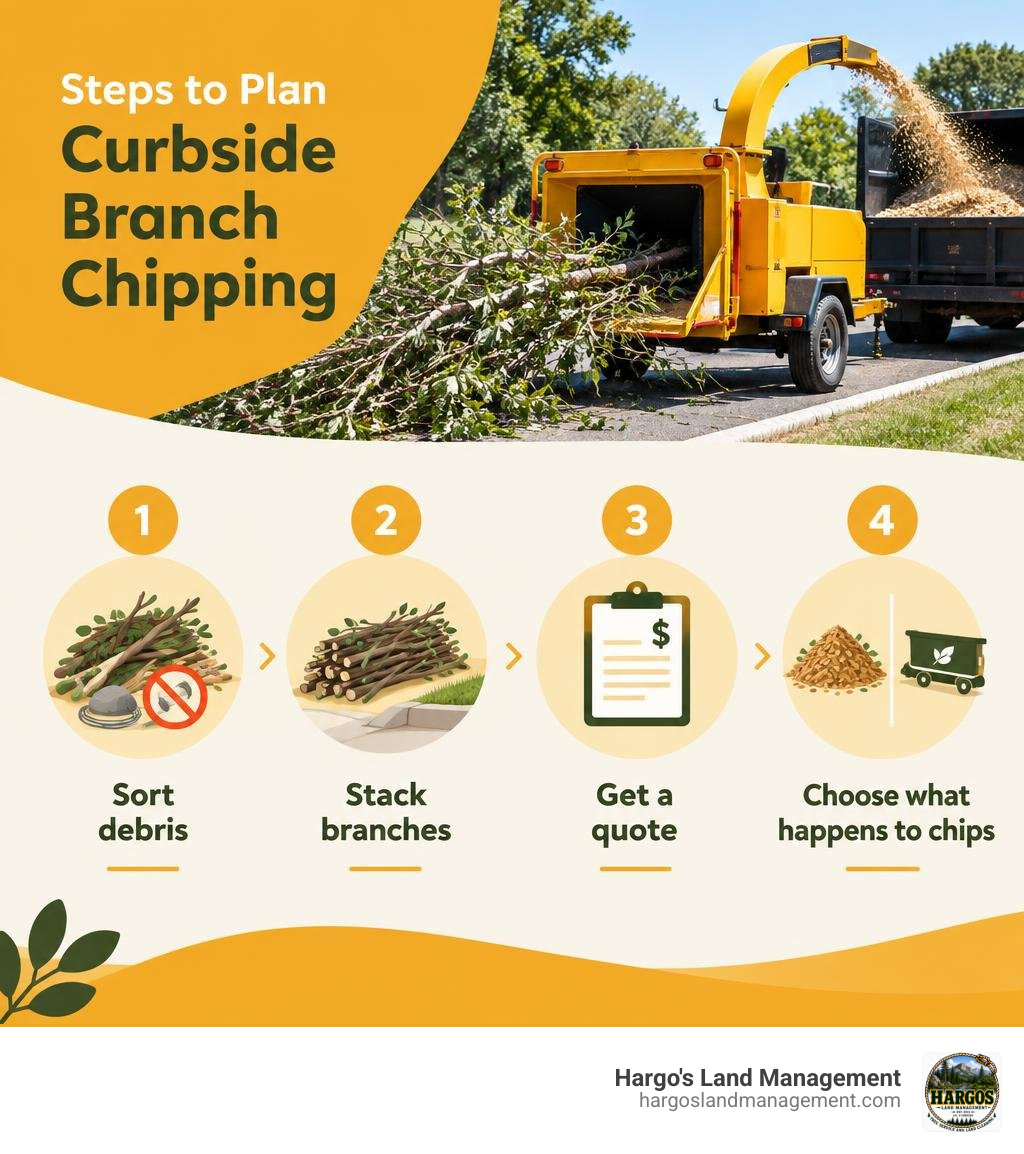
A tree chipping service turns cut branches and woody brush into chips on-site, so you can clear a pile without hauling loose debris yourself. To get a useful quote, stack branches where a crew can reach them, keep soil, rocks, and wire out of the pile, and ask whether the price includes chip removal or leaving the chips for mulch.
For an El Dorado County property, ask how chipping fits into your wider brush-clearing and fire-safety plans. Hargo’s Land Management offers free on-site estimates for tree services, land clearing, and defensible-space work.
Understanding Tree Chipping vs. Tree Removal and Stump Grinding
When managing residential or commercial acreage, distinguishing between the stages of timber management saves both time and budget. Tree care is not a single, one-size-fits-all operation. Depending on the condition of your landscape, your property goals may require branch processing, canopy thinning, or subterranean root mitigation.

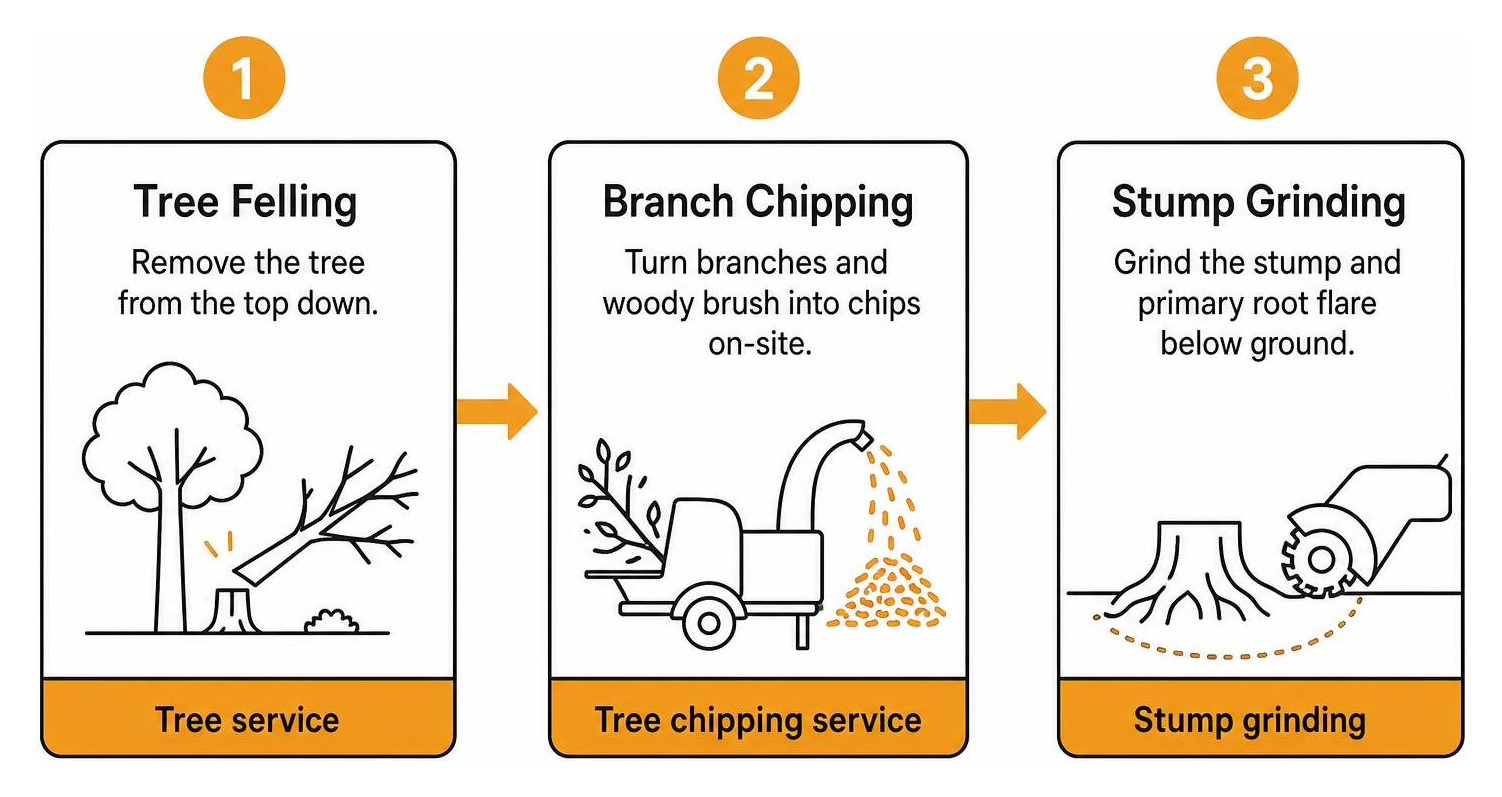
Tree chipping is primarily a volume-reduction and biomass-recycling method. When we chip branches, mechanical feed rollers draw limbs into spinning steel drum or disc blades, converting sprawling, tangled brush piles into compact, uniform wood chips. This process reduces the physical volume of organic yard debris by up to 75 to 80 percent, eliminating the need for dozens of truck bed loads.
In contrast, felling or canopy work falls under a broader tree service. When a specimen poses an active structural threat to a home or utility line, we perform hazardous tree removal, dismantling the tree from the top down using specialized rigging, cranes, or bucket trucks.
Once the above-ground biomass is down and processed, the base of the trunk remains. This is where dedicated stump grinding comes in. Chippers are designed strictly for clean, aerial wood; they cannot process subterranean root balls because embedded soil and rocks instantly destroy high-speed cutting teeth. Stump grinders use specialized tungsten-carbide tipped wheels to pulverize the stump and primary root flare several inches below grade, preparing the soil for turf, gravel, or replanting.
What to Expect from a Professional Tree Chipping Service
Hiring a professional crew turns what could be weekends of exhausting personal labor into a smooth, organized operation. When we arrive on-site, we bring heavy-duty commercial equipment engineered to handle dense brush and thick limbs rapidly.
Knowing everything to expect from a tree debris removal service starts with understanding the equipment. Commercial chippers feature hydraulic feed rollers that pull large limbs in smoothly. For properties with steep terrain, soft soil, or narrow access gates, we deploy low-ground-pressure, track-mounted chippers. These machines traverse off-road topography without tearing up lawns or compacting root zones, allowing on-site vegetation clearing and brush chipping right at the source.
Materials Accepted and Prohibited for Chipping
Chipping machinery is powerful, but it relies on razor-sharp, precision-balanced steel knives. Introducing non-woody or contaminated items creates hazardous projectile risks and damages cutting blades.
Accepted Materials:
- Hardwood limbs (oak, madrone, walnut, ash)
- Softwood branches and conifer boughs (pine, cedar, fir)
- Freshly pruned landscape brush and woody shrubs
- Clean, unrooted tree trimmings within specified diameter thresholds
Prohibited Materials:
- Root balls and dirt-encrusted stumps (soil and embedded stones dull knives instantly)
- Raked leaves, loose pine needles, lawn clippings, and garden compost
- Vines, blackberry brambles, and loose ivy (these wrap around drive shafts and jam feed rollers)
- Poison oak, poison ivy, and noxious weeds (chipping aerosolizes toxic oils, posing severe respiratory risks)
- Construction waste, treated lumber, pallets, fencing, metal wire, nails, or ropes
How to Prepare and Stack Curbside Branches
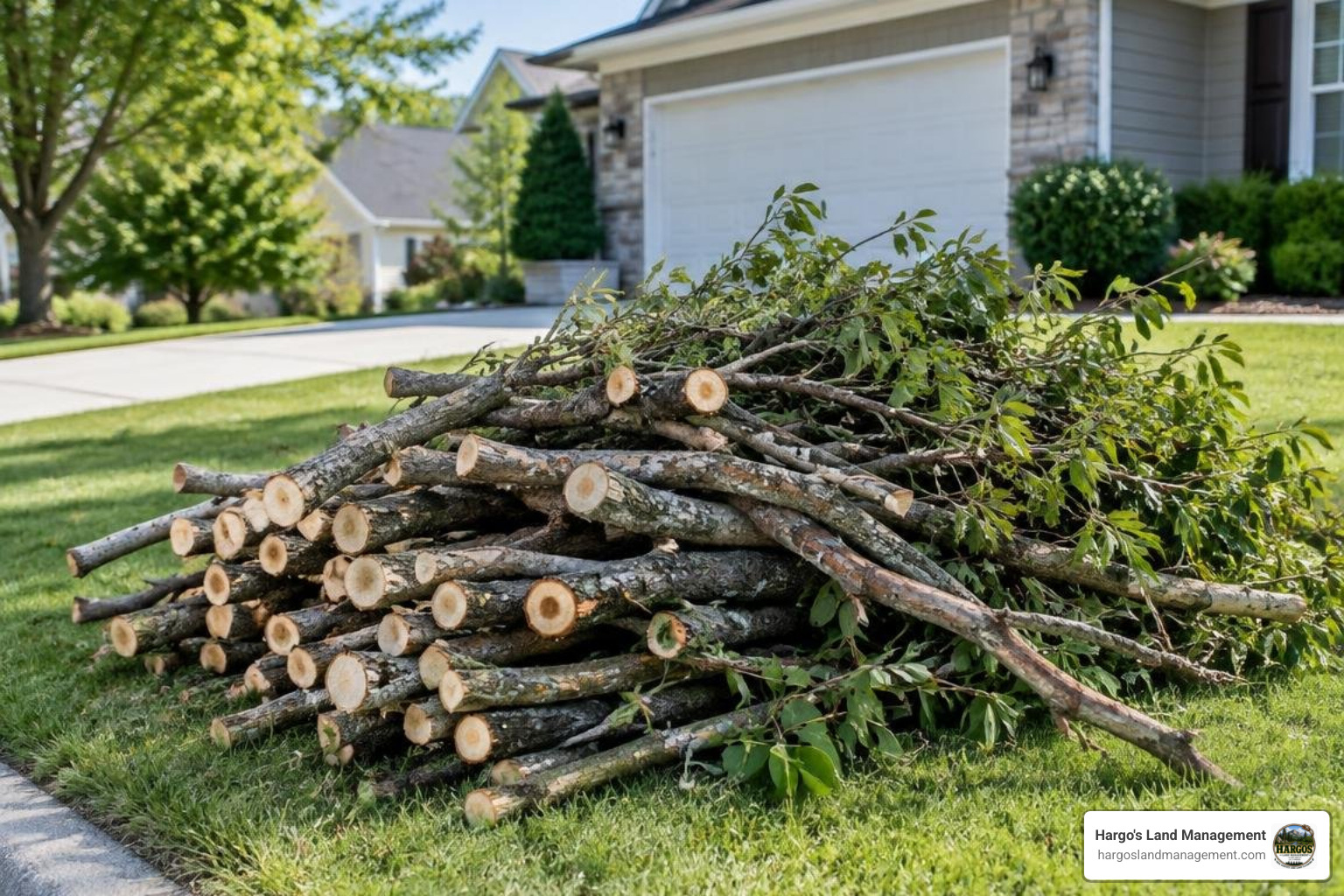
Proper staging directly influences project efficiency and safety. When branches are haphazardly piled like a giant game of pickup sticks, our crew must spend valuable time untangling them by hand.
- Point Cut Ends Toward Access: Stack all limbs with the thick, cut ends facing outward toward the driveway or street where the chipper will park.
- Keep Stacks Parallel: Lay branches flat in neat, uniform rows rather than creating crisscrossed mounds.
- Mind Height and Width Limits: Keep individual piles under four to five feet in height so they remain stable and manageable to feed.
- Maintain Clearances: Keep curbside piles clear of fire hydrants, mailboxes, utility meters, low-hanging service wires, sidewalks, and storm drains.
- Leave Long Limbs Intact: Do not waste energy cutting branches into tiny pieces. Commercial chippers handle long limbs much faster and safer than short, awkward chunks.
On-Site Chipping and the Benefits of Using Wood Chips
Transforming unwanted yard debris into fresh wood chips provides ecological and financial advantages. Instead of paying hauling and tipping fees to dump organic material at a landfill, wood chipping converts waste into a valuable landscaping asset right on your property.
| Advantage | Traditional Landfill Hauling | On-Site Chipping & Mulch Reuse |
|---|---|---|
| Direct Costs | Dump gate fees, trailer rentals, fuel expenses | Single service fee, zero disposal fees |
| Carbon Footprint | Multiple heavy vehicle trips to disposal sites | Single on-site visit with zero highway transport emissions |
| Soil Health | Organic matter lost permanently from property | Retains nutrients, buffers soil temperature, adds carbon |
| Water Conservation | Exposed topsoil dries out quickly under sunlight | 2–4 inches of chip mulch reduces evaporation up to 50% |
| Weed Suppression | Requires ongoing manual pulling or chemical sprays | Naturally blocks sunlight from weed seeds |
Spreading fresh chips across garden beds, walking paths, and exposed slopes protects topsoil against erosion caused by heavy rains. For larger logs that exceed chipper capacity or make excellent firewood, reviewing log splitting service pricing and stacking options explained helps you decide whether to split trunks for fuel or process smaller tops into mulch. If your project generates more volume than your landscape beds can absorb, you can also consider sharing or free wood chips programs for neighbors and community gardens.
Pricing, Project Duration, and Seasonal Scheduling
Understanding how chipping projects are scheduled and billed helps homeowners plan property cleanup efficiently. Whether you are dealing with seasonal growth or unexpected storm damage, organizing debris early keeps costs predictable.
Many regions experience seasonal surges in woody debris. For example, municipal branch collection efforts, such as the Branch Chipping Service | Clinton Township, MI, run seasonal curbside sweeps between spring and early autumn to help residents clear storm trimmings. For private properties, scheduling independent chipping ensures immediate cleanup without waiting for municipal windows, particularly when urgent storm cleanup is needed after severe weather drops heavy limbs across driveways and fence lines.
Understanding Tree Chipping Service Costs and Pricing Models
Tree chipping is billed under a few standard industry pricing models depending on project scope:
- Hourly Rates: Ideal for properties where debris is already cleanly staged at the curb or driveway edge. Rates typically reflect a full crew, truck, and commercial chipper setup.
- Project Minimums: Most licensed tree care companies maintain a project baseline (often starting around $250 to $750) to cover travel time, equipment fuel, machine setup, and operational overhead.
- Flat-Rate Day or Half-Day Rates: Preferred for extensive acreage clearing, defensible-space creation, or large commercial developments requiring multiple hours of non-stop feeding.
- Haul-Away vs. Broadcast Chipping: Leaving chips on-site in a neat pile or broadcasting them into naturalized woodland zones is generally more cost-effective than paying additional transport and disposal fees to haul the chips away.
Factors That Determine Job Duration
A standard residential pile can often be chipped in one to two hours, while multi-acre fuels reduction projects may take several days. Key variables influencing project speed include:
- Total Brush Volume: The physical size and density of the brush piles.
- Branch Staging and Distance: Piles located right beside the chipper feed table process significantly faster than limbs that must be dragged up steep slopes or through narrow backyard gates.
- Wood Species and Dryness: Green, freshly cut branches bend and pull through feed rollers smoothly, whereas brittle, dried deadwood or dense hardwoods feed slightly slower.
- Presence of Contaminants: Piles mixed with vines, dirt, or wire force crews to stop and sort materials manually to protect cutting blades.
- Crew Size and Equipment Horsepower: High-horsepower commercial chippers with dual hydraulic feed rollers process large limbs in seconds compared to light-duty rental units.
Safety, Credentials, and Hiring Standards
Operating high-capacity wood chippers requires rigorous safety protocols and expert training. Commercial chipper blades rotate at thousands of revolutions per minute, generating immense suction and feed force.
When you hire professionals, you protect your property and ensure the work is performed under strict safety standards. Our crews wear full personal protective equipment (PPE)—including steel-toe boots, chainsaw chaps, eye protection, and ballistic-rated face shields. We position discharge chutes carefully to prevent chips or stray debris from striking vehicles, windows, or nearby structures. To learn more about our broader land-clearing capabilities, explore our full range of services and read our blog resources for helpful property maintenance tips.
How to Choose a Reliable Tree Chipping Service
Never allow an unlicensed or uninsured contractor to operate heavy machinery on your property. Use this checklist when vetting local tree service providers:
- Comprehensive Insurance Coverage: Request current certificates proving both General Liability (to protect your structures and landscape) and Workers’ Compensation (to protect you from liability if a worker is injured).
- Appropriate Licensing and Bonding: Ensure the contractor holds all necessary state and county business licenses.
- Transparent, Written Estimates: Look for itemized quotes that clearly define whether hauling, site cleanup, or leaf-blowing are included.
- Modern, Well-Maintained Equipment: Well-serviced equipment with sharp knives produces clean chips and minimizes on-site delays.
- Strong Local Reputation: Look for companies with established local roots, verified customer reviews, and clear knowledge of regional vegetation and fire-safety requirements.
Frequently Asked Questions About Tree Chipping
Can fresh wood chips from tree chipping be used immediately as landscape mulch?
Yes, fresh wood chips make excellent surface mulch for established trees, shrubs, and garden pathways. A common gardening myth suggests that fresh wood chips rob soil of nitrogen. In reality, nitrogen tie-up only occurs in the top few millimeters of soil directly touching the chips.
As long as you use fresh chips as a top-dressing rather than tilling them deeply into planting beds, they provide outstanding moisture retention, regulate soil temperatures, and suppress weeds without harming plant roots. For delicate annual vegetable gardens, simply allow the chips to age for a few months before use.
What branch size diameter can a residential tree chipping service process?
Commercial tree chippers typically handle branches from 6 inches up to 18 inches in diameter, depending on the machine’s throat size and engine capacity. Residential cleanup jobs rarely produce branches larger than 8 to 12 inches.
Limbs that exceed a chipper’s capacity are typically bucked into firewood rounds or handled with dedicated log-splitting equipment. When staging your brush, you do not need to trim side limbs off main stems as long as the base diameter fits within your service provider’s stated limits.
How can I plan a private tree chipping project?
Planning a private chipping project starts with assessing your timeline and debris volume:
- Prune and Clear First: Complete all cutting, tree trimming, and brush clearing before scheduling the chipping crew so all material is ready to process in a single visit.
- Select an Accessible Staging Area: Choose a firm, level area near your driveway or property entrance where a heavy truck and trailer can park safely.
- Decide on Chip Placement: Determine beforehand whether you want chips blown into a centralized pile for garden mulch, spread across naturalized slopes, or hauled away entirely.
- Schedule an Estimate: Contact your local tree care specialist for a free on-site estimate to confirm volume, equipment access, and project timelines.
Conclusion
Curbside branch chipping is the fastest, most cost-effective way to clear unsightly brush piles, recycle organic nutrients, and protect your property from seasonal wildfire risks. Rather than spending exhausting days loading trailers and hauling debris to distant landfills, professional on-site processing restores your landscape in just a few hours.
At Hargo’s Land Management, we combine commercial equipment with deep local expertise across El Dorado County, including Placerville and South Lake Tahoe. Whether you need storm cleanup, brush processing, or comprehensive defensible space clearing to meet California wildfire safety standards, our licensed, bonded, and insured team is here to help. Contact us today to schedule your free on-site estimate.
CUSTOMER REVIEWS & TESTIMONIALS
We strive to exceed your expectations. See what our customers have to say.




















CONTACT US TODAY
Serving El Dorado and Surrounding Counties
Locally owned and operated since 2013. Use our live chat support to get in touch about your land management needs today.
Request a free evaluation and estimate by completing our online form or book an on-site appointment.
El Dorado County: El Dorado Hills, Cameron Park, Shingle Springs, Coloma, Placerville, Camino, Pollock Pines, South Lake Tahoe and more...
Amador County: Jackson, Ione, and Surrounding Towns
Sacramento County: Sacramento and Surrounding Cities
Placer County: Roseville, Rocklin, Auburn, and Everything In Between
Nevada County: Penn Valley, Nevada City, Grass Valley