
Log Splitting Service Pricing and Stacking Options Explained
Get Clear Log Splitting Prices and Safer Firewood Storage
A professional log splitting service turns cut rounds into manageable firewood and can stack it for better drying. To get an accurate quote, tell the provider:
- Approximate wood volume, such as a pickup load, pile size, or cords.
- Log diameter, species, and whether the wood is fresh or dry.
- Site access, including steep slopes, gates, and distance from the driveway.
- Whether you want splitting only, stacking, hauling, or brush cleanup included.
Pricing commonly reflects labor time or the amount of wood processed. Larger, knotty hardwood rounds and difficult access usually take longer. For El Dorado County property owners, planning the split-and-stack job at the same time as tree or defensible-space work can also help keep downed wood organized instead of leaving it as a wildfire fuel concern.
Proper stacking matters as much as splitting. Keep firewood off bare soil, leave space between rows, and use sun and airflow to support seasoning before burning.
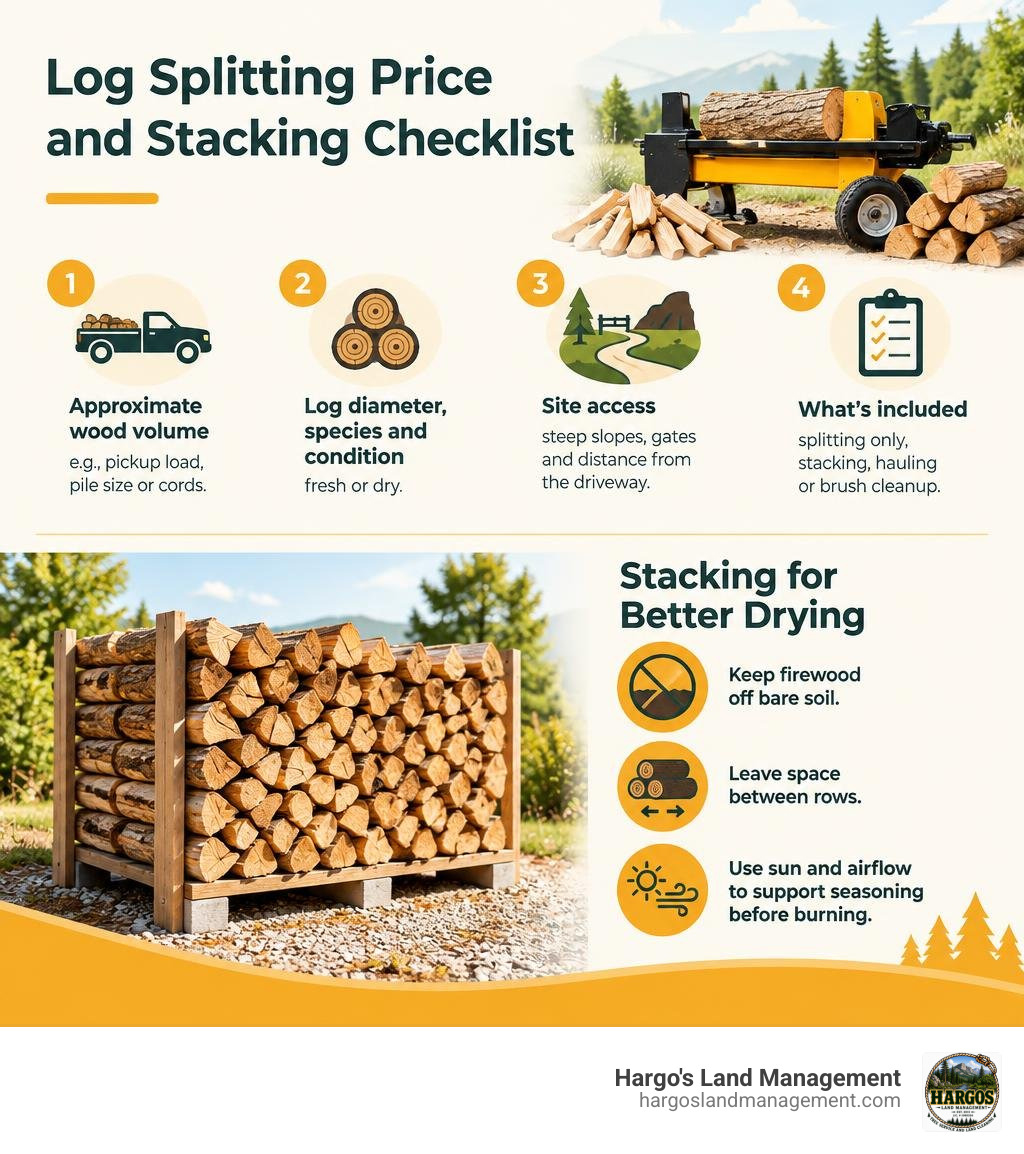
Simple guide to log splitting service terms:
Cost Factors for a Professional Log Splitting Service
Hiring a professional team to split your timber involves several variables. While some property owners expect a flat fee, tree processing requires evaluating the physical density of the wood, physical site access, and overall staging. Whether you are managing fallen timber after a winter storm or processing rounds left behind from thinning projects, understanding these cost factors helps prevent surprises when reviewing estimates.
When budgeting for tree removal and stump grinding services, incorporating wood processing at the same time often yields significant cost savings compared to calling out machinery for multiple separate visits.
Wood species hardness plays a primary role in project timelines. Splitting native softwoods like ponderosa pine or cedar goes relatively quickly because straight grain patterns shear easily under moderate hydraulic pressure. Conversely, native hardwoods such as black oak, interior live oak, and madrone require substantially higher tonnage and deliberate positioning to split cleanly.
Beyond species, consider these critical elements that influence project costs:
- Log Diameter: Rounds exceeding 24 to 30 inches cannot be easily lifted by hand onto standard horizontal splitter beds, requiring vertical splitters, log-lift hydraulics, or heavy equipment assists.
- Knot Density and Grain Twist: Branch junctions, crotches, and twisted grain resist hydraulic wedges, slowing down processing speed compared to straight trunk wood.
- On-Site Staging and Access: Rounds scattered across a hillside take longer to gather than a concentrated pile dumped next to an accessible driveway.
How a Professional Log Splitting Service Calculates Volume and Cord Rates
In the forestry and timber industry, firewood volume is measured in standard cords). A full cord consists of a tightly stacked pile measuring 4 feet high, 4 feet deep, and 8 feet long, totaling 128 cubic feet of wood and air space. In contrast, a “face cord” (or stove wood cord) refers to a single stack measuring 4 feet high and 8 feet long, but only as deep as the individual log length (typically 16 inches), representing roughly one-third of a full cord.
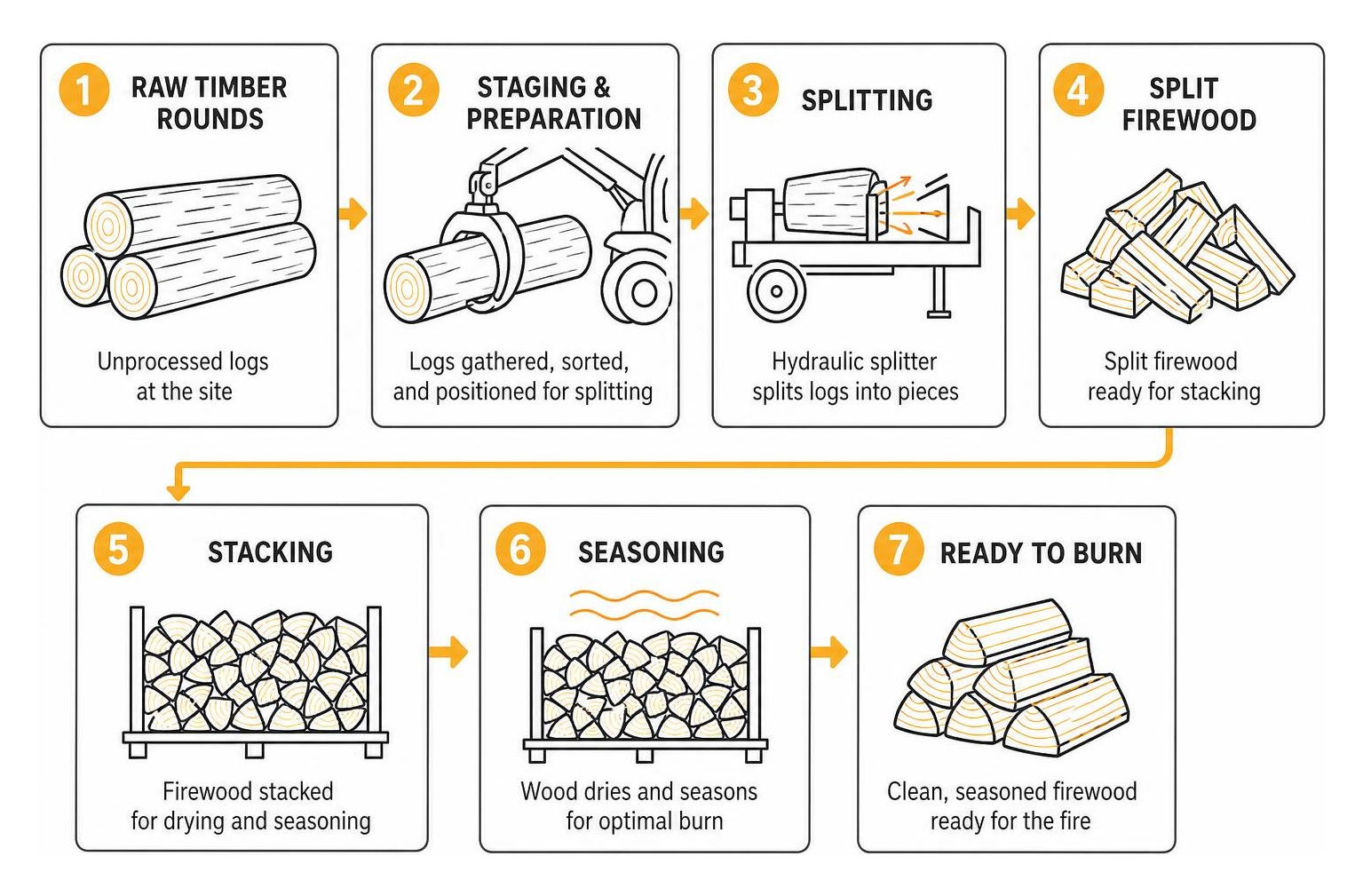
Timber moisture content heavily impacts processing dynamics. Green, freshly felled timber contains high sap and water volumes, often holding 50% or more moisture by weight. While green softwood shears cleanly, wet wood is significantly heavier to lift and stage. Seasoned logs that have sat unmanaged in fields may develop surface rot, embedded grit, or rock contamination, which quickly dulls chainsaw chains and damages wedge surfaces. Incorporating processing as part of everything to expect from a tree debris removal service keeps your yard orderly and turns raw timber into clean fuel.
Additional Equipment and Site Accessibility Fees
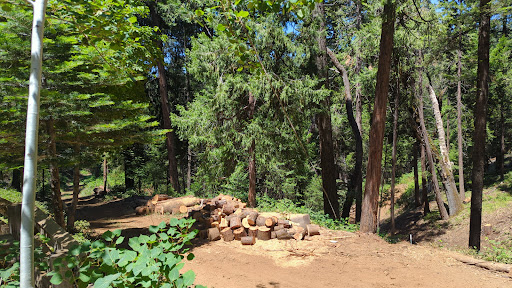
Standard residential lots with paved driveways allow crews to roll towable hydraulic splitters directly adjacent to the staging pile. However, rural acreage and foothill properties frequently present steep slopes, narrow access gates, and unpaved, uneven ground.
Specialized mobile units demonstrate how dedicated machinery solves difficult physical layouts. When handling large-scale acreage cleanup, we evaluate our machinery based on terrain slope and soil conditions. Consulting a heavy brush removal equipment comparison for landowners illustrates why skid steers and mini-excavators are frequently paired with commercial splitters to move massive rounds across rugged properties without damaging surrounding landscape roots.
Firewood Stacking Styles and Best Practices
Splitting your logs is only half the battle; how you stack your wood dictates how fast it cures, its overall heating efficiency, and whether it attracts wood-boring pests. Stacking green wood directly on damp soil traps ground moisture, initiating rapid fungal decay and attracting subterranean termites and carpenter ants.
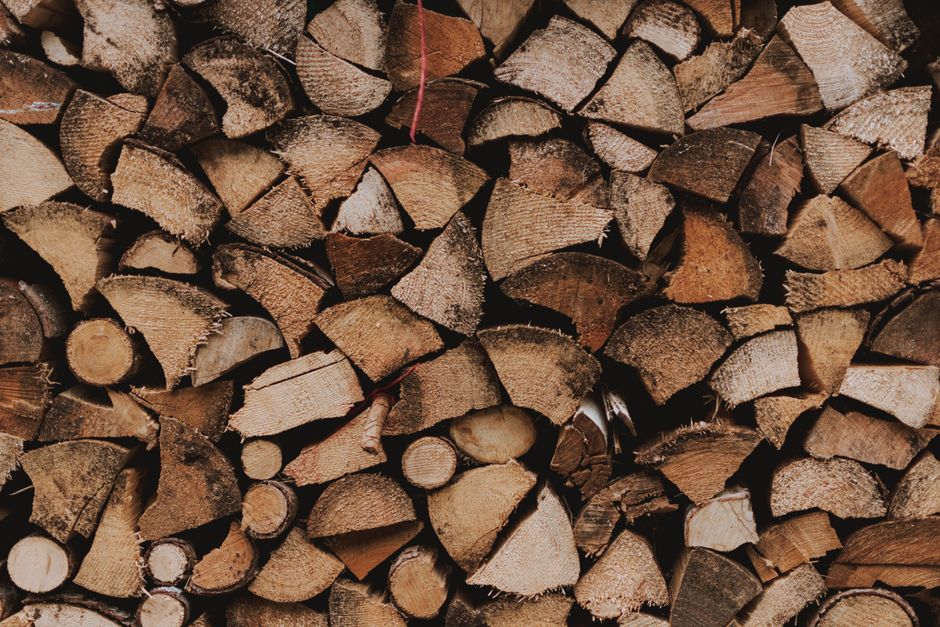
To maximize solar exposure and prevent fungal rot, follow these core rules:
- Elevate the Base: Place your bottom layer on pressure-treated stringers, gravel pads, or scrap wooden pallets to isolate the timber from ground dampness and maintain airflow underneath.
- Maintain Clear Separation: Never stack wood flush against exterior residential walls or wooden fences. Maintain at least 12 to 24 inches of clearance to ensure continuous airflow and prevent insects from bridging into structural framing.
- Orient for Sun and Wind: Align rows perpendicular to prevailing summer breezes, positioning stack faces toward southern or western sun exposures to accelerate evaporation.
Traditional Row Stacking vs. German Holzhausen
The two most common structural methods for seasoning firewood are traditional linear row stacking and the circular German Holzhausen (wood house).
Traditional single-row stacking relies on cross-hatched end pillars (alternating parallel and perpendicular split pieces) to stabilize the outer corners. This method allows maximum breeze penetration across every log, making it ideal for standard residential side-yards.
The Holzhausen utilizes a circular perimeter of uniform pieces tilted slightly inward toward the center. The hollow core is filled with odd-shaped, knotty chunks that would otherwise destabilize a straight row. As warm air rises through the center core, it draws cooler air inward through the outer walls like a chimney, accelerating radial curing while maintaining high structural stability across small footprints.
Integrating Wood Chipping and Log Management for Wildfire Safety
Downed timber, dry branches, and unmanaged brush piles create dangerous surface fuel ladders that carry ground fires directly into forest canopies. Splitting quality hardwood and softwood trunks into organized, managed firewood stores provides valuable home heating while eliminating uncontrolled ground hazards.
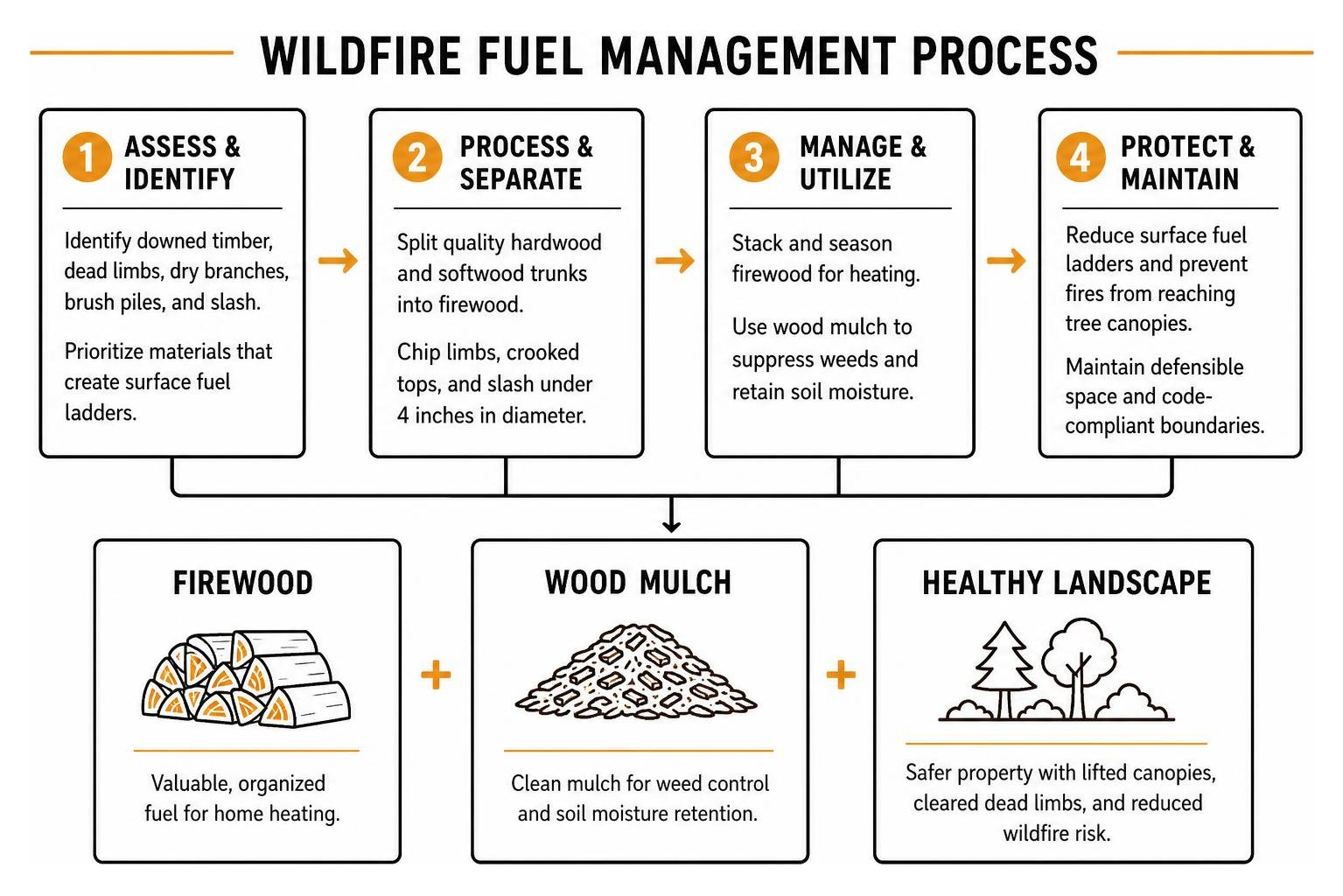
For smaller limbs, crooked tops, and slash under 4 inches in diameter, pairing your log processing with wood chipping creates clean wood mulch to suppress weeds and retain soil moisture across defensible borders. Addressing these materials alongside our comprehensive tree service ensures tree canopies are properly lifted, dead limbs are cleared, and boundary lines remain compliant with local fire protection codes.
How to Prepare Your Property for Log Splitting and Stacking
Preparing your staging zones prior to our arrival ensures maximum efficiency, lowering labor hours and keeping costs contained.

- Buck Logs to Stove Length: Cut tree trunks into uniform rounds (standard 16 inches for typical wood stoves; 18–20 inches for open fireplaces). Non-uniform lengths create unstable stacks and slow processing.
- Consolidate Rounds into Accessible Staging Areas: Roll or skid heavy rounds onto level ground clear of low-hanging overhead utility wires, septic tanks, or delicate sprinkler heads.
- Clear Brush and Establish Drop Paths: Ensure a clear 6-to-8-foot pathway between the timber pile, splitting staging pad, and final storage location. Coupling this with targeted brush and land clearing removes tripping hazards like blackberry vines, poison oak, and buckbrush.
- Prepare Pallets and Stringers: Have your stacking foundations, treated runners, or open-sided firewood sheds cleared and leveled before split logs start coming off the wedge.
Key Benefits of Hiring a Dedicated Log Splitting Service Over DIY Rentals
Renting a small commercial splitter from a tool rental center might appear cost-effective initially, but the physical labor, equipment limitations, and hidden logistical costs add up quickly.
Rental units typically offer limited hydraulic wedge force (15 to 20 tons), which frequently stalls on dense Sierra foothill oaks or knotty pine bases. Our dedicated commercial splitters generate 30 to 40+ tons of commercial force, effortlessly slicing through cross-grained knots and massive 36-inch rounds.
Handling thousands of pounds of heavy wood rounds carries significant risk of lumbar strain, pinched fingers, and flying splinter injuries. Our experienced team manages the heavy lifting, staging, splitting, and stacking safely using professional protective equipment, heavy machinery assists, and proven physical techniques—sparing you days of exhausting manual labor.
Frequently Asked Questions About Log Splitting and Stacking
How much does professional log splitting typically cost per cord?
In Northern California foothill communities, splitting previously bucked rounds generally ranges between $100 and $220 per full cord, depending on wood species hardness, average diameter, and site access. Stacking services typically add an additional $40 to $90 per cord. When site clearing requires machine-clearing or bucking long tree stems to length on-site, crews usually charge hourly rates ranging from $90 to $160 per hour.
How long does freshly split wood need to season before burning?
Split softwood (such as cedar and pine) generally requires 6 to 8 months of summer curing to drop below 20% internal moisture content. Dense hardwoods (such as black oak, live oak, and madrone) require a minimum of 9 to 12 months, and up to two full seasons if stored in shaded or high-humidity foothill microclimates. Test split faces using an electronic pin moisture meter to confirm readiness.
Can log splitters process freshly felled green logs immediately?
Yes. Splitting logs while green is significantly easier because moisture inside the wood cells lubricates the grain, allowing hydraulic wedges to shear fibers cleanly. Waiting until logs dry in round form causes the wood to harden and case-harden, dramatically increasing splitting resistance and causing unpredictable grain checking.
Conclusion
Managing downed trees and processing firewood is an essential part of responsible property management in foothill environments. Leaving rounds scattered across open acreage invites pest infestations, accelerates wood rot, and creates dangerous fuel arrangements during high-risk summer fire conditions.
At Hargo’s Land Management, we help property owners across Placerville, El Dorado Hills, and South Lake Tahoe maintain clean, safe, and beautiful properties through professional tree care, precision log processing, and specialized land maintenance. Contact our licensed, bonded, and insured team today to schedule your free on-site estimate and protect your property with defensible space clearing.
CUSTOMER REVIEWS & TESTIMONIALS
We strive to exceed your expectations. See what our customers have to say.














CONTACT US TODAY
Serving El Dorado and Surrounding Counties
Locally owned and operated since 2013. Use our live chat support to get in touch about your land management needs today.
Request a free evaluation and estimate by completing our online form or book an on-site appointment.
El Dorado County: El Dorado Hills, Cameron Park, Shingle Springs, Coloma, Placerville, Camino, Pollock Pines, South Lake Tahoe and more...
Amador County: Jackson, Ione, and Surrounding Towns
Sacramento County: Sacramento and Surrounding Cities
Placer County: Roseville, Rocklin, Auburn, and Everything In Between
Nevada County: Penn Valley, Nevada City, Grass Valley