
Everything to Expect from a Tree Debris Removal Service
Clear Tree Debris Before It Becomes a Safety or Fire Problem
A tree debris removal service clears fallen branches, logs, brush, leaves, and leftover wood from trimming or storm damage. For large El Dorado County properties, the fastest path is to separate immediate hazards from routine cleanup: keep people away from downed power lines, clear blocked driveways and walkways, then arrange hauling, chipping, or wood processing for the remaining pile.
Prompt cleanup matters. Dry brush and dead limbs can add wildfire fuel, while damp piles can attract pests, encourage fungi, and smother grass beneath them. A qualified crew can remove heavy material safely and help turn usable wood into mulch or firewood instead of sending it to a landfill.
This guide explains what to expect, from cost and property prep to defensible-space cleanup, recycling options, and when professional equipment is the safer choice.
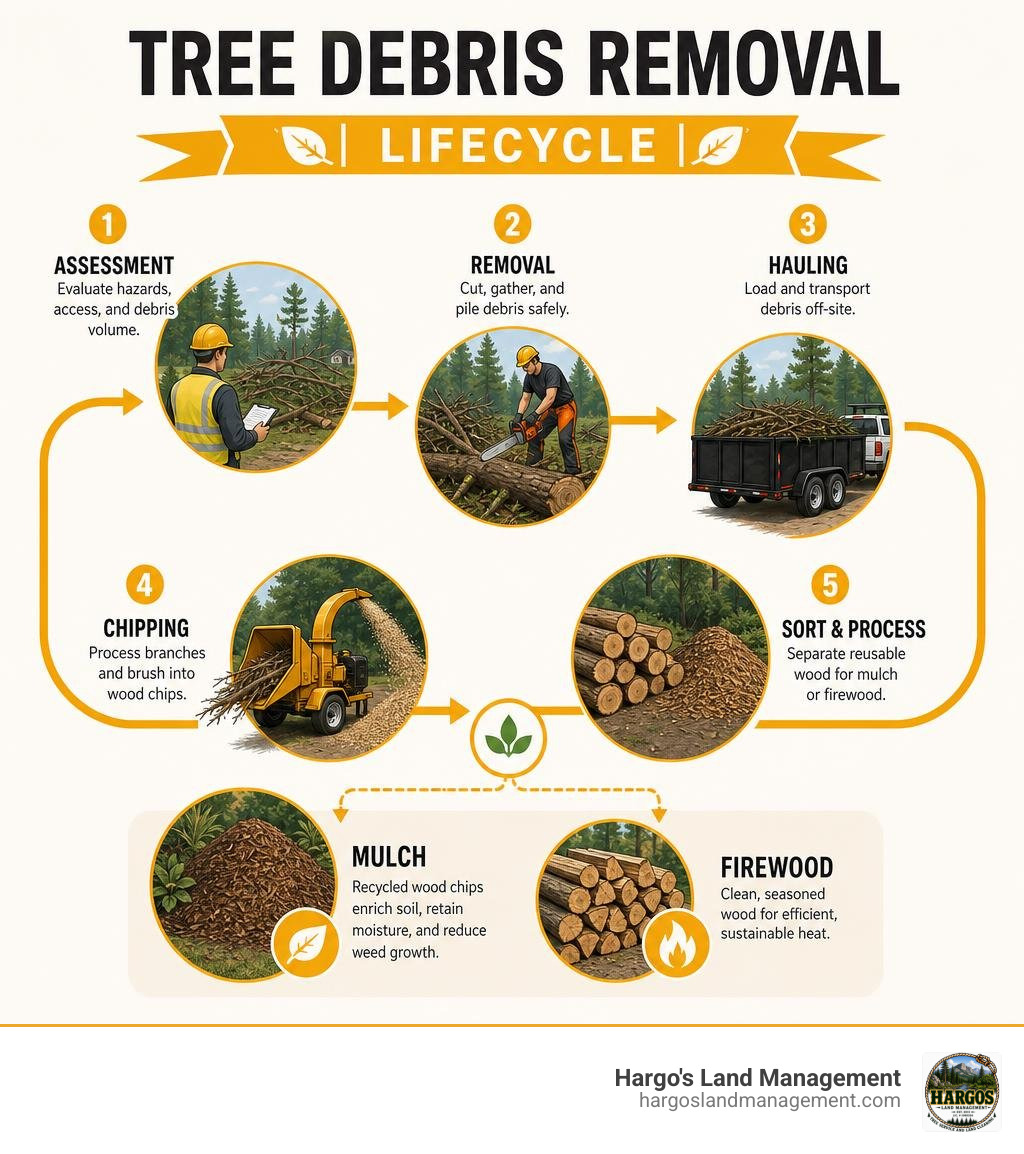
Tree debris removal service definitions:
Understanding Tree Debris Removal and Common Property Hazards
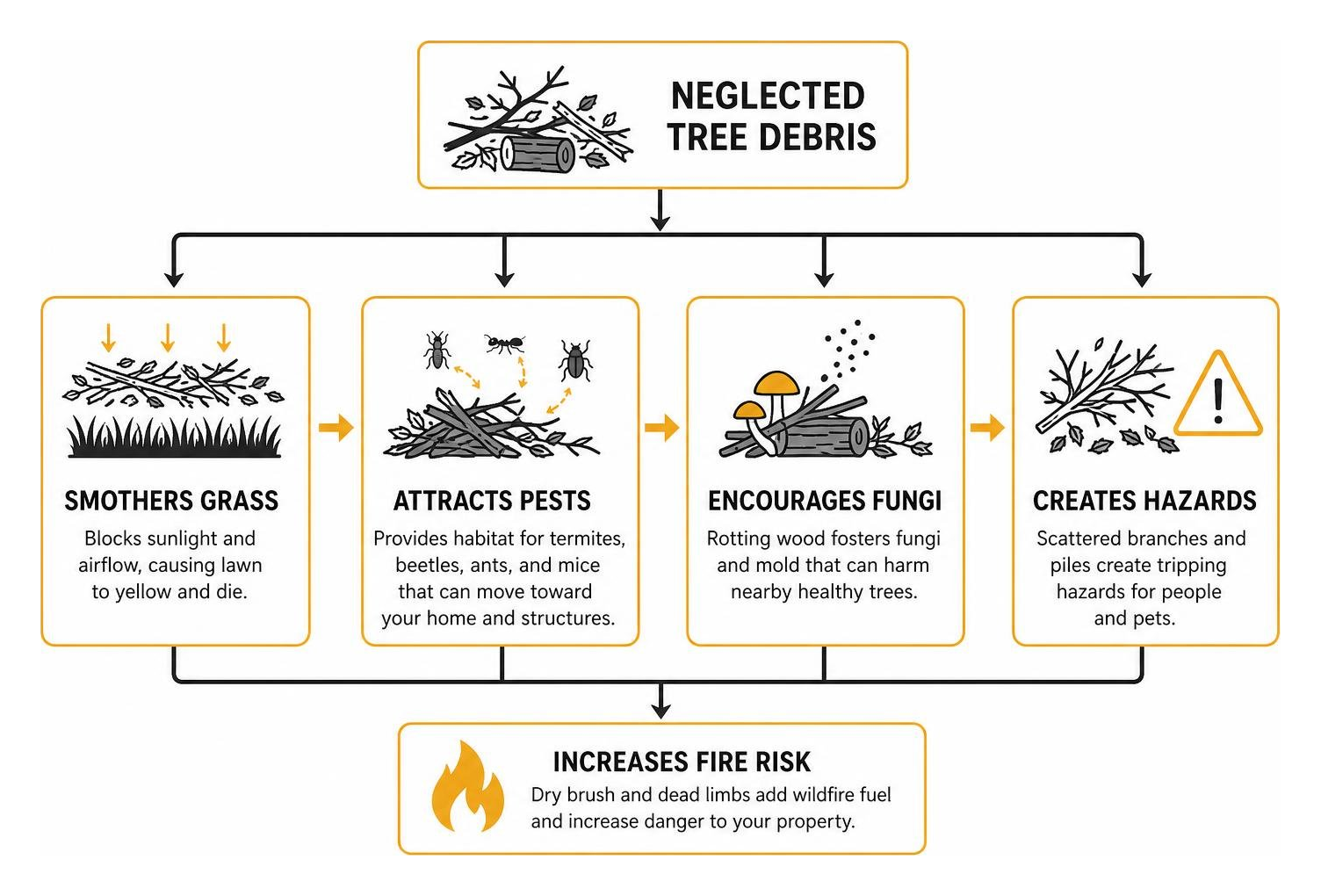
When trees shed limbs or undergo seasonal pruning, the residual waste left on your property is far more than an eyesore. Left unmanaged, piles of branches, bark, and foliage trigger several cascading property hazards.
First, dense layers of deadwood and wet foliage act like a suffocating blanket across your lawn. Deprived of direct sunlight and airflow, the underlying turf grass deteriorates, yellowing and dying within weeks. Second, rotting organic material creates an inviting habitat for unwanted wildlife. Termites, wood-boring beetles, carpenter ants, and mice readily colonize damp brush piles, using them as staging grounds before migrating toward residential foundations and outbuildings. Fungal pathogens also thrive in decomposing wood piles, producing mold spores that can infect neighboring, healthy ornamental trees.
Beyond ecological and pest issues, scattered branches and brush piles create immediate physical tripping hazards for family members, guests, and pets, turning a tranquil backyard into an obstacle course.
Assessing Property Needs for Tree Debris Removal Service
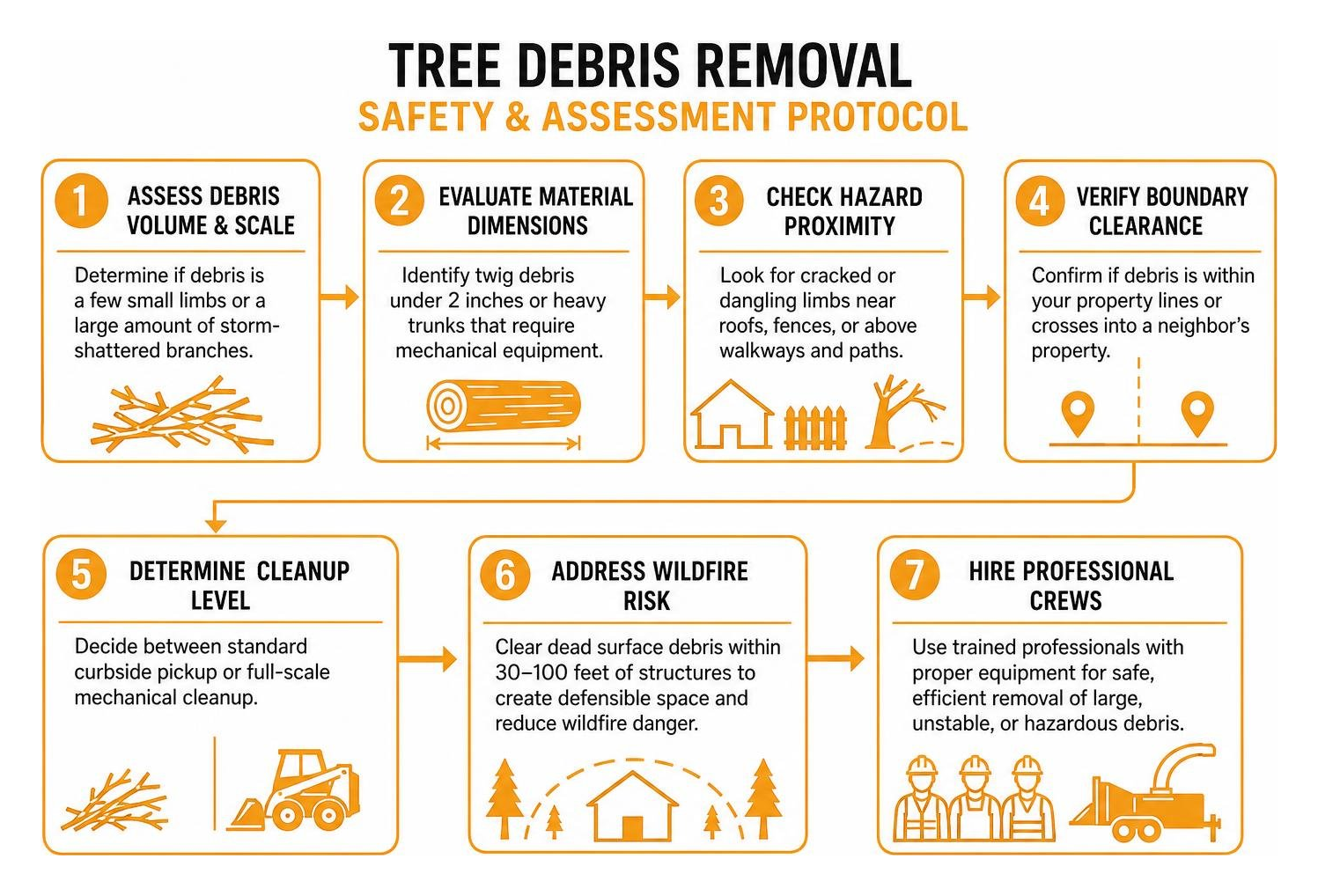
Every property cleanup begins with an honest assessment of debris volume and complexity:
- Volume and Scale: Is the debris confined to a few small limbs from an afternoon of pruning, or is it a sprawling mountain of storm-shattered boughs?
- Material Dimensions: Are you dealing with manageable twigs under 2 inches in diameter, or heavy, mature trunk segments requiring mechanical machinery to shift?
- Hazard Proximity: Are any cracked limbs resting on rooflines, resting against fences, or dangling dangerously in the canopy above walking paths?
- Boundary Clearance: Did the tree fall entirely within your boundary lines, or does it cross property borders, necessitating communication with neighbors?
Taking inventory of these factors helps determine whether you simply need a standard curbside pickup or a full-scale mechanical cleanup operation.
Wildfire Risks and Defensible Space Requirements
In high-risk areas—especially across foothill communities like Placerville and South Lake Tahoe—tree debris isn’t just landscape clutter; it is volatile wildfire kindling. Piles of dry pine needles, curing oak limbs, and dead brush provide dry timber that easily ignites from wind-borne embers.
Maintaining fire-safe buffer zones around your structures requires proactive defensible space clearing to break up continuous fuel beds. Clearing away dead surface debris within 30 to 100 feet of your home drastically reduces flame lengths and radiant heat, giving emergency responders a safe perimeter to protect your property. Proactive green waste hauling is essential to reduce wildfire dangers and maintain property insurability throughout the dry summer and autumn months.
When to Hire a Professional Tree Debris Removal Service
While raking leaves and trimming soft twigs is manageable weekend work, processing large logs and unstable storm debris demands professional intervention. Chainsaw kickback, rolling timber on steep slopes, and spring-loaded limbs under mechanical tension present severe injury risks to untrained property owners.
Professional crews come equipped with industrial safety gear, rigging systems, skid steers, and commercial chipping units that turn multi-ton debris heaps into uniform mulch in hours rather than weeks.
Post-Storm Emergencies and Hazardous Limb Damage
Severe weather brings heavy winds, saturated soil, and snow loads that uproot entire root plates or snap massive canopy branches. In these crisis moments, rapid storm cleanup becomes vital for personal safety and structural integrity.
If a heavy limb has compromised your roof or collapsed an outbuilding, attempting to cut it away without proper rigging can cause catastrophic secondary damage to your home. Navigating storm damage tree removal insurance claims and safe cleanups starts with stabilizing the immediate impact zone, documenting all damage thoroughly for adjusters, and letting insured specialists crane or winch the heavy timber safely away from structural walls.
Always remember: if a fallen limb is touching or near an electrical line, immediately keep your distance and contact your local electric utility provider before scheduling any debris removal work.
Large-Scale Lot Clearing vs Routine Yard Maintenance
There is a vast difference between clearing a single seasonal brush pile and overhauling overgrown acreage. When preparing a home site, opening pastureland, or managing dense rural vegetation, routine raking falls short.
Comprehensive brush and land clearing integrates heavy equipment like forestry mulchers and grapple loaders to eliminate understory overgrowth, diseased saplings, and heavy surface timber in one unified workflow. For overgrown parcels, homeowners can save your yard by booking a full tree removal service today to address both dangerous standing trees and accumulated ground debris simultaneously.
Average Costs and Key Pricing Factors
The cost of tree debris removal varies depending on the total volume of organic waste, accessibility of the site, and the machinery required. Nationally, typical tree debris removal costs range from $75 to $500, with the average residential job running around $150. Large-scale cleanups involving heavy trunk wood or multiple dump runs can reach $625 to $1,000 or more.
| Service Type / Scope | Average Price Range | Pricing Metric |
|---|---|---|
| Brush Pile Removal | $150 – $200 | Per trip / standard load |
| Tree Branch Removal | $75 – $250 | Single load / light clearing |
| Single Dump Trip Run | $75 – $250 | Per trip (based on distance & dump fees) |
| 2 to 3 Dump Trip Runs | $150 – $750 | Multi-load residential clearing |
| 4+ Dump Trip Runs | $300 – $1,000+ | Large acreage / severe storm cleanup |
| Hourly Tree Debris Labor | $25 – $50 / hour | Standard labor rates |
| Landscaper Debris Crew | $50 – $100 / hour | General property crew rates |
| Wood Chipping Service | $50 – $125 / hour | On-site chipping operations |
| Log Splitting Service | $50 – $120 / hour | Firewood processing |
| Whole Tree Removal & Debris | $200 – $2,000 | Felling, processing, and full hauling |
| Stump Grinding Cleanup | $170 – $550 | Per stump site cleanup |
Understanding stump grinding service costs tools and safety tips helps ensure your initial quote covers both below-ground grinding and above-ground debris disposal, preventing unexpected add-on fees.
Breakdown of Labor Rates and Dump Trip Fees
Contractor pricing generally breaks down across three core fee structures:
- Hourly Rates: Tree debris crews typically charge between $25 and $50 per hour per worker, while specialized tree service crews command $50 to $100 per hour depending on technical skill and equipment operation requirements.
- Dump Trip Charges: Landfills and green-waste transfer stations assess gate and tonnage fees. Hauling debris typically costs between $75 and $250 per dump trip depending on vehicle size (trailer vs. dump truck) and travel distance.
- Truckload Minimums: Waste hauling operations frequently charge a base minimum of $75 to $125 for a 1/8 truckload increment, scaling up as debris volume fills the truck bed.
Practical Ways to Reduce Cleanup Expenses
You don’t have to break your budget to get your property cleared. Here are practical strategies to minimize overall labor and disposal costs:
- Consolidate and Pre-Stack: Laborers spend the majority of billable time dragging loose branches from backyard corners to the street. Consolidate small branches into organized piles near your driveway to drastically cut billable hours.
- Direct the Cut Ends: When stacking branches, point all thick, cut ends facing the street or driveway. This allows grapple loaders or ground crews to feed the chipper rapidly without untangling messy root-and-branch webs.
- Retain Mulch On-Site: Opt to have branches chipped directly onto your property instead of hauled away. You eliminate landfill disposal fees and gain valuable organic mulch for your garden beds and pathways.
- Book in the Off-Season: Scheduling non-emergency cleanups during the winter or early spring off-season can save up to 20% compared to peak summer and post-storm surges.
How to Prepare Your Property for Efficient Debris Pickup
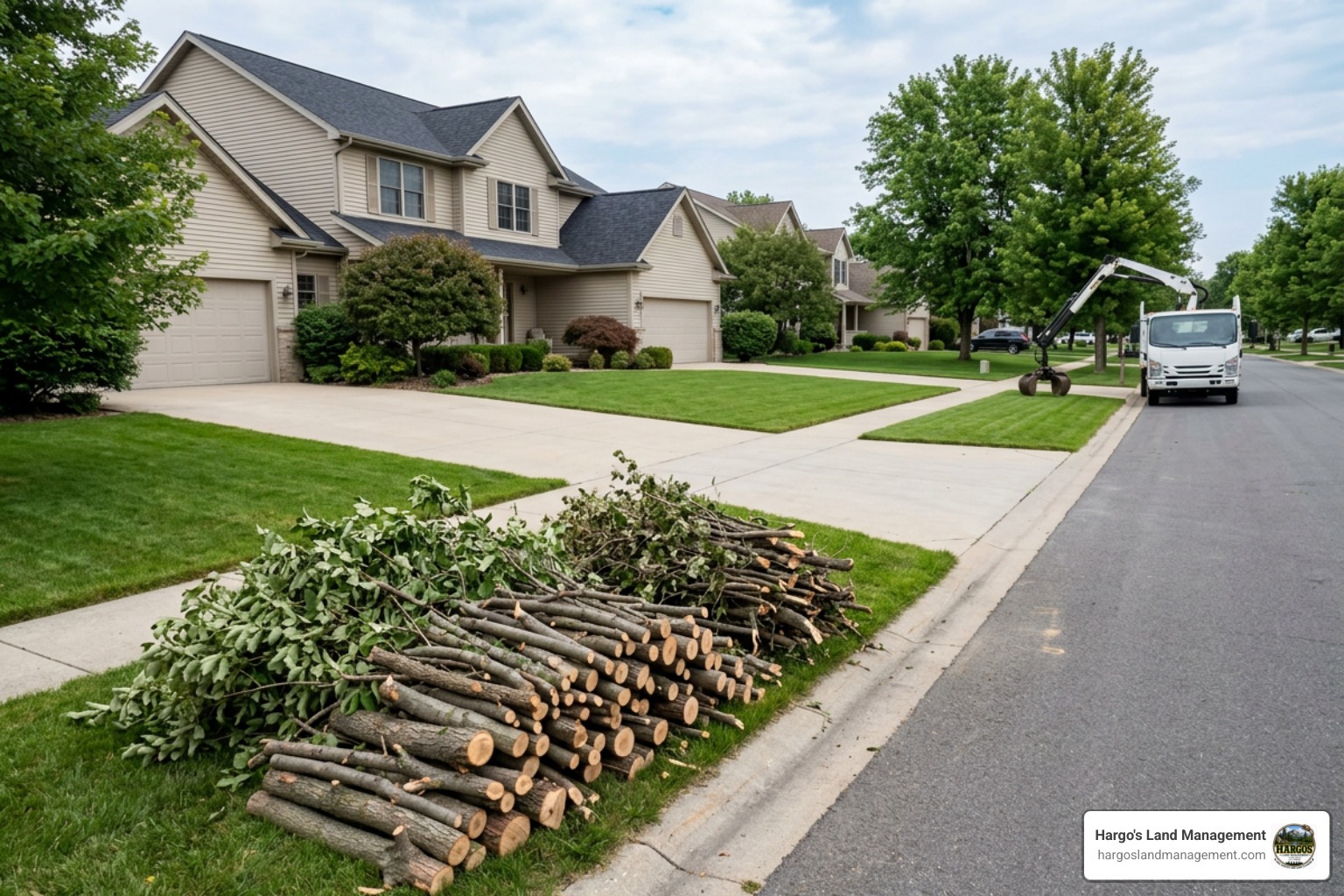
Smooth debris collection relies heavily on proper staging and clear property access. Preparing your site beforehand ensures the cleanup crew can operate heavy machinery safely without damaging existing landscape features, driveways, or underground utilities.
Selecting the Right Tree Debris Removal Service Provider
When vetting contractors, always verify that the business is fully licensed, bonded, and carries both general liability and worker’s compensation insurance. Operating heavy chippers, chainsaws, and hydraulic grapples carries inherent risks; an uninsured contractor puts you at financial liability for site injuries or structural damage.
Working with experienced professionals who understand tree biology and structural mechanics ensures your property is evaluated comprehensively. It’s often beneficial to protect your home with a certified arborist tree risk assessment to evaluate whether lingering standing trees pose hidden decay or root instability before finalizing your cleanup plans. An ISA certified arborist can identify structural defects in surviving trees that untrained laborers will inevitably miss.
Curbside Stacking Protocols and Heavy Machinery Access
For seamless curbside pickup, follow these standardized staging rules:
- Stack Height and Dimensions: Keep loose curbside piles under 4 feet tall and roughly 5 feet wide. Piles stacked taller can collapse into the roadway or block sightlines for passing motorists.
- Cut End Alignment: Point the thick, cut ends of limbs toward the street or access point.
- Maintain Clearances: Keep all debris piles at least 5 to 10 feet away from fire hydrants, mailboxes, utility boxes, parked cars, and low-hanging overhead power lines.
- Never Place Tarps Underneath: While it seems convenient for raking, mechanical grapple claws (“knuckles”) easily catch, tear, and ingest plastic tarps, jamming machinery and creating hazardous plastic waste.
- Segregate Materials: Keep clean wood, branches, and organic brush completely separated from dimensional lumber, nails, gravel, and household trash.
Disposal, Recycling, and Sustainable Wood Processing Options

Tossing green waste into standard landfills is an unnecessary waste of valuable organic material. Modern tree care prioritizes resource diversion, turning yard waste back into beneficial agricultural and landscaping commodities through proactive vegetation management. Regional wood recyclers process hundreds of thousands of tons of wood debris every year, keeping organic materials out of municipal waste streams.
On-Site Chipping, Mulching, and Firewood Conversion
Rather than paying hauling and tipping fees to send timber off-site, homeowners can repurpose fallen materials directly on their property:
- Mechanical Chipping: Utilizing professional wood chipping converts unsightly brush and branch piles into fresh wood chips. These chips can be spread across garden beds, walkways, and bare dirt to suppress weed growth, regulate soil temperature, and retain essential ground moisture.
- Firewood Splitting: Hardwood branches and trunk sections exceeding 6 inches in diameter can be bucked and split for fireplace or woodstove use. Allow freshly cut green wood to season in a dry, ventilated area for 6 to 12 months prior to burning to reduce creosote buildup and smoke production.
Municipal Hauling Rules and Illegal Dumping Regulations
If you plan to utilize municipal curbside collections or solid waste drop-off sites, you must strictly comply with local sanitation ordinances.
Dumping tree limbs, clippings, or stump grindings on public easements, city parkways, or vacant lots is strictly prohibited and classified as illegal dumping, resulting in heavy fines. Furthermore, placing loose debris in public rights-of-way where it obstructs sidewalks, bike lanes, or storm drains violates municipal sanitation codes. Always check your local waste management agency’s dimensional criteria (e.g., maximum bundle lengths of 4 feet tied with natural twine) before staging materials on city curbs.
Frequently Asked Questions About Tree Debris Removal
How much does tree debris removal cost on average?
On average, homeowners spend approximately $150 for residential tree debris removal, with standard projects spanning from $75 to $500. Small branch removals or single truckload sweeps start around $75 to $200, while extensive property clearings requiring multiple dump runs, log splitting, or crane support can reach $625 to $1,000+.
Who is responsible for tree debris that falls across a property line?
In most jurisdictions, responsibility follows the property line where the debris lands, regardless of where the tree originally grew. If your neighbor’s healthy tree falls onto your property due to natural causes (such as an act of nature or unexpected storm wind), you are typically responsible for clearing the debris on your side of the property boundary.
However, if the neighbor’s tree was provably diseased, dead, or neglected prior to falling—and you had previously provided documented notice of the hazard—the neighbor may be held legally liable for the resulting cleanup costs and property damages.
Can I dispose of large tree debris myself?
Small clippings, twigs, and light brush can be disposed of through municipal green-waste bins or residential compost piles. However, managing large tree limbs and trunk timber yourself requires heavy equipment, chainsaw proficiency, and hauling vehicles.
Renting commercial wood chippers or flatbed trailers often approaches or exceeds the cost of hiring an insured crew, while open-air burning is heavily restricted by regional air quality management districts and seasonal fire burn bans. For large, heavy materials, hiring a licensed contractor is almost always the safest and most cost-effective solution.
Conclusion
Tree debris accumulation isn’t just an eyesore; it poses genuine fire risks, harbors destructive pests, and creates hazardous conditions for your family and guests. Whether you are dealing with seasonal pruning fallout, clearing defensive buffer zones, or recovering from a severe windstorm, prompt and strategic cleanup protects your property’s value and safety.
By organizing piles correctly, understanding key pricing metrics, and prioritizing eco-friendly recycling methods like on-site wood chipping, you can restore your landscape quickly and affordably.
At Hargo’s Land Management, we are locally owned, licensed, bonded, and fully insured, specializing in fire-season defensible space creation, comprehensive land clearing, and rapid storm response throughout El Dorado County. When you need heavy logs shifted or hazardous brush cleared safely, don’t take unnecessary risks—schedule professional hazardous tree removal and cleanup with our expert team today!
External References for Further Reading:
- Learn more about defensible space and wildfire risk reduction guidelines from CAL FIRE.
- Explore professional tree care, maintenance, and safety resources through the International Society of Arboriculture.
CUSTOMER REVIEWS & TESTIMONIALS
We strive to exceed your expectations. See what our customers have to say.













CONTACT US TODAY
Serving El Dorado and Surrounding Counties
Locally owned and operated since 2013. Use our live chat support to get in touch about your land management needs today.
Request a free evaluation and estimate by completing our online form or book an on-site appointment.
El Dorado County: El Dorado Hills, Cameron Park, Shingle Springs, Coloma, Placerville, Camino, Pollock Pines, South Lake Tahoe and more...
Amador County: Jackson, Ione, and Surrounding Towns
Sacramento County: Sacramento and Surrounding Cities
Placer County: Roseville, Rocklin, Auburn, and Everything In Between
Nevada County: Penn Valley, Nevada City, Grass Valley