
What to Do Immediately When Storms Knock Trees onto Live Power Lines
Act Fast When a Tree Falls on a Power Line
If there is a tree down on a power line, treat every wire, branch, fence, puddle, and object nearby as energized. Stay at least 30 feet away, keep people and pets back, call 911, and report the hazard to your electric utility. Do not touch, cut, move, or drive over the tree or wires. Never assume the power is off because lights are out.
A storm-damaged tree can snap a pole, block a driveway or road, cause a neighborhood outage, and create arcing that may start a fire. The danger is especially serious in rural areas, where fallen limbs can contact fences, structures, and dry vegetation.
The utility must de-energize and secure the line before any tree removal or cleanup begins. First responders can establish a safe perimeter and manage traffic while utility crews handle the electrical hazard.
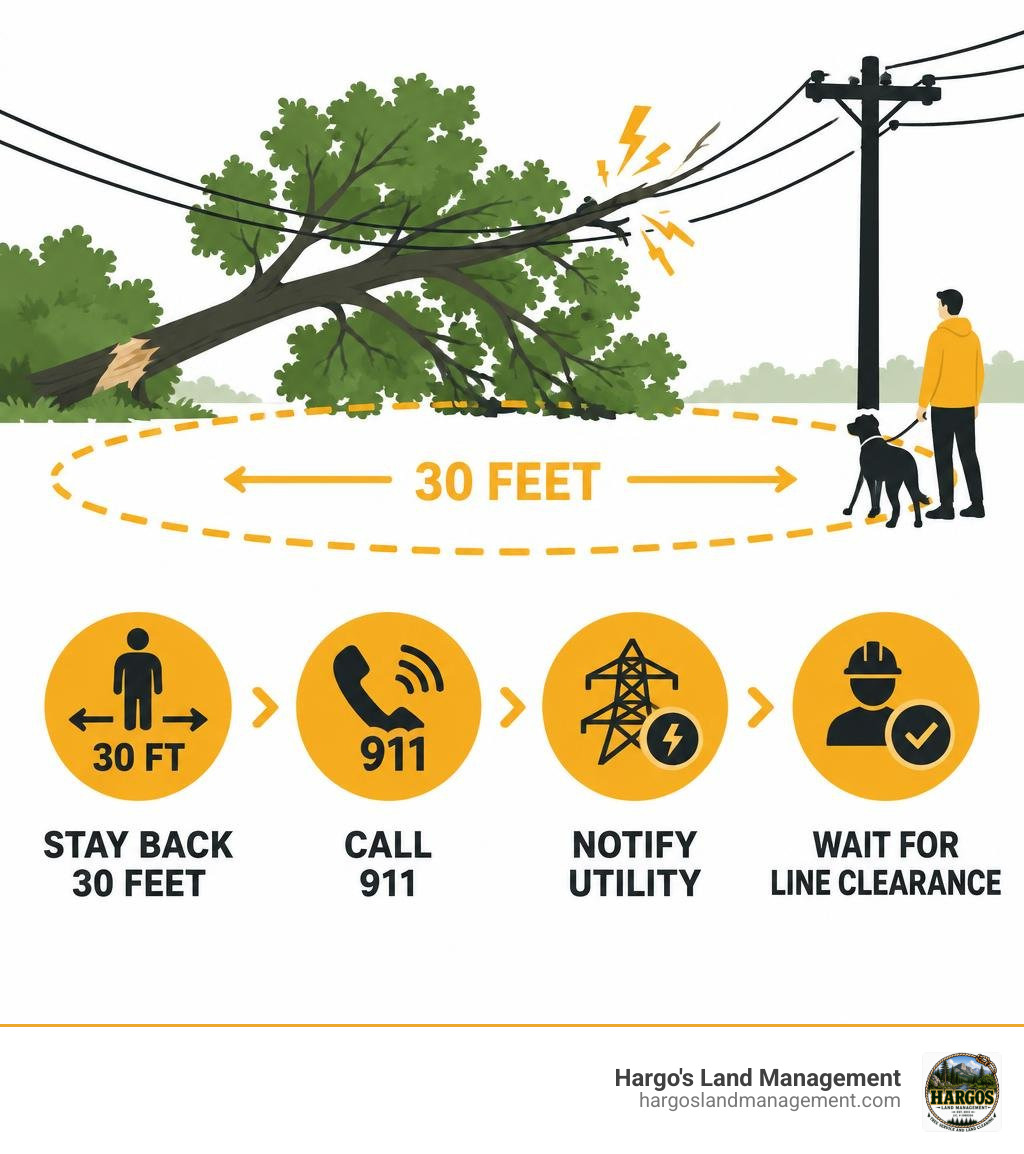
Tree down on power line helpful reading:
Immediate Dangers When You Spot a Tree Down on Power Line
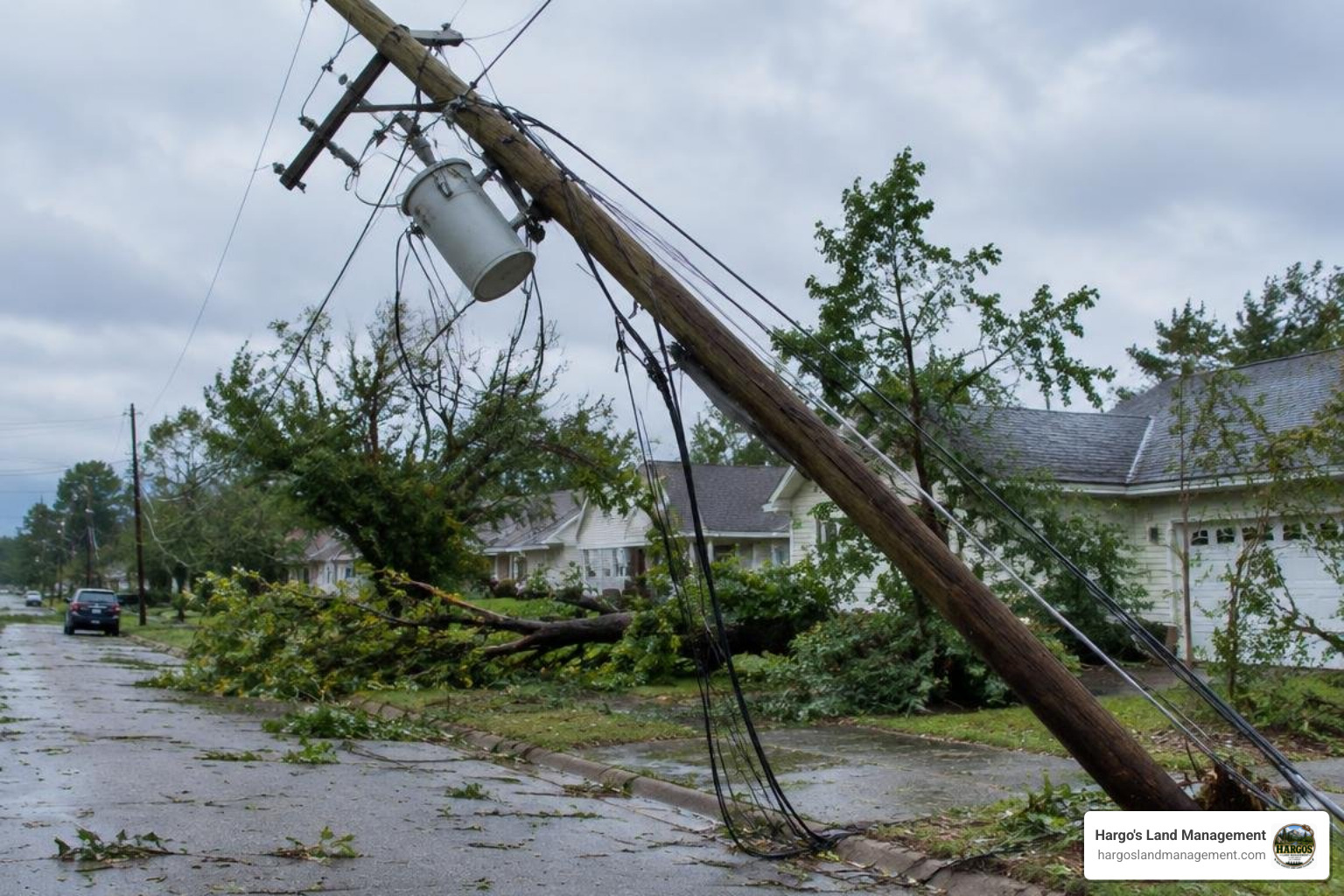
When severe winds, heavy snow, or torrential rains cause a mature tree to collapse across overhead power distribution lines, a calm suburban street or quiet rural driveway can instantly become a high-voltage hazard zone. The sheer physical weight of a falling trunk can snap heavy utility poles like matchsticks, pulling down transformers and hundreds of feet of high-tension electrical cabling.
The most critical danger during these events is electrocution. High-voltage distribution lines carry thousands of volts of electricity. When a tree rests on these lines, that electrical energy does not simply disappear—it actively seeks any conductive path to ground. Wood, moisture, asphalt, and metal fences can quickly become energized.
Additionally, arcing electrical currents generate intense heat that easily ignites dry timber, surrounding underbrush, or nearby structures. In severe cases, emergency responders document violent electrical arcing right outside residential properties, as detailed in this Citizen incident report on arced wires. When electrical discharge contacts dry fuels, structural fires or fast-moving brush fires can ignite within seconds.
Beyond the direct fire and shock hazards, fallen utility poles and entangled tree canopies regularly block entire roadways. This cuts off emergency access for ambulances, fire engines, and police cruisers, isolating neighborhoods precisely when urgent assistance is required.
Recognizing Hidden Electrical Risks and Arcing
Electricity behaves unpredictably when high-voltage lines contact trees, structures, or the soil. One of the deadliest phenomena associated with downed power lines is “ground gradient” or step potential. When a live conductor touches the ground, electricity fans out through the earth in concentric circles of decreasing voltage. If you walk near this zone, the difference in voltage between your feet can create an electrical circuit right through your body, causing severe injury or death.
Furthermore, many people assume that wood is a natural insulator. While dry, treated lumber offers some resistance to low voltages, living trees are loaded with moisture, sap, and minerals, making them exceptionally conductive to high-voltage currents. A green limb resting across a wire turns the entire tree into a live electrical hazard.
The danger escalates dramatically when fallen trees crush both wires and private structures simultaneously. Emergency dispatchers frequently encounter complex incidents where energized lines are pinned against outbuildings or homes, as seen in this Citizen report on structural wire hazards. In these high-risk scenarios, gutters, siding, and metal roofing can become energized, posing an invisible threat to anyone attempting to exit or approach the building.
Real-World Outage and Grid Disruptions
The infrastructural damage caused by falling trees is rarely confined to a single property. When a primary distribution line or utility pole snaps under extreme tension, the resulting grid disruption can cascade across whole utility circuits, plunging thousands of residents into darkness in an instant.
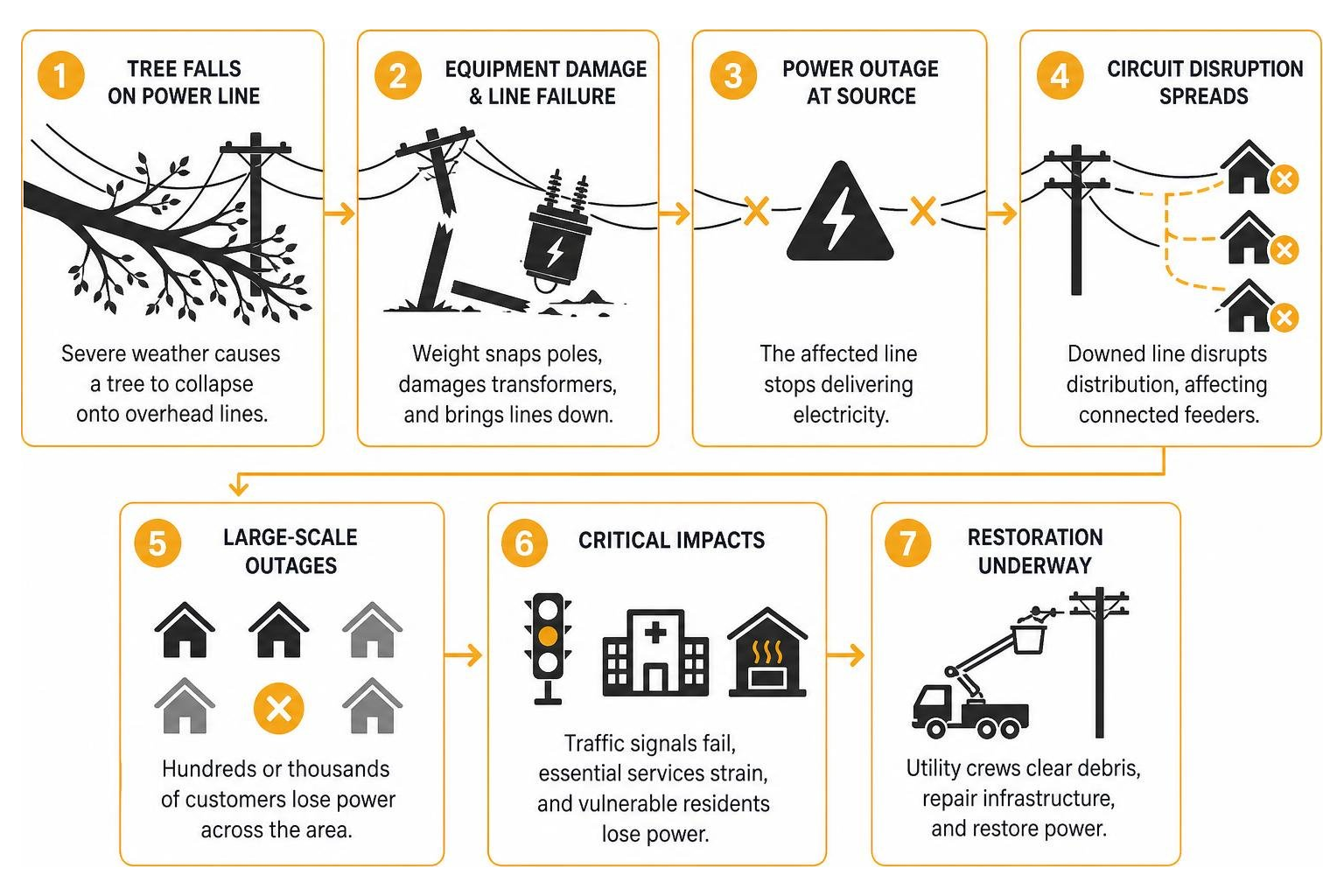
The sheer physical force of a falling oak or pine can sever main utility corridors. For instance, recent incidents demonstrate how a single structural failure can knock out service to massive portions of a city. Significant news coverage on severe power outages and snapped utility poles highlighted an event where a single falling tree snapped a pole in half, immediately knocking out power to over 4,000 Duke Energy customers and forcing emergency road closures.
Similarly, an oak tree collapse along Glenwood Avenue in Raleigh plunged more than 600 utility customers into prolonged blackouts while snarling regional transit. These large-scale disruptions shut down traffic signals, leave vulnerable residents dependent on emergency generators for heating and medical devices, and demand intensive, multi-agency repairs before neighborhoods can return to normal.
Step-by-Step Emergency Protocol for a Tree Down on Power Line Hazard

Discovering a downed tree entangled in electrical cables requires immediate, decisive, and cautious action. Missteps in the first few minutes can lead to catastrophic injuries. Here is the exact protocol you should follow:
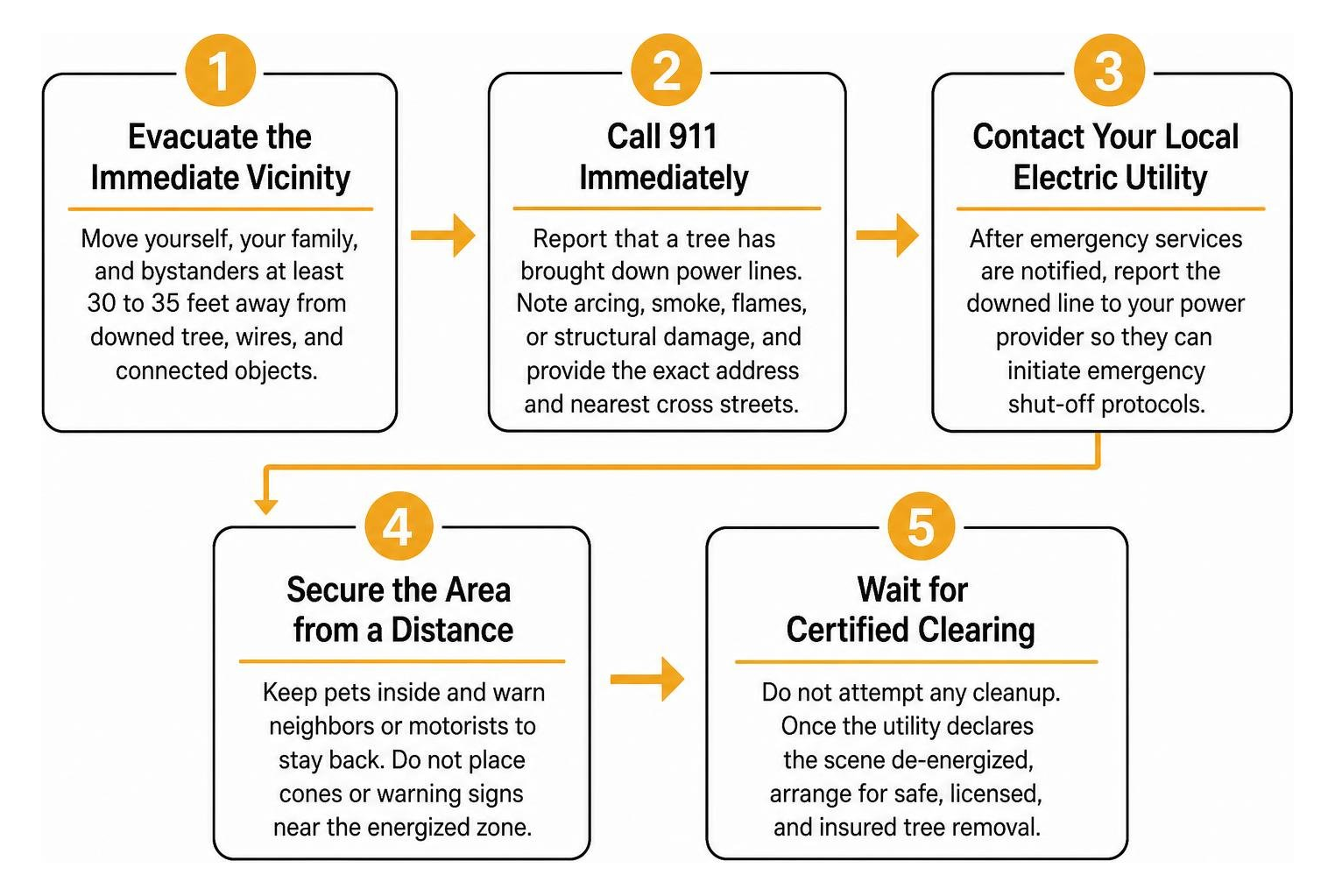
- Evacuate the Immediate Vicinity: Move yourself, your family, and any bystanders at least 30 to 35 feet away from the downed tree, wires, and any connected objects like fences or guardrails.
- Call 911 Immediately: Inform emergency dispatchers that a tree has brought down power lines. Specify whether you observe arcing, smoke, flames, or direct structural damage to buildings. Provide the exact address and nearest cross streets.
- Contact Your Local Electric Utility: Once emergency services are notified, report the downed line directly to your power provider (such as PG&E, Duke Energy, or Eversource) so their high-voltage grid dispatchers can initiate emergency shut-off protocols.
- Secure the Area from a Distance: Keep pets inside and warn neighbors or motorists to stay back. Never attempt to place physical cones or warning signs near the energized zone yourself.
- Wait for Certified Clearing: Do not attempt any cleanup on your own. Once the utility declares the scene de-energized, arrange for safe high-risk tree removal solutions for hazardous trees near you through a fully bonded, licensed, and insured crew.
Crucial Steps While Awaiting First Responders
While you wait for emergency crews to arrive on scene, maintaining an uncompromising perimeter is your primary responsibility. Downed conductors can violently jump or whip across the pavement if automatic grid reclosers attempt to test and restore power downstream.
Keep all household pets secured indoors. Animals cannot perceive electrical step potential and will instinctively investigate fallen limbs, leading to tragedy. If the fallen tree has blocked access to your street or driveway, direct approaching vehicles to turn around from a safe distance well outside the hazard perimeter.
Emergency logs frequently detail how major street blockages compound neighborhood risks during storms, such as this Citizen dispatch on street tree entanglements, where fallen timber simultaneously disabled municipal transit and active utility lines. Above all, remain in a secure location and resist the urge to retrieve personal property near the downed cables.
How Utility Crews and Emergency Teams Coordinate
Resolving a high-voltage tree entanglement requires seamless coordination between local fire departments, law enforcement, public works departments, and electric utility operators.
First responders, such as municipal firefighters or CAL FIRE units, typically arrive first. Their primary role is scene management: establishing perimeter tape, blocking traffic, and evaluating nearby structures for potential fire spread. However, firefighters cannot cut or move the tree until line technicians officially de-energize the circuit.
When utility lineworkers arrive, they use specialized remote-switching equipment or physical cutouts to isolate and ground the downed section of wire. Real-time incident logs, such as this Citizen alert on tree on wire incidents, show how quickly fire and utility teams exchange critical site data to safely secure live hazards. Once the lines are confirmed completely dead and grounded, specialized tree-clearing crews can move in with heavy rigging, cranes, and chainsaws to section the timber without fear of electrocution.
Post-Emergency Clearing, Debris Removal, and Insurance Coordination
Once electric utility technicians have isolated the power grid, grounded the lines, and repaired the primary infrastructure, property owners are often left with massive fallen trunks, splintered limbs, and scattered debris across their yards, driveways, and roofs. Navigating the aftermath requires a structured approach to ensure safety and secure proper financial reimbursement.
First, document all damage meticulously before any cleanup begins. Take high-resolution photos and video of the fallen timber, crushed fences, roof damage, and broken landscape features from safe vantage points. Then, contact your insurance provider to open a claim.
Handling the aftermath of severe weather demands seasoned professionals who specialize in storm cleanup and understand how to navigate carrier requirements. Working with an experienced team ensures smooth coordination for storm damage tree removal insurance claims and safe cleanups, protecting you from out-of-pocket delays and disputed estimates.
Managing Debris and Property Cleanup Safely
Clearing heavy storm debris after an electrical emergency is far more complex than standard landscaping. Fallen trunks are frequently under extreme mechanical tension or pinned beneath twisted communication wires and structural framing. Cutting these limbs without proper rigging knowledge can cause violent kickbacks or sudden weight shifts that crush nearby structures.
Professional crews systematically break down massive storm-damaged trees using advanced rigging, hydraulic cranes, and industrial wood chippers. Understanding everything to expect from a tree debris removal service will give you peace of mind as the site is cleared, chipped, and restored to safe condition.
In many instances, trees that fall across property lines or utility easements involve specialized insurance documentation. Utilizing professional insurance clearing services guarantees that all debris processing, stump remediation, and emergency hauling meet the strict line-item standards required by major insurance adjusters.
Verifying Contractor Credentials for High-Voltage Site Clearing
Never hire an unvetted “fly-by-night” contractor who knocks on your door with a chainsaw following a severe storm. Storm-clearing sites remain inherently hazardous due to unstable ground, compromised root systems, and nearby electrical infrastructure. Hiring an uninsured or underinsured tree service exposes property owners to massive personal liability if an untrained worker is injured or causes secondary damage to utility connections.
Always verify that any tree service operating on your land carries comprehensive general liability, commercial auto, and active workers’ compensation insurance. Learning why does proof of tree removal insurance matter so much can save you from tens of thousands of dollars in legal fees and structural repair bills. Reputable, locally owned contractors will gladly provide active certificates of insurance and bonding verification before firing up a single saw.
Proactive Prevention: Safeguarding Your Property from Power Line Tree Failures
While violent storms are unavoidable, the vast majority of catastrophic tree failures near power lines can be prevented through proactive property management. Weakened root plates, internal fungal rot, overextended canopies, and poor soil drainage are all warning signs that can be identified and corrected long before a gale-force wind strikes.
Investing in preventive tree care drastically reduces the risk of structural damage, prolonged power outages, and life-threatening emergencies. Scheduling a thorough arborist tree risk assessment allows certified experts to inspect mature trees for hidden defects, assess wind-load vulnerability, and recommend strategic pruning or removal. Partnering with a full-spectrum tree service ensures your property maintains healthy, resilient trees that coexist safely with surrounding utility lines.
Identifying Unstable Trees Near Overhead Utilities
Property owners should routinely inspect mature trees located within falling distance of overhead utility lines, especially before winter storms or high-wind seasons arrive. Look for the following red flags:
- Dead or Hanging Branches: Large, brittle deadwood in the upper canopy (known as “widowmakers”) can easily snap and fall onto wires in moderate breezes.
- Trunk Cavities and Fungal Growth: Conks, mushrooms, or large hollows at the base of the trunk indicate extensive internal decay that weakens structural integrity.
- Severe Lean and Root Heaving: A tree that has recently begun to lean, accompanied by cracked, mounded soil or exposed root plates on the opposite side, is at imminent risk of complete uprooting.
- Co-Dominant Stems with Included Bark: Trees with tight, “V-shaped” trunk unions are prone to splitting down the middle under heavy wind or snow loads.
If an inspection reveals critical instability, prompt professional intervention is essential. You can watch removing a hazardous tree to see how precision felling and sectioning techniques safely eliminate high-risk timber without threatening nearby power infrastructure.
Addressing Infrastructure Resilience and Climate Factors
As climate patterns shift, communities across the nation are experiencing more frequent severe storms, atmospheric rivers, prolonged droughts, and catastrophic wildfire conditions. Drought-stressed trees are far more susceptible to bark beetle infestations and fungal decay, leaving brittle standing timber that collapses easily under storm conditions.
When overhead lines are struck by failing timber, the resulting sparks can ignite fast-moving wildfires, particularly in heavily forested or wildland-urban interface (WUI) zones like Northern California’s foothills. Forward-thinking property owners and municipal planners are recognizing the urgent need for grid hardening and comprehensive vegetation management.
A thoughtful analysis of storm grid disruptions and infrastructure resilience underscores that maintaining aggressive tree-clearance zones, establishing defensible space, and integrating smart grid fault-detection technologies are vital steps toward protecting communities from cascading environmental and infrastructural disasters.
Frequently Asked Questions About Tree Down on Power Line Emergencies
What is the very first thing to do if a tree falls on a live power line?
The absolute first step is to stay away and establish an immediate safety perimeter of at least 30 to 35 feet from the tree, wires, and any connected structures or fences. Treat every wire as fully energized and lethal, even if it is not sparking, humming, or smoking. Once you are in a safe location, call 911 immediately to dispatch emergency first responders, and then contact your local electric utility provider to report the downed line.
Can property owners cut a tree off a power line themselves?
No. Under no circumstances should a homeowner, property manager, or uncertified tree cutter attempt to prune, chainsaw, pull, or touch a tree that is in contact with or near a power line. Doing so carries an extreme risk of fatal electrocution. High-voltage electricity can easily arc across air gaps or travel down wet wood, chainsaws, and pole saws. Only certified line-clearance arborists and utility technicians are legally authorized and equipped to operate near high-voltage lines.
Who pays for the removal of a tree that falls across electrical wires?
Responsibility generally depends on the location of the tree’s base and utility easement boundaries:
- Utility Responsibilities: Electric utility companies are typically responsible for clearing limbs directly contacting their primary distribution lines to restore power and ensure safety. However, they usually only cut enough of the tree to clear the line and make the area safe; they rarely haul away the remaining logs or debris from private property.
- Homeowner and Insurance Responsibilities: The remaining debris removal and property repairs fall to the property owner whose land the tree damaged. Most standard homeowners insurance policies cover the cost of removing storm-damaged trees that damage insured structures, subject to your policy deductible and coverage limits. If a healthy tree from a neighbor’s yard falls onto your lines or property due to an “Act of God” storm, your own insurance policy typically covers your property damage.
Conclusion
A storm-damaged tree collapsing onto live utility lines creates an instantaneous, life-threatening emergency that demands extreme caution. By immediately maintaining a 30-foot perimeter, alerting 911, and coordinating with utility providers, you protect your family, neighbors, and first responders from severe electrical shocks and fire hazards.
Once the immediate danger has passed and power technicians have rendered the grid safe, property owners must rely on certified, properly insured professionals to handle the complex, high-stakes cleanup process. At Hargo’s Land Management, we specialize in high-risk property clearing, defensible-space creation, and storm damage remediation across El Dorado County—including Placerville and South Lake Tahoe. As a locally owned, fully licensed, bonded, and insured team, we provide free on-site estimates and rapid, fire-safety-focused service when you need it most.
Protect your home and landscape before the next major storm strikes. Contact our team today for expert hazardous tree removal and ensure your property remains safe, clear, and resilient year-round.
CUSTOMER REVIEWS & TESTIMONIALS
We strive to exceed your expectations. See what our customers have to say.














CONTACT US TODAY
Serving El Dorado and Surrounding Counties
Locally owned and operated since 2013. Use our live chat support to get in touch about your land management needs today.
Request a free evaluation and estimate by completing our online form or book an on-site appointment.
El Dorado County: El Dorado Hills, Cameron Park, Shingle Springs, Coloma, Placerville, Camino, Pollock Pines, South Lake Tahoe and more...
Amador County: Jackson, Ione, and Surrounding Towns
Sacramento County: Sacramento and Surrounding Cities
Placer County: Roseville, Rocklin, Auburn, and Everything In Between
Nevada County: Penn Valley, Nevada City, Grass Valley