Secure Tree Removal Assistance Before Dangerous Trees Cause Costly Property Damage
Find Tree Removal Assistance Before a Hazard Becomes an Emergency
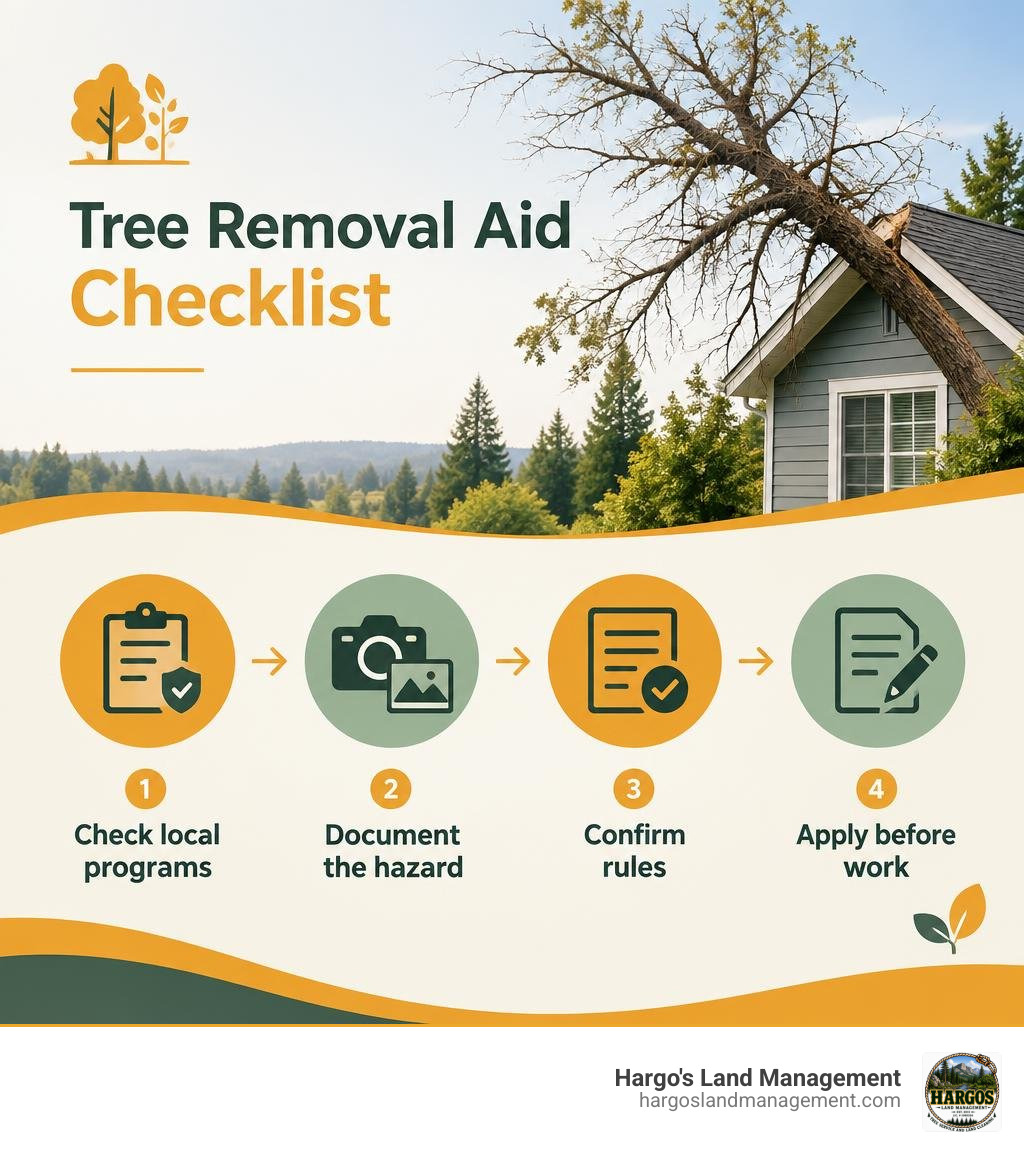
Need help paying to remove a dangerous tree? Start with your city or county planning office and local fire safe council. Ask whether they offer tree removal grants, cost-sharing, or defensible space help for your property. Programs vary by location and funding, so check eligibility before hiring a crew. Take photos of the tree, get a professional risk assessment if required, and ask what permits and contractor bids you need.
For El Dorado County homeowners, the first question is whether the tree threatens a home, access road, or power line. If it is touching a line or poses an immediate danger, keep clear and contact the utility or emergency services. Financial aid applications can wait; your safety cannot.
Tree removal assistance program near me word list:
Types of Financial Aid Available for Hazardous Tree Mitigation
A dead, diseased, or heavily leaning tree can keep you up at night—especially when severe winds kick up or wildfire season approaches. The financial burden of taking down a massive pine, oak, or cedar often causes property owners to hesitate. Fortunately, several public and private initiatives offer financial relief to help homeowners eliminate these hazards safely.

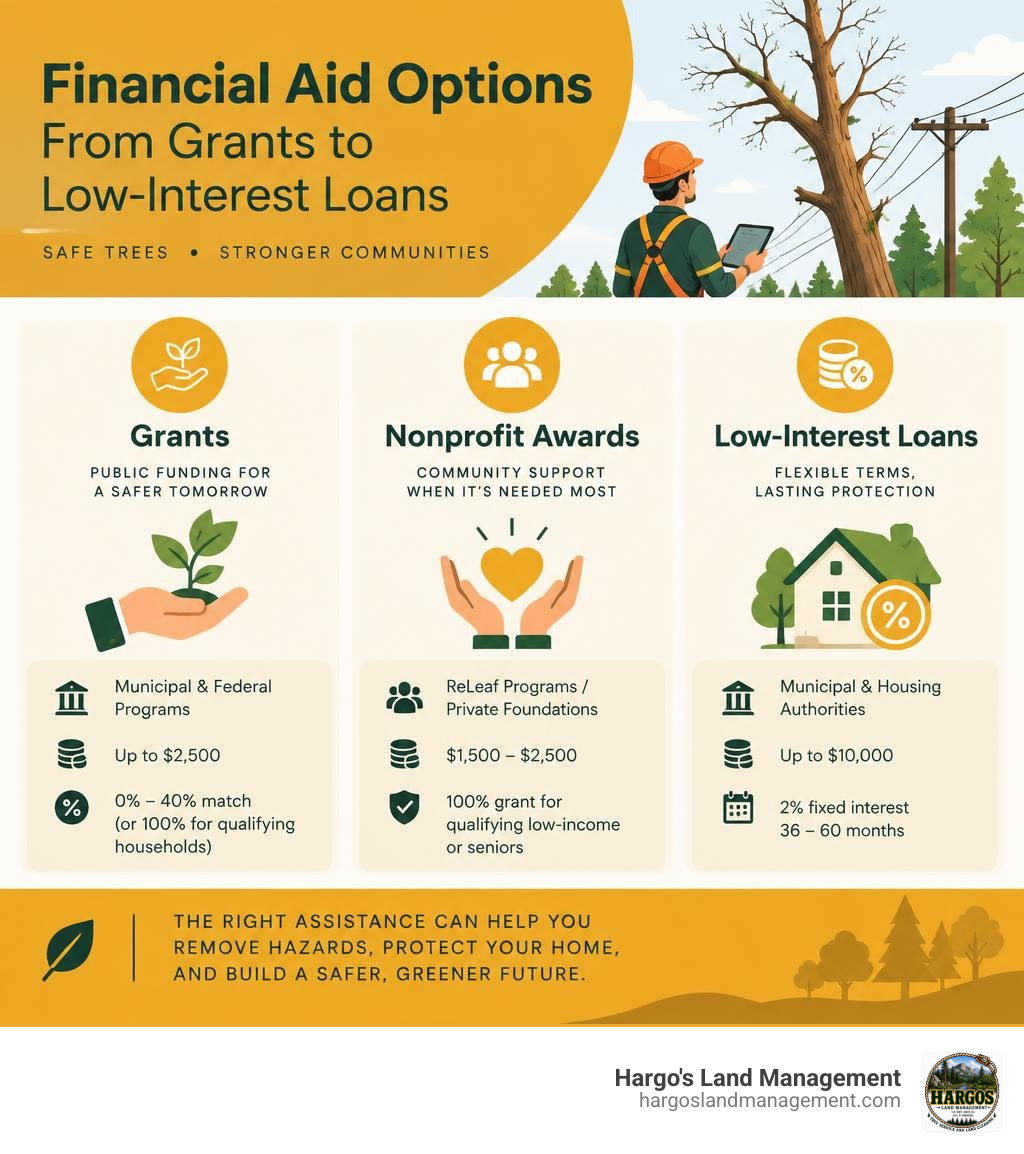
Assistance programs typically fall into three buckets: cost-share grants, non-profit hardship awards, and low-interest municipal loans. Understanding which funding stream matches your situation saves precious time and helps you secure aid before disaster strikes.
| Program Type | Typical Funding Source | Award / Loan Maximum | Matching / Repayment Terms |
|---|---|---|---|
| Municipal Urban Forestry Grants | USDA Forest Service / Clean Energy Funds | $2,000 – $2,500 | 0% – 40% homeowner match; direct contractor payment |
| Community Non-Profit Awards | ReLeaf Programs / Private Foundations | $1,500 – $2,500 | 100% grant for qualifying low-income or seniors |
| Municipal Defensible Space Loans | Housing & Redevelopment Authorities | Up to $10,000 | 2% fixed interest; 36 to 60-month repayment terms |
| Right-of-Way (ROW) Rebates | City Public Works / ARPA Funds | $500 – $2,000 | Cost-share (up to 75% reimbursement) |
Municipal Grants and Urban Forestry Rebates
Local governments regularly allocate federal funds—including allocations from the USDA Forest Service, the Inflation Reduction Act, and regional clean energy funds—to maintain the urban canopy and eliminate immediate physical dangers.
For example, homeowners looking to Apply for Tree Care Assistance through programs funded by municipal clean energy initiatives can receive complete coverage for hazard evaluations, canopy pruning, and dead tree removals without spending a dime out of pocket. In other regions, initiatives like the municipal Tree Assistance Program provide tiered grants covering 60% to 100% of removal costs—capping awards at $2,500 for high-risk removals while reserving funds for mandatory replanting.
These municipal initiatives typically focus on:
- High-risk dead or dying trees on owner-occupied properties.
- Hazard mitigation along critical access routes and evacuation corridors.
- Canopy health improvements that limit the spread of invasive pests.
Nonprofit and Community ReLeaf Initiatives
When municipal budgets are tight, nonprofit organizations and regional arboricultural associations step in to assist vulnerable populations. Many state arborist foundations run specialized programs, such as the Tree Removal Assistance Program — Georgia Arborist Association, which provides one-time awards for low-income homeowners and seniors facing structural hazards from dead or failing trees.
Similarly, local civic partnerships like the Ferguson Neighborhood Tree Assistance Program leverage community block development funds and ARPA resources to cover up to 75% of removal costs (up to $2,500 per property). These programs prevent property damage while ensuring that dangerous tree take-downs are completed by fully licensed, insured arborists rather than well-meaning but unqualified volunteers.
Low-Interest Loans and Defensible Space Subsidies
If your household income puts you just outside direct grant eligibility, low-interest revolving loan funds provide a sensible middle ground. Programs like the WoodCHIP (Tree Removal / Replanting Program) – Austin Housing & Redevelopment Authority offer loans up to $10,000 at a fixed 2% interest rate with flexible five-year terms.
For property owners throughout California foothill communities and El Dorado County, removing heavy fuel loads and beetle-killed timber is essential for wildfire defense. Proactive planning makes a significant difference, and budgeting for tree removal and stump grinding services through low-cost financing allows you to clear wide defensible space perimeters without draining emergency savings.
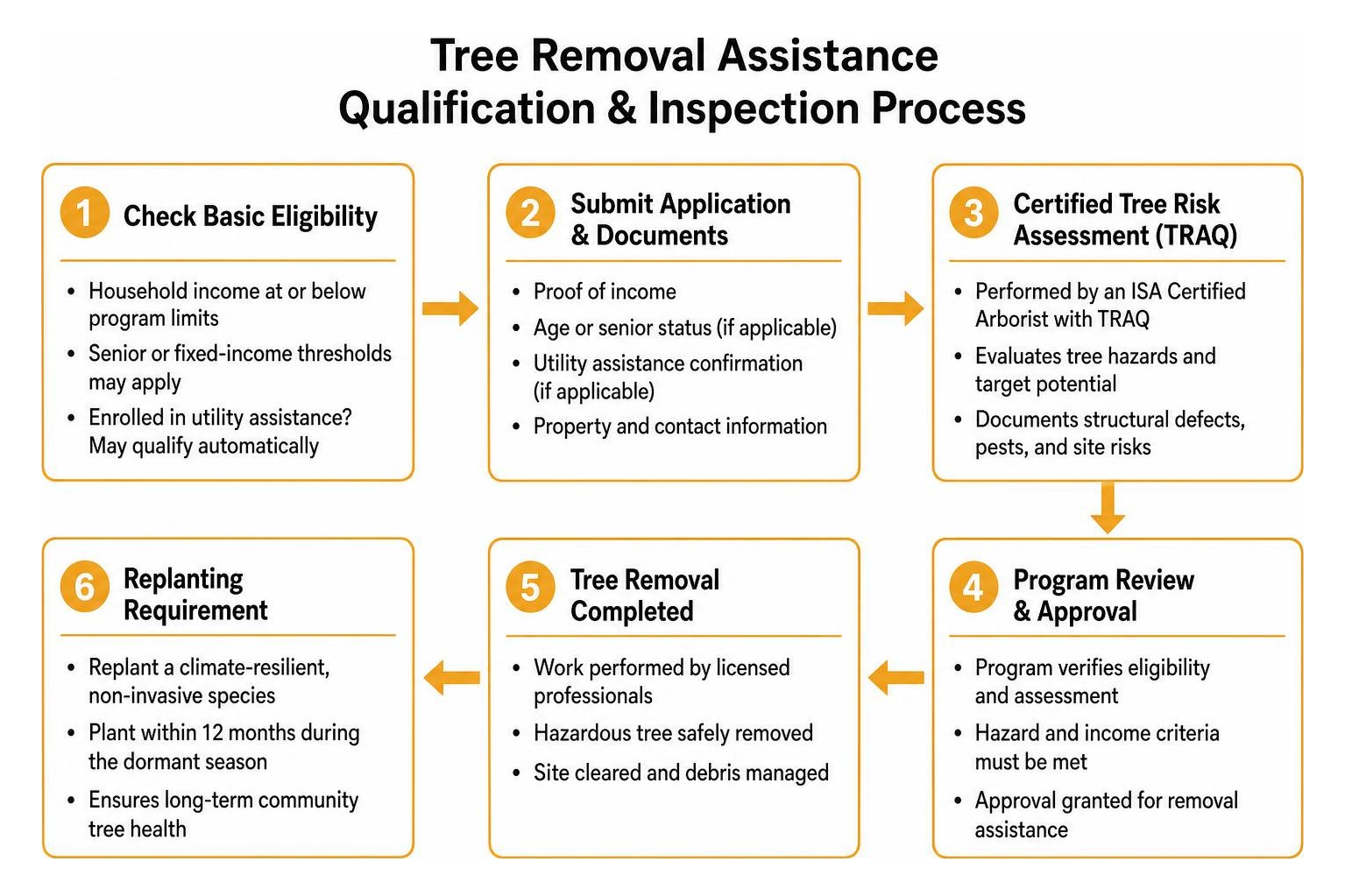
How to Qualify for a Tree Removal Assistance Program Near Me
Securing public or non-profit funding requires meeting distinct administrative criteria. Because grant pools are finite, administrators prioritize properties where hazard level, household income, and neighborhood vulnerability intersect.
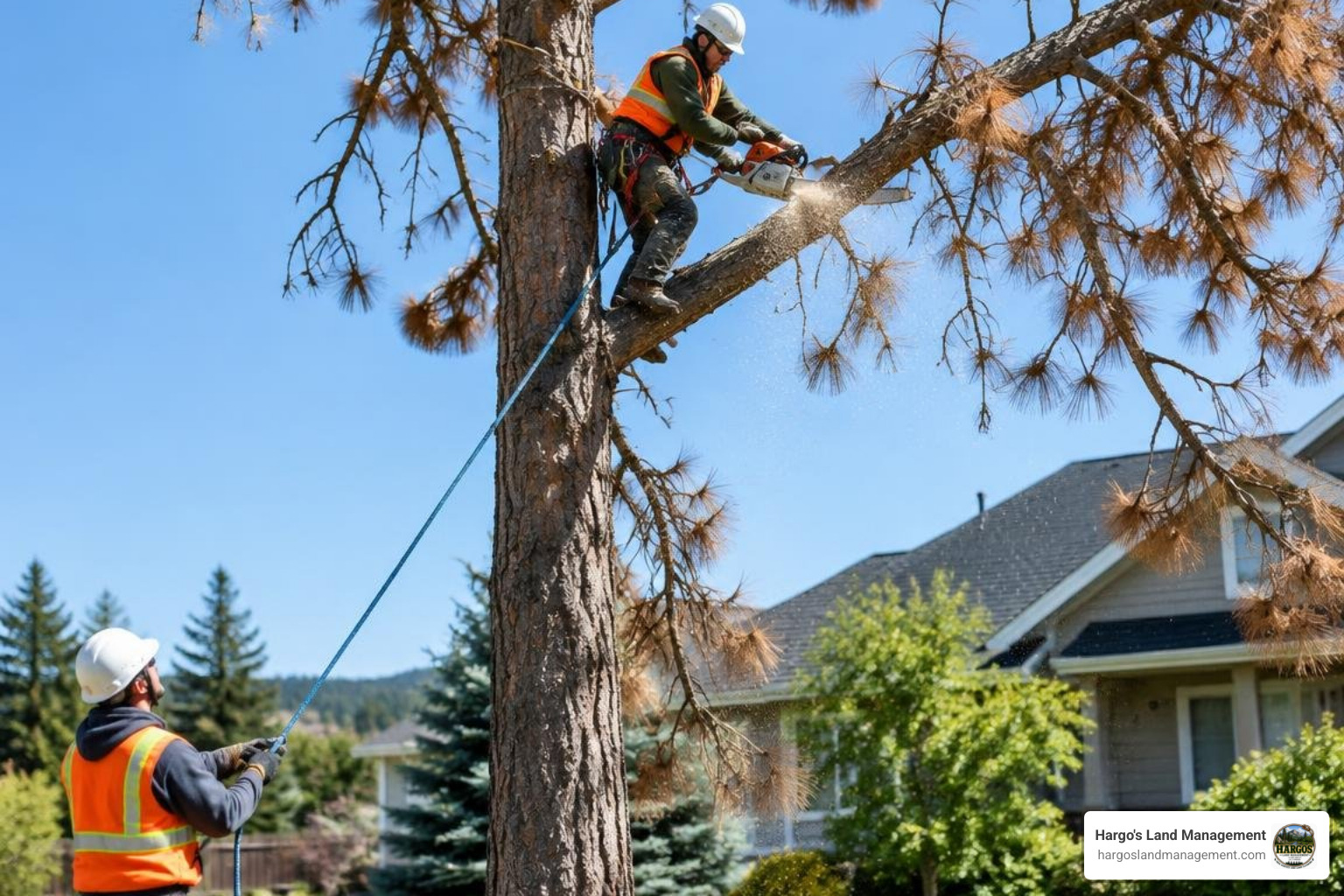
When seeking a tree removal assistance program near me, you will need to demonstrate that the targeted tree presents an authentic hazard and that your household meets local socioeconomic benchmarks.
Income Verification and Area Median Income Thresholds
Most public aid programs align their qualification standards with federal Department of Housing and Urban Development (HUD) guidelines:
- Area Median Income (AMI) Caps: Programs commonly require household incomes to fall at or below 60% to 80% of the local Area Median Income. For instance, single-person household caps might sit around $50,600, while a four-person household could qualify at up to $74,150 depending on regional living costs.
- Senior and Fixed-Income Streams: Senior citizens (typically aged 65+) frequently qualify under streamlined thresholds (such as annual household incomes at or below $40,000) when combined with an active primary homestead exemption.
- Automatic Qualification via Utility Assistance: If you are already enrolled in your city’s low-income water, power, or heating assistance program, many municipal forestry departments will fast-track your tree assistance paperwork without requiring redundant tax filings.
Mandatory Certified Tree Risk Assessments and Species Guidelines
Financial aid programs require verification from an experienced professional before approving tree felling. You cannot simply submit a photo of a tree you dislike; funding boards require documentation from an ISA Certified Arborist holding a Tree Risk Assessment Qualification (TRAQ).
During a certified arborist tree risk assessment, the inspector evaluates:
- Structural defects such as trunk cavities, root rot, fungal conks, or severe lean.
- Target potential (proximity to roofs, utility connections, or public thoroughfares).
- Pest infestations, particularly trees decimated by bark beetles, Dutch Elm Disease, or Emerald Ash Borer.
Municipal programs also enforce strict replanting rules. When a hazardous tree is removed using public funding, administrators frequently mandate that you replant a climate-resilient, non-invasive species within 12 months during the dormant planting season.
Key Application Strategies and Program Deadlines for 2026
Grant review cycles move quickly. If you submit incomplete documentation or wait until funding windows close, your application could sit on a waitlist for months while structural risks mount.
Finding a Municipal Tree Removal Assistance Program Near Me in 2026
As of September 2026, urban forestry grant programs are actively processing applications under seasonal windows:
- Spring Application Windows: Many cities accept applications between March 1 and May 1 for planned summer and fall tree mitigation.
- Fall Application Windows: Secondary cycles typically open August 1 through October 1 to clear storm risks ahead of winter weather and spring windstorms.
- Waitlist Prioritization: If your municipality’s funding allocation is fully committed, ask to be placed on the priority waitlist. Many agencies receive supplemental allocations from clean energy and wildfire resiliency funds mid-fiscal year.
Working with an experienced provider of tree service ensures your tree condition reports, contractor bids, and timeline estimates meet municipal review boards’ exacting standards.
Step-by-Step Application Process for a Tree Removal Assistance Program Near Me
To navigate the application smoothly, follow this practical checklist:
- Gather Ownership & Financial Records: Prepare recent federal tax returns, W-2s, utility discount verifications, proof of homeowner’s insurance, and confirmation of paid property taxes.
- Document the Tree Hazard: Take high-resolution photographs showing the entire tree, wide shots capturing its proximity to structures or power lines, and close-ups of trunk decay, dead branches, or cracking.
- Secure Qualified Contractor Bids: Most cost-share and grant programs require one to two detailed estimates from licensed, bonded, and insured contractors.
- Submit Application to Grant Administrator: Send complete forms, liability waivers, and assessments to the designated municipal or foundation review committee.
- Await Written Pre-Approval: Never cut down the tree before receiving formal authorization; grant programs will not reimburse work executed prior to application approval.
- Execute and Submit Proof of Completion: After our crew performs the safe high-risk tree removal solutions for hazardous trees near you, submit paid invoices and post-work photos to unlock your grant reimbursement or direct contractor disbursement.
Frequently Asked Questions About Tree Removal Financial Assistance
What income level qualifies for hazardous tree removal grants?
Most municipal assistance programs establish income cutoffs between 60% and 80% of your county’s Area Median Income (AMI). Senior citizens on fixed incomes (often defined as earning $40,000 or less annually) and households already participating in municipal utility bill discount programs generally receive priority scoring.
Does insurance or municipal aid cover stump grinding and replanting?
Financial assistance terms vary widely by jurisdiction:
- Grants: Urban forestry grants frequently exclude stump grinding from standard funding, focusing purely on dropping the physical hazard. However, many provide a free replacement sapling or a planting stipend (around $450) to support urban canopy recovery.
- Loans: Low-interest housing loans (such as WoodCHIP) explicitly allow stump grinding and replacement tree planting to be rolled into the total loan balance.
- Homeowners Insurance: Standard homeowner policies rarely pay for stump removal unless the tree fell during a covered peril and directly damaged an insured structure.
Can I apply for tree removal funding if the tree is located in a public right-of-way?
Yes. If the hazardous tree grows within the public right-of-way (ROW) bordering your property, specific municipal programs offer dedicated cost-shares. In many cities, ROW assistance programs cover up to $2,000 for removal and replacement, requiring only a preliminary inspection by a municipal arborist before work begins.
Conclusion
A compromised, dead, or diseased tree is a ticking clock. Delaying action out of concern over upfront expenses can lead to catastrophic structural damage, power outages, or personal injury during sudden severe weather or dry, high-wind fire conditions.
At Hargo’s Land Management, we specialize in high-efficiency land clearing, fire-season defensible-space creation, and complex hazardous tree removal throughout El Dorado County, including Placerville and South Lake Tahoe. As a locally owned, licensed, bonded, and insured team, we provide property owners with honest guidance, detailed itemized proposals for grant submissions, and rapid, safety-focused execution.
Do not wait for a structural failure to address dangerous timber on your property. Book online or contact our team today to schedule your free on-site estimate and protect your home with confidence.
CUSTOMER REVIEWS & TESTIMONIALS
We strive to exceed your expectations. See what our customers have to say.













CONTACT US TODAY
Serving El Dorado and Surrounding Counties
Locally owned and operated since 2013. Use our live chat support to get in touch about your land management needs today.
Request a free evaluation and estimate by completing our online form or book an on-site appointment.
El Dorado County: El Dorado Hills, Cameron Park, Shingle Springs, Coloma, Placerville, Camino, Pollock Pines, South Lake Tahoe and more...
Amador County: Jackson, Ione, and Surrounding Towns
Sacramento County: Sacramento and Surrounding Cities
Placer County: Roseville, Rocklin, Auburn, and Everything In Between
Nevada County: Penn Valley, Nevada City, Grass Valley