
Beginner Tree Trimming Mistakes and How to Avoid Them
Tree Trimming: Avoid the Cuts That Cause Damage
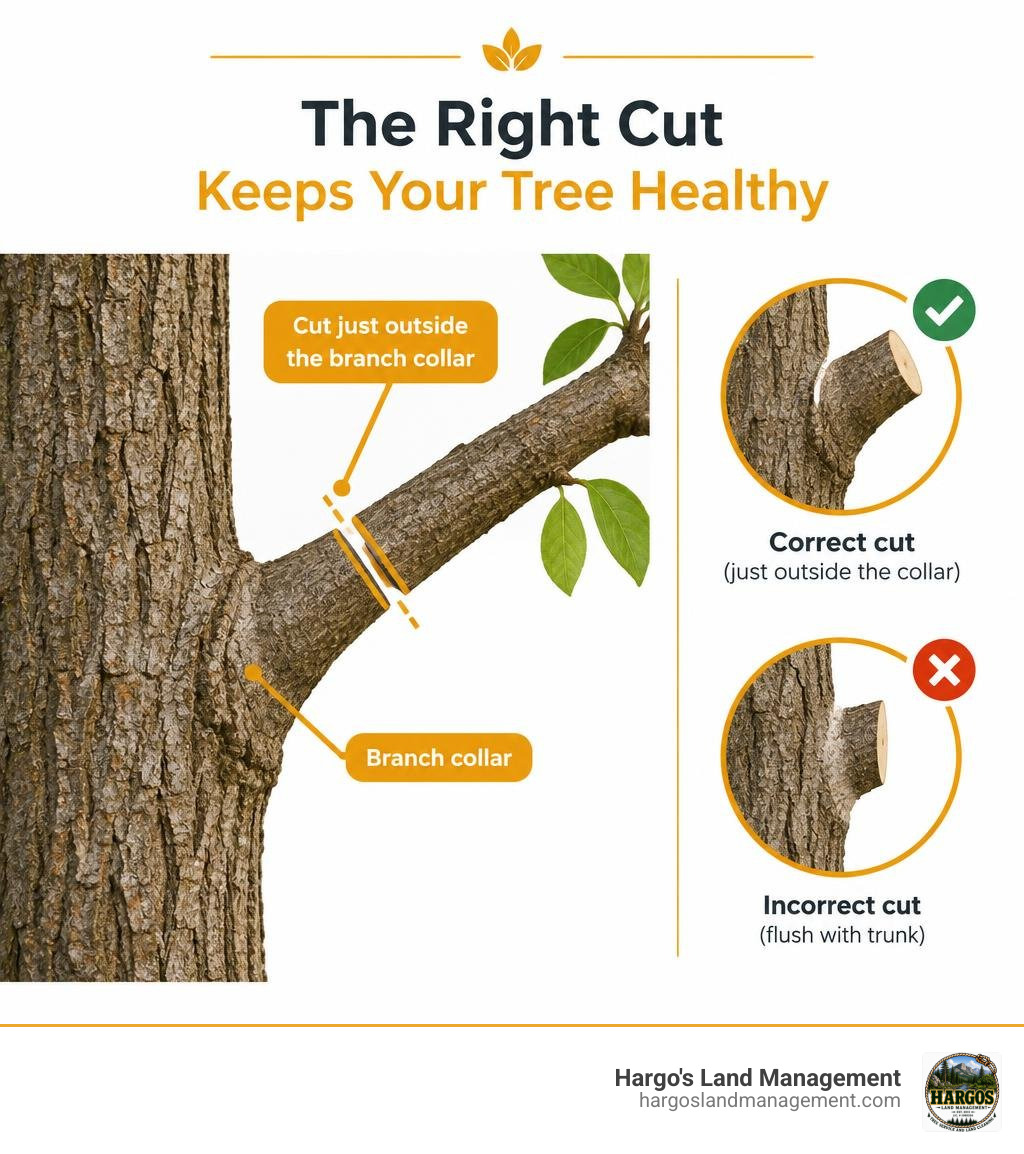
Good tree trimming starts with a reason for every cut. Remove small dead or rubbing branches, and cut just outside the branch collar, the slightly raised area where a branch meets the trunk. Never cut flush against the trunk or top a tree to make it shorter. Both can leave it weak and more likely to need work later.
For larger limbs, storm damage, or any tree near a power line, stop and call a qualified professional. On a large El Dorado County property, careful pruning can reduce falling-branch hazards while keeping healthy trees that add shade and curb appeal.
Trees provide immense ecological and economic value to our communities. In urban environments, a healthy canopy acts as a natural powerhouse. For example, municipal studies show that an extensive urban canopy can store over 332,000 tons of carbon in its wood, sequester thousands of tons of emissions annually, remove hundreds of thousands of pounds of air pollutants, and deliver millions of dollars in stormwater detention services. Yet, when unmaintained or pruned incorrectly, those same assets can quickly turn into hazardous liabilities.
Critical Tree Trimming Mistakes That Damage Your Landscape
Pruning a tree is not simply giving it a quick haircut; it is performing minor surgery on a living organism. When homeowners head into the yard with a pair of shears or a chainsaw without understanding tree physiology, they often cause irreversible structural harm.
The most common blunders include:
- Tree Topping: Indiscriminately lopping off the upper canopy to reduce height.
- Flush Cuts: Cutting a limb completely smooth against the trunk, eliminating the tree’s natural healing mechanism.
- Stub Cuts: Leaving long pegs of dead wood sticking out that cannot heal over and invite wood-boring insects.
- Lion-Tailing: Stripping all interior foliage and leaving foliage only at branch tips, shifting weight outwards and making limbs snap easily in high winds.
- Over-Thinning: Removing more than 25% of the canopy at once, starving the tree of its food factory.
Understanding the deep risks of tree topping helps illustrate why taking drastic shortcuts backfires. Topping triggers an emergency survival response: the tree expends stored starches to push out clusters of weak, rapid sprouts (water sprouts) that are poorly anchored to the outer layers of wood.
| Pruning Action | Improper Tree Topping | Safe Structural Pruning |
|---|---|---|
| Primary Goal | Arbitrarily reduce tree height | Remove hazards, shape structure, and encourage balanced growth |
| Branch Attachment | Produces weakly anchored, hazardous epicormic shoots | Preserves strong branch unions with natural branch bark ridges |
| Sunlight & Bark | Exposes inner trunk wood to sunscald and severe bark cracking | Retains adequate canopy density to shelter main limbs |
| Disease Susceptibility | Creates massive open wounds that invite decay fungi and pests | Leaves minimal wound areas that seal rapidly over the branch collar |
| Long-Term Cost | High: requires frequent corrective trims and eventual removal | Low: promotes a stable, self-sustaining tree canopy |
As highlighted in Illinois Extension research on pruning cuts, every cut on a tree permanently alters its growth trajectory. Pruning must be executed with an explicit purpose rather than cosmetic guesswork.
Disastrous Pruning Techniques: From Topping to Bad Cuts
When removing a branch, your goal is to help the tree seal the wound naturally. Trees do not heal damaged tissue like humans do; instead, they wall off the damage through Compartmentalization Of Decay In Trees (CODIT).
The crucial anatomical marker is the branch bark collar—the swollen ring of overlapping trunk and branch tissues at the base of the limb. If you cut into this collar (a flush cut), you open up the main trunk vascular system to rot. If you cut too far out (a stub cut), the leftover wood dies, preventing the collar from rolling over the wound.
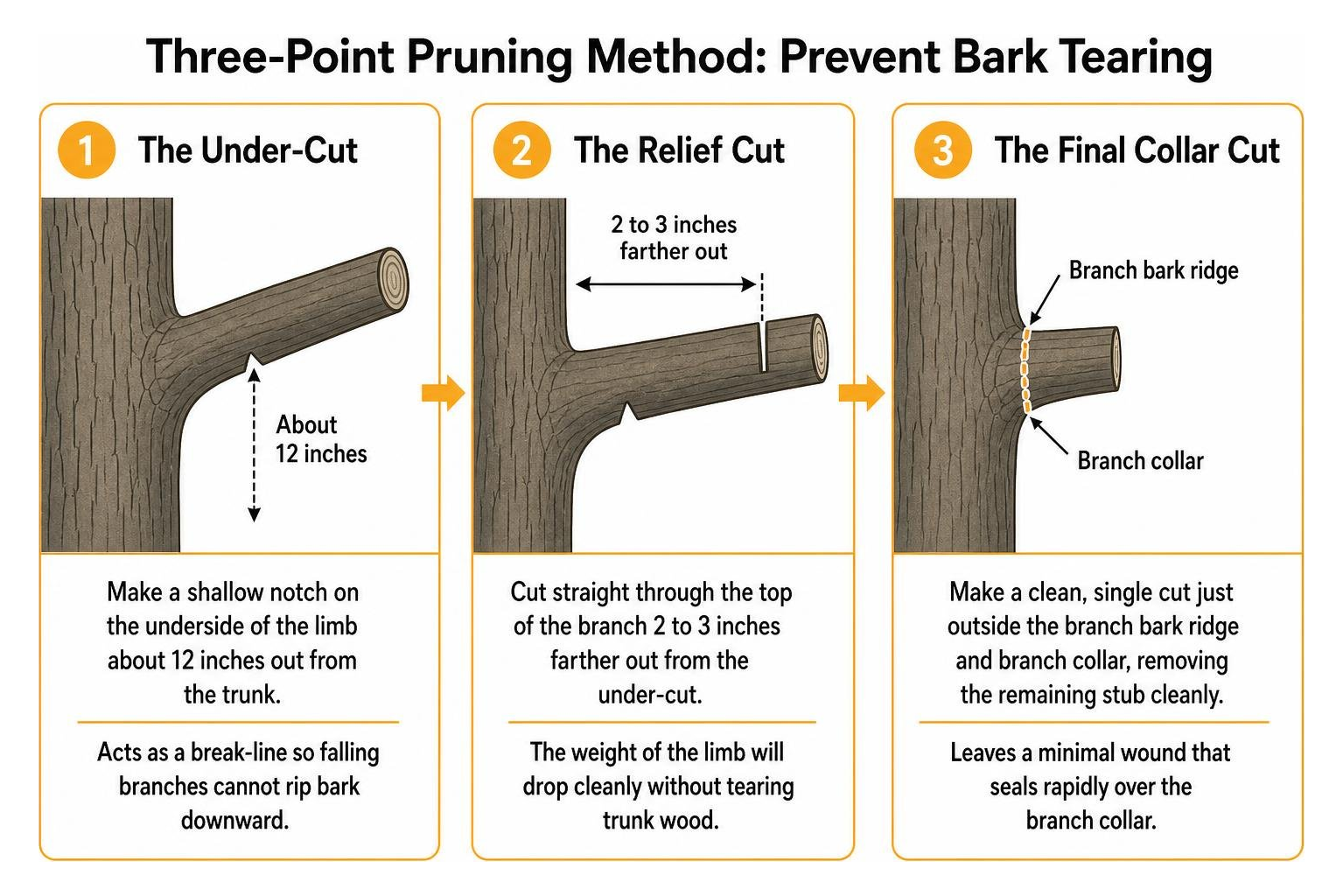
To remove branches larger than 1 inch without stripping bark down the trunk, always follow the industry-standard ANSI A300 three-point pruning method:
- The Under-Cut: Make a shallow notch on the underside of the limb about 12 inches out from the trunk. This acts as a break-line so falling branches cannot rip bark downward.
- The Relief Cut: Cut straight through the top of the branch 2 to 3 inches farther out from the under-cut. The weight of the limb will drop cleanly without tearing trunk wood.
- The Final Collar Cut: Make a clean, single cut just outside the branch bark ridge and branch collar, removing the remaining stub cleanly.
Avoid applying cosmetic wound dressings or paint to cuts. Modern arboricultural science shows that tar or paint traps moisture inside the wound, speeding up fungal decay rather than preventing it.
Seasonal Tree Trimming Timing and Dormant Pruning
Timing matters just as much as technique. Pruning during the late dormant season (late winter to very early spring) is optimal for most deciduous and evergreen species.
During dormancy:
- Deciduous leaves have fallen, giving you an unobstructed view of the tree’s architecture, co-dominant leaders, and damaged limbs.
- Fungi, boring beetles, and other pathogens are inactive, drastically reducing the risk of disease transmission.
- The tree retains its carbohydrate energy reserves in the roots, directing that energy straight toward spring bud break and callus tissue formation.
Pruning during the late spring flush or late autumn can weaken trees, causing sap loss or triggering late-season growth that gets killed off by early frosts. For communities throughout Northern California, you can learn more about how to maintain healthy trees across Placerville, Auburn, and Lake Tahoe through properly scheduled, climate-resilient maintenance cycles.
Safety and DIY Limits: When to Prune vs. When to Call an Expert
Tackling small yard work can be satisfying, but tree trimming quickly enters high-risk territory. According to OSHA safety data, falls from ladders and strikes from falling limbs are among the leading causes of severe residential landscaping injuries.
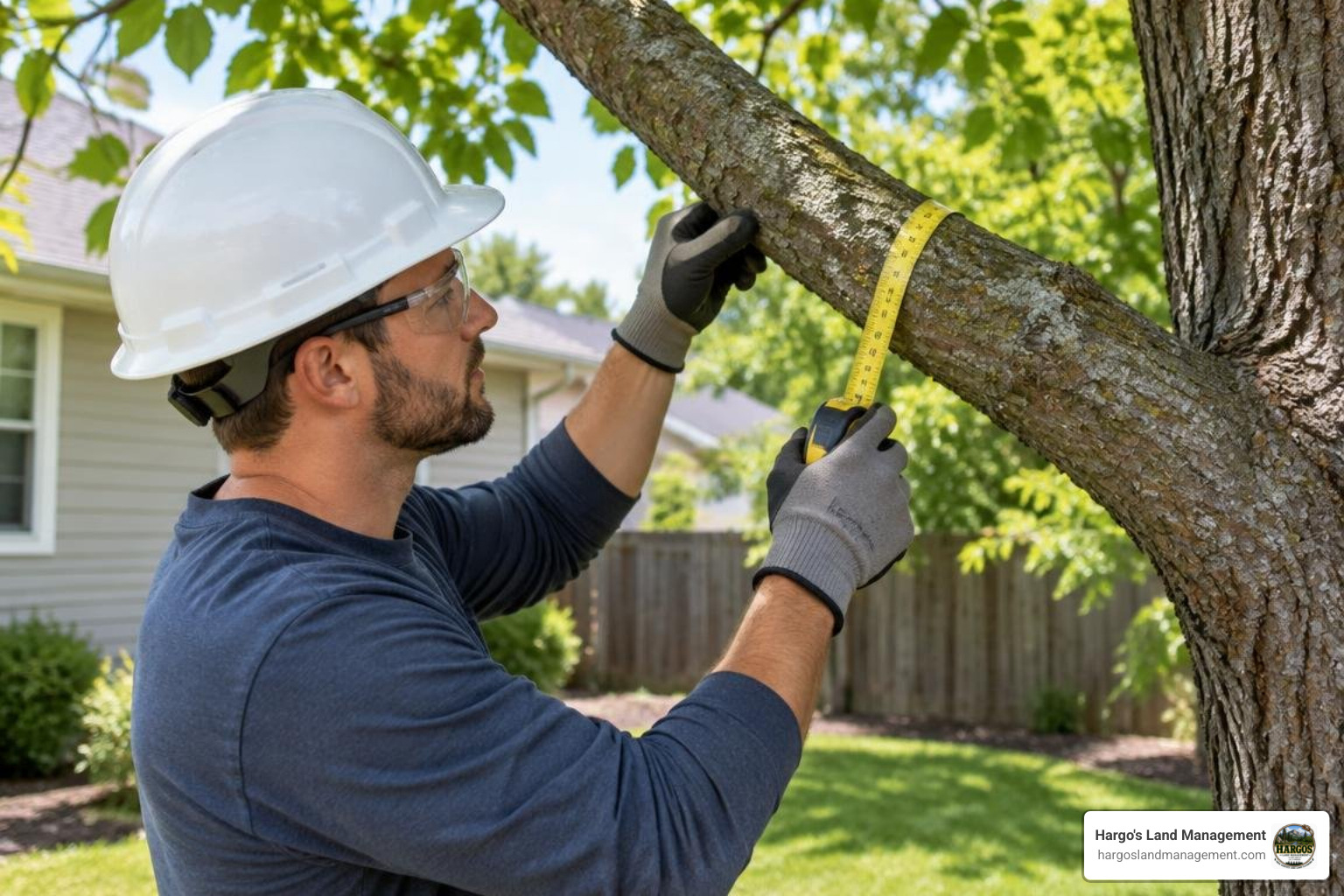
Before picking up tools, make sure you have the basics: heavy work gloves, ANSI-approved eye protection, a hard hat, and non-slip boots. Always review our guide to the smart homeowner guide to Home Depot tree pruning tools to select bypass hand pruners, loppers, and manual pole saws that cut cleanly without crushing plant tissue.
Proper DIY Tree Trimming Techniques and Branch Size Rules
To determine if a branch is safe for DIY maintenance, use the Branch Diameter Rule:
- Under 2 inches (5 cm): Safe for DIY homeowners using sharp bypass shears or loppers.
- 2 to 4 inches (5 to 10 cm): Proceed with extreme caution; use pole saws or hand saws from a stable, ground-level position.
- Over 4 inches (10 cm): Call a professional tree care contractor. These limbs carry massive weight and erratic fall paths.
Never climb a ladder with a running chainsaw, and never lean a ladder against a limb you plan to cut. Additionally, sanitize cutting blades between trees using a 70% isopropyl alcohol solution or a diluted bleach mixture to stop cross-contaminating fungal spores or bacterial blights.
Recognizing When to Hire a Certified Arborist
Some tree jobs go far beyond DIY yard work. You should bring in a qualified professional when dealing with:
- Large, mature canopies requiring rope-rigging and climbing harnesses.
- Co-dominant stems showing deep bark inclusions or vertical structural cracks.
- Dead hanging branches lodged high up in the canopy (widow-makers).
- Trees showing signs of severe root decay, hollow trunks, or sudden leaning.
Hiring an ISA certified arborist ensures that the person working on your property adheres to rigorous safety standards and scientific arboricultural practices. When stability is in question, scheduling a certified arborist tree risk assessment will pinpoint hidden internal rot before extreme weather causes catastrophic failure.
In cases where structural defects cannot be mitigated through pruning, specialists in safe high-risk tree removal solutions for hazardous trees can safely rig down hazardous timber without endangering surrounding structures.
Legal, Property Line, and Utility Clearance Errors
Trimming trees without checking local laws, property boundaries, or utility clearances can lead to expensive fines and neighbor disputes.

Navigating Neighbor Disputes, Permits, and “Pay to Trim” Programs
Tree branches do not respect property lines. If your neighbor’s tree overhangs your yard, common law across most jurisdictions allows you to trim back branches up to your boundary line—with critical caveats:
- You cannot trespass onto your neighbor’s property to prune without explicit permission.
- You cannot cut so aggressively that you destabilize, disfigure, or kill the tree. Doing so can expose you to civil liability for the replacement value of a mature tree.
- You are responsible for disposing of any pruning debris that falls on your side of the fence.
Before making cuts, talk to your neighbor. As highlighted in the City of Bellevue municipal tree regulations, approaching tree conflicts with clear communication or mediation avoids costly litigation.
Furthermore, many municipalities enforce strict tree preservation ordinances. In many cities, pruning or removing significant trees (often defined as trunks greater than 6 to 8 inches in diameter) requires an official municipal permit. Commercial properties and multi-family HOAs frequently require city-issued pruning permits before contractors can operate.
In some municipalities, residents can participate in “Pay to Trim” initiatives. In these programs, property owners can retain a licensed, insured contractor (often holding specialized D49 tree trimming licenses) to trim city-owned parkway trees that obstruct driveways or create hazards, following pre- and post-work municipal inspections.
Utility Line Clearing and Defensible Space Violations
Did you know that tree contact with electrical infrastructure is the leading cause of power interruptions, accounting for nearly half of all blackouts nationwide? In fire-prone regions, overgrown branches touching power lines create devastating wildfire risks.
According to regulatory frameworks like the CPUC vegetation management guidelines, utility companies maintain legal easements that grant them the right to clear branches around high-voltage transmission and distribution lines. Utilities generally maintain a safety buffer of at least 10 feet to the side and 15 feet above high-voltage conductors.
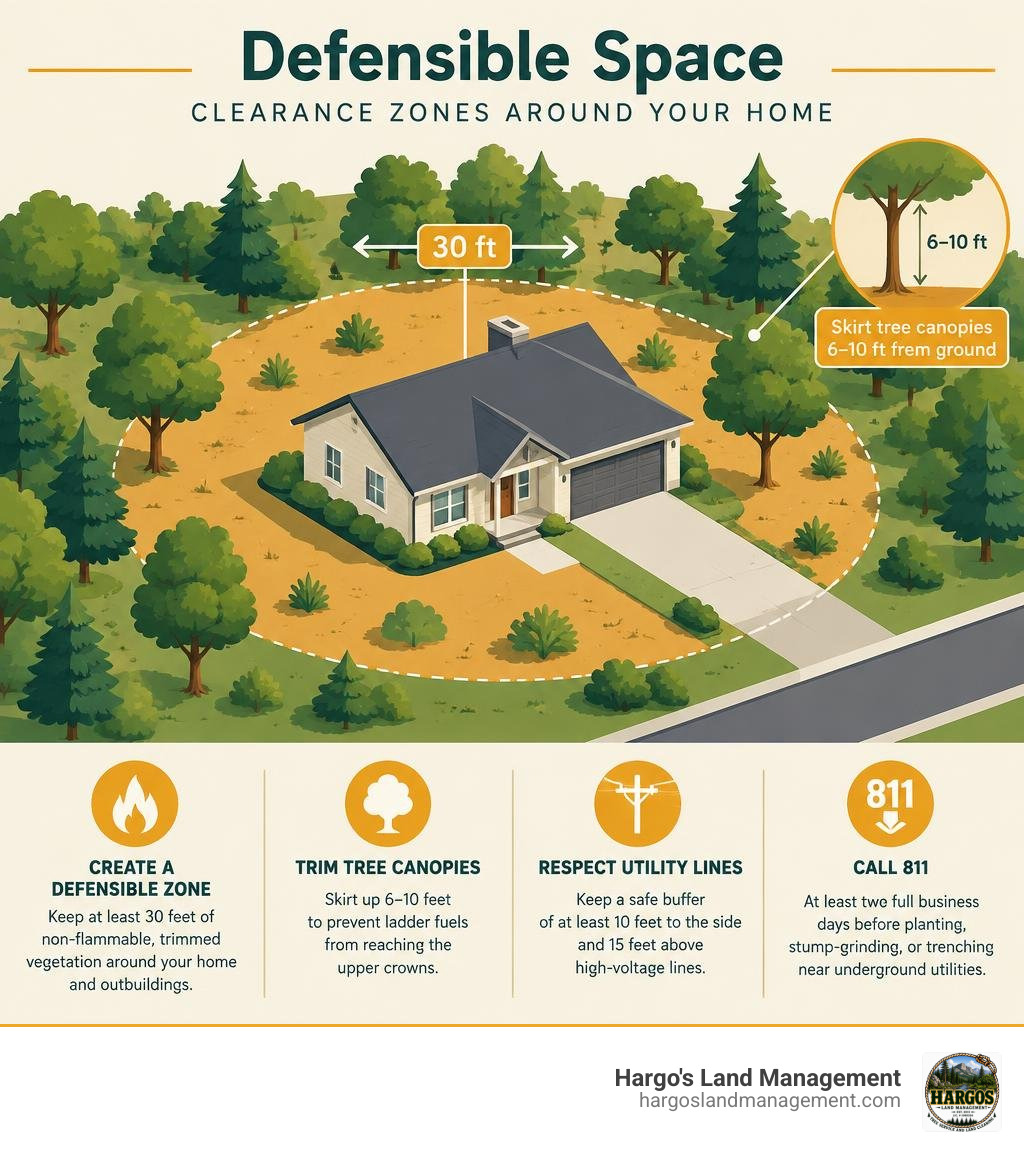
For homeowners living in high fire-threat zones, maintaining defensible space is both a safety necessity and a legal mandate:
- California Public Resource Code Section 4291 requires a minimum 30-foot clearance zone of non-flammable, trimmed vegetation around all homes and outbuildings.
- Mature tree canopies within defensible zones must be skirted up 6 to 10 feet from the ground to prevent ground fires from climbing into the upper crowns as “ladder fuels.”
- Always call 811 (“Call Before You Dig”) at least two full business days before planting, stump-grinding, or trenching around root zones to protect underground electric, gas, and fiber-optic utilities.
Proactive Planning: Planting the Right Tree in the Right Place
The easiest way to avoid intensive trimming is proactive landscaping. When trees outgrow their planting sites, constant pruning creates recurring structural and health problems.
Before planting, evaluate:
- Mature Height and Canopy Spread: Ensure the tree’s maximum size will clear overhead utility lines and stay well back from roof eaves and gutters.
- Root Zone Restrictions: Keep large canopy trees at least 15 to 30 feet from foundations, driveways, and underground utility mains.
- Sun and Soil Needs: Match the species to your USDA hardiness zone and soil drainage profile.
For dense perimeter plantings, privacy screens, and ornamental hedges, proper species selection and maintenance schedules are essential; read our practical guide to arborvitae tree care when to fertilize, water, and protect to keep hedge screens healthy without aggressive corrective shearing.
Frequently Asked Questions About Tree Trimming
How often should trees be trimmed?
Most mature shade trees thrive on a regular trimming cycle of once every 3 to 5 years. Young trees benefit from structural pruning every 1 to 2 years to establish a single dominant leader and balanced scaffold branches. Rapidly growing species or trees in fire-defensible zones should receive an annual health and clearance assessment.
Who is responsible for trimming trees near utility lines?
Electric utility companies are legally responsible for trimming branches around main high-voltage distribution lines running along streets and easements. However, property owners are generally responsible for managing vegetation around the lower-voltage service drop line running directly from the utility pole to their home. Always hire a qualified line-clearance professional to work near these wires, as detailed in the Ohio Consumers’ Counsel utility line clearing rules.
Can I trim branches from a neighbor’s tree that hang over my yard?
Yes, you generally have the legal right to trim overhanging branches back to your property line. However, you must not cross the boundary without permission, and you must never cut so heavily that you damage or destabilize the tree’s health. Open, respectful communication with your neighbor before trimming is always the best first step.
Professional Tree Care for Safe, Healthy Landscapes
Avoiding beginner trimming mistakes keeps your landscape healthy and protects your property from storm damage and fire hazards. Whether you are clearing limbs away from roof eaves, establishing defensible space, or addressing structural defects in mature canopies, proper pruning requires the right tools, knowledge, and safety standards.
At Hargo’s Land Management, our team provides full-service residential and commercial tree care, land clearing, and wildfire defensible-space creation across El Dorado County—including Placerville and South Lake Tahoe. We are locally owned, licensed, bonded, and insured, delivering rapid, fire-safety-focused tree care.
Reach out to schedule your free on-site estimate with our experienced team at Hargo’s Land Management Tree Service to keep your property safe, compliant, and thriving.
CUSTOMER REVIEWS & TESTIMONIALS
We strive to exceed your expectations. See what our customers have to say.



















CONTACT US TODAY
Serving El Dorado and Surrounding Counties
Locally owned and operated since 2013. Use our live chat support to get in touch about your land management needs today.
Request a free evaluation and estimate by completing our online form or book an on-site appointment.
El Dorado County: El Dorado Hills, Cameron Park, Shingle Springs, Coloma, Placerville, Camino, Pollock Pines, South Lake Tahoe and more...
Amador County: Jackson, Ione, and Surrounding Towns
Sacramento County: Sacramento and Surrounding Cities
Placer County: Roseville, Rocklin, Auburn, and Everything In Between
Nevada County: Penn Valley, Nevada City, Grass Valley