
What Happens When Landscaping Encroaches on Fire Hydrants?
Keep Fire Hydrants Clear for Fast Emergency Access
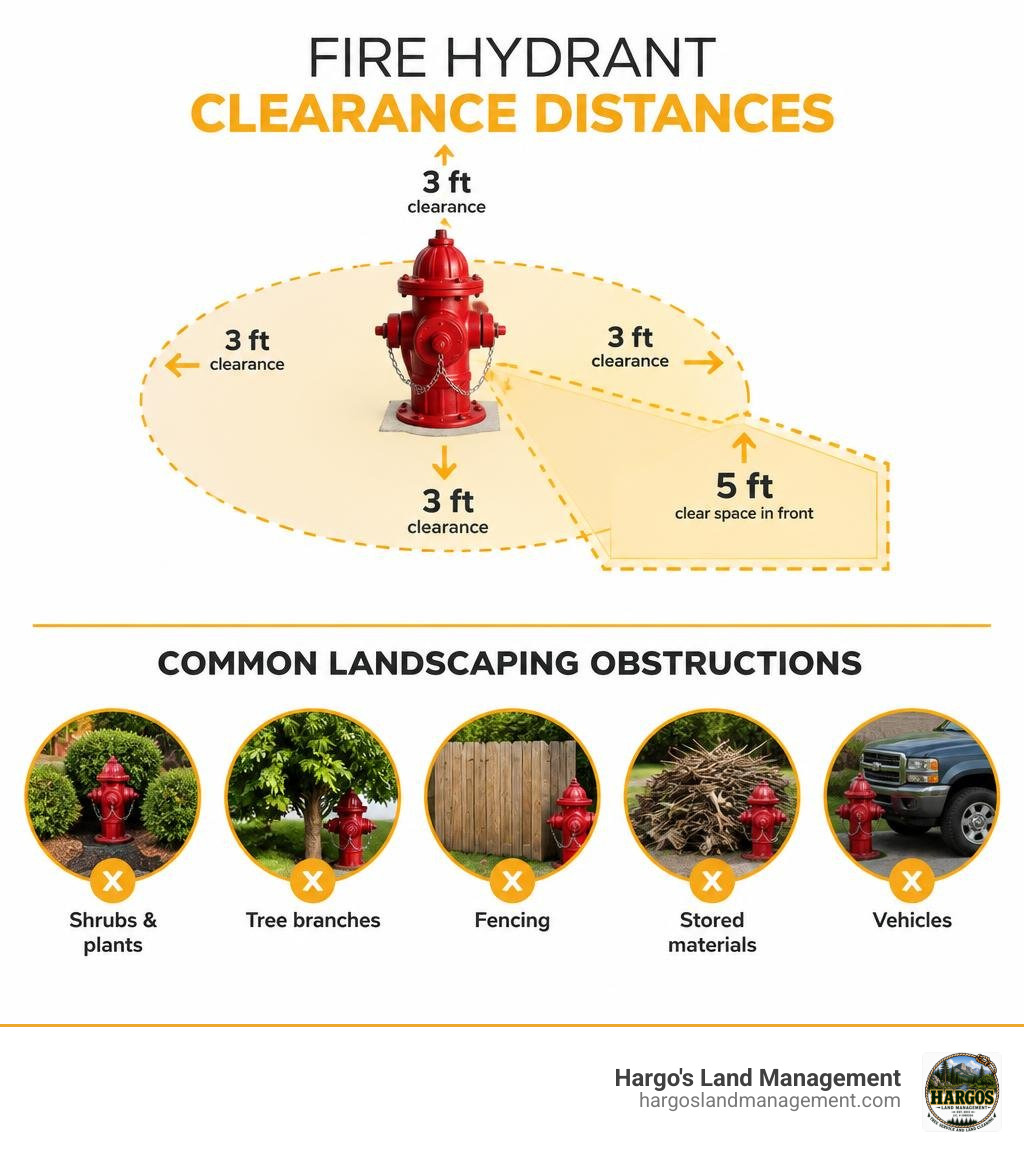
Fire hydrant clearance means keeping at least 3 feet of open space around the entire hydrant at all times. Remove or trim shrubs, branches, fencing, stored materials, and other obstacles in that zone. Larger hydrant outlets may also need 5 feet of clear space directly in front so firefighters can connect large hoses quickly.
For El Dorado County property owners, this is more than a landscaping detail. A hedge, pile of brush, or parked vehicle can slow firefighters when every second matters. Clear, visible hydrants support faster water access during a house fire or wildfire emergency.
In the sections below, we cover the clearance rules, common landscaping mistakes, parking limits, winter concerns, and the potential cost of blocking a hydrant.
Discover more about fire hydrant clearance:
1. Critical Delays in Emergency Response Times and Equipment Access
When emergency crews arrive at a structure fire or wildland blaze, every single second dictates whether a home is saved or lost. Fire engines carry a limited water supply—typically around 500 gallons—which can run dry in under two minutes during heavy suppression efforts. Firefighters must quickly connect to a pressurized municipal or private water source to establish a continuous supply line.
If overgrown landscaping hides the hydrant or blocks access to its discharge ports, crews lose valuable minutes clearing brush, cutting branches, or forcing fittings onto obstructed valves. Thick hedges, low-hanging tree canopies, and unmanaged decorative grasses create physical bottlenecks that prevent firefighters from swinging hydrant wrenches or aligning large-diameter supply hoses.
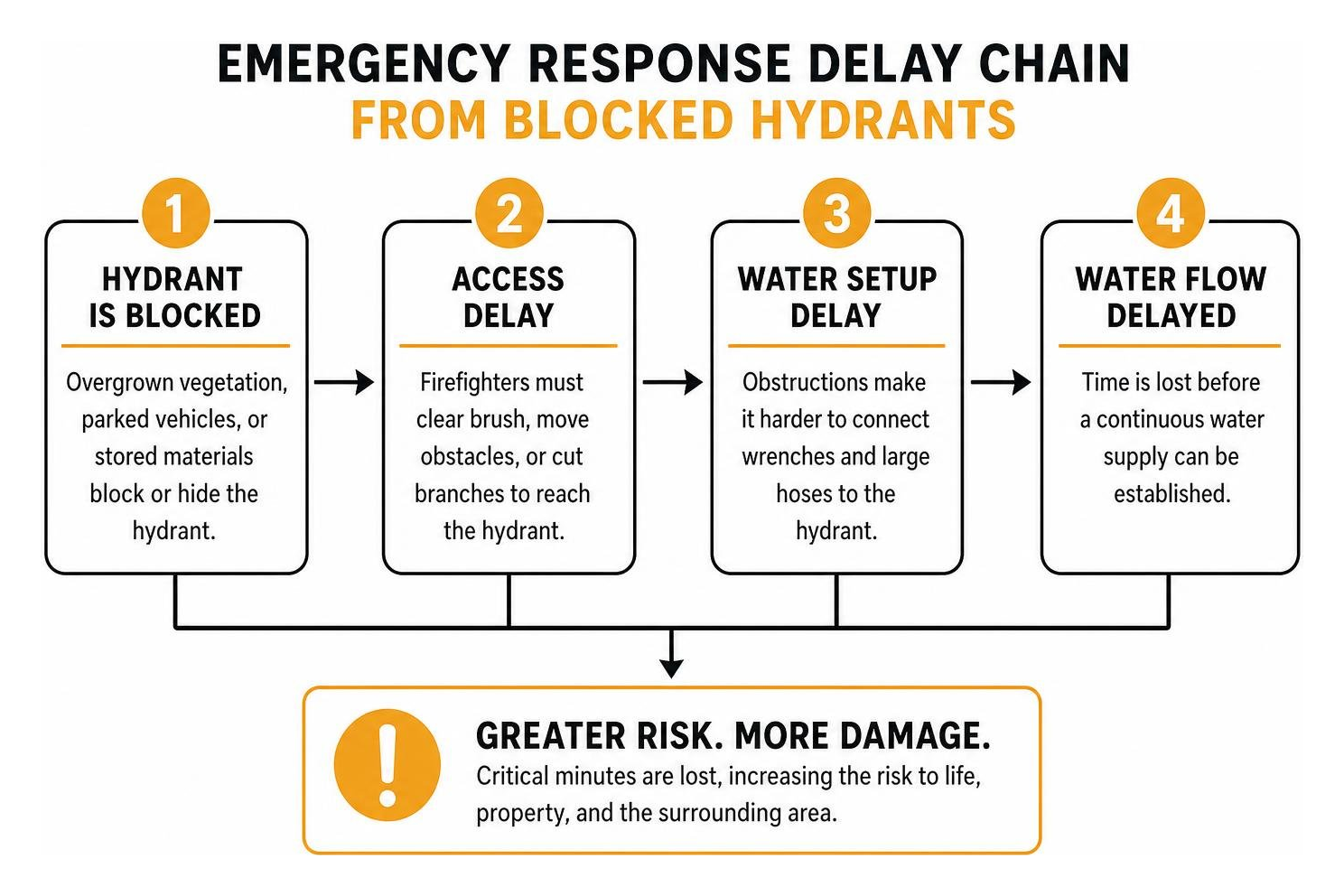
These access delays do not just threaten the immediate structure; unmanaged vegetation around water infrastructure can ignite from flying embers, transforming the water access point into an active fuel bed. Proper clearing helps reduce wildfire dangers across properties in vulnerable foothill communities. Under NFPA 1 fire safety standards, emergency access must remain completely unobstructed so that water delivery can begin without operational delays.
2. Mandatory Fire Hydrant Clearance Standards Every Property Owner Must Follow
Fire codes set strict dimensional rules around hydrants and emergency appliances to allow first responders to locate, hook up, and operate equipment quickly. The table below outlines standard clearance dimensions enforced across major fire jurisdictions.
| Feature / Standard | Minimum Required Distance | Primary Purpose |
|---|---|---|
| Radial Circumference | 36 inches (3 feet / 1 meter) | Allows 360-degree tool rotation and gate valve operation |
| Large Steamer Front Zone | 60 inches (5 feet) | Accommodates large-diameter hose coupling and pumper intake |
| Vertical Overhead Clearance | 7 feet (84 inches / 2 meters) | Prevents overhead branch strikes and allows firefighter standing room |
| Hydrant Flange Elevation | Minimum 2 inches above grade | Prevents dirt buildup around breakaway bolts and operating mechanisms |
| Steamer Centerline Height | 18 to 48 inches above grade | Ensures standard hose connections without ground interference |
| Groundcover Plant Height | Maximum 12 inches | Maintains clear sightlines from emergency vehicles |
| Street Setback | 2 to 9 feet from curb line | Positions hydrant within safe reach of fire apparatus |
Local fire districts enforce these metrics using detailed municipal standards, such as the regional Clearances for Fire Hydrants and Fire Appliances Handout. Property owners can maintain compliant, fire-safe perimeters by understanding defensible space zones and tree spacing rules.
Circumference Dimensions and Radial Fire Hydrant Clearance Requirements
The foundational rule across national and local codes is maintaining a 3-foot (36-inch) radial perimeter around the full circumference of the hydrant barrel. Firefighters use heavy, long-handled hydrant wrenches that require a full 360-degree sweep around the operating nut at the top of the assembly.
If a retaining wall, wooden fence, or dense juniper bush encroaches within this three-foot circle, the wrench cannot complete its rotation. As detailed in the Woodland Fire Department clearance guidelines, fences and permanent landscape features must remain at least 3 feet away to give crews unobstructed mechanical leverage during an incident.
Large Steamer Connection and 60-Inch Front Access Standards
Most modern fire hydrants feature two 2½-inch side discharge ports and one large front connection—often measuring 4, 4½, or 5 inches—known as the steamer port or pumper outlet. Connecting a large-diameter suction hose to this port requires significant space.
Fire codes require an expanded clearance zone of 60 inches (5 feet) directly in front of any outlet larger than 2½ inches. This clear path extends straight from the pumper cap to the access roadway, allowing crews to bend and maneuver rigid supply lines without kinking the hose or damaging fittings.
Vertical Clearance, Flange Elevation, and Plant Height Limits
Clearance rules apply vertically as well as horizontally:
- Overhead Clearance: A full 7-foot (2-meter) vertical column above the hydrant base must remain clear of tree branches, trellis overhangs, and patio eaves.
- Flange Height: The breakaway flange at the base of the hydrant must sit at least 2 inches above the finished grade or planter curb. Burying this flange in mulch or soil prevents proper breakaway operation if struck by a vehicle.
- Outlet Elevation: The centerline of the steamer outlet must sit between 18 and 48 inches above the ground to keep hose couplings out of the dirt.
- Planting Limits: Groundcover vegetation within the vicinity should never exceed 12 inches in height, and adjacent decorative shrubs must not exceed half the hydrant’s height.
3. Legal Penalties, Fines, and Property Owner Liability for Hydrant Obstructions
Hiding or blocking a fire hydrant can lead to serious legal and financial consequences. Fire marshals and municipal code officers regularly inspect neighborhoods and commercial corridors to enforce clear space requirements. When an obstruction is found, the property owner or vehicle operator can face administrative fines, forced abatement costs, and civil liability.
According to the legal rules for fire hydrant clear space, property owners who fail to maintain their frontage can receive formal violation notices. If the hazard is not cleared within the specified correction window, municipal work crews may perform the removal at the owner’s expense. Strict roadway regulations, such as the Fort Worth fire lane and hydrant specifications, designate these clearance zones as high-priority emergency corridors that must remain completely open.
Parking Violations and the 15-Foot No-Parking Distance Rule
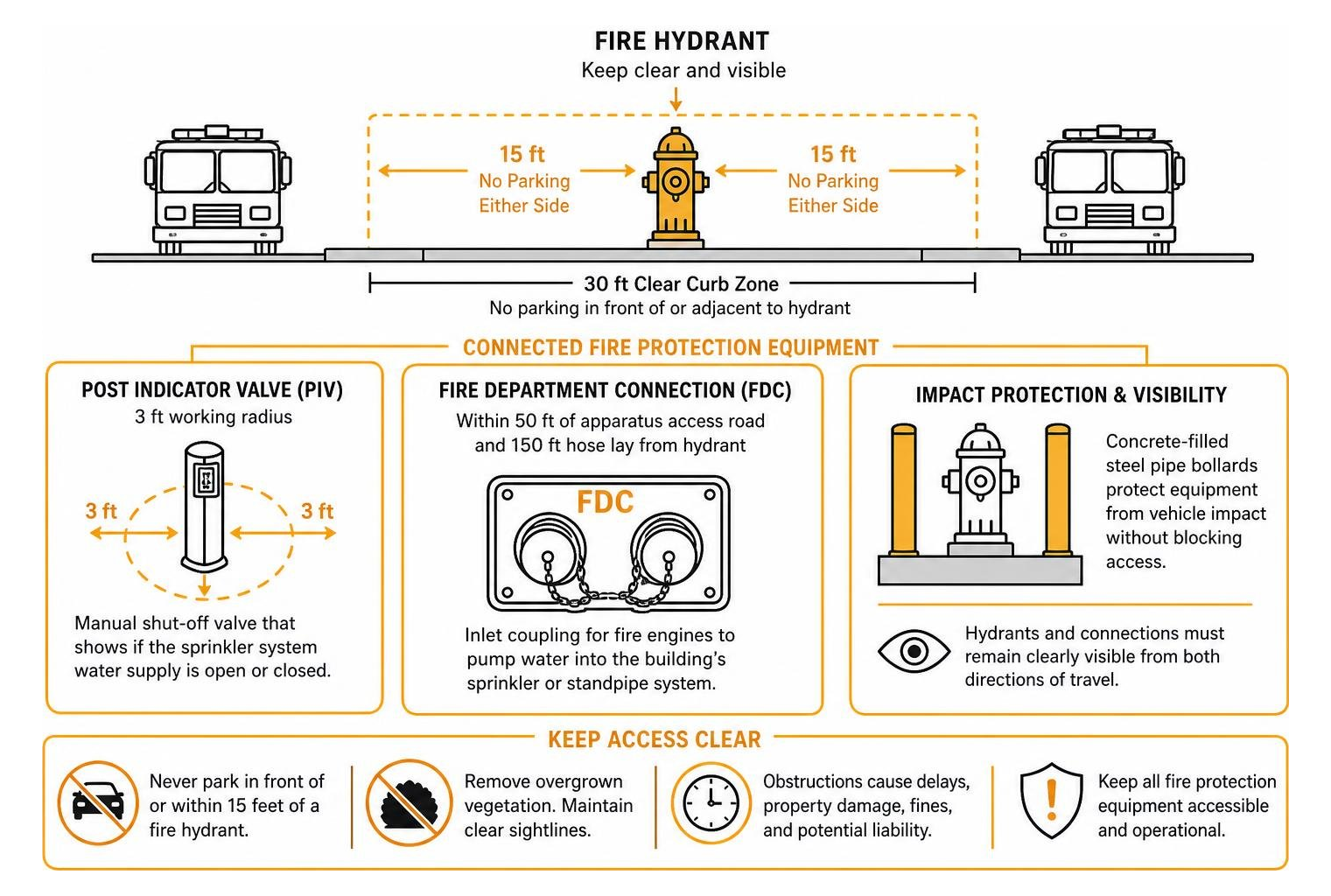
Parking in front of or adjacent to a fire hydrant is strictly prohibited across the United States. While individual state statutes range from 5-foot restrictions to 20-foot local ordinances, the standard national rule prohibits parking within 15 feet of a fire hydrant in either direction.
This 30-foot clear curb zone gives the incoming fire engine adequate room to position near the water supply without catching supply lines on parked vehicles. Blocking this zone can result in heavy traffic fines, parking citations, and immediate vehicle impoundment.
Direct Property Damage, Hose Routing, and Civil Liability
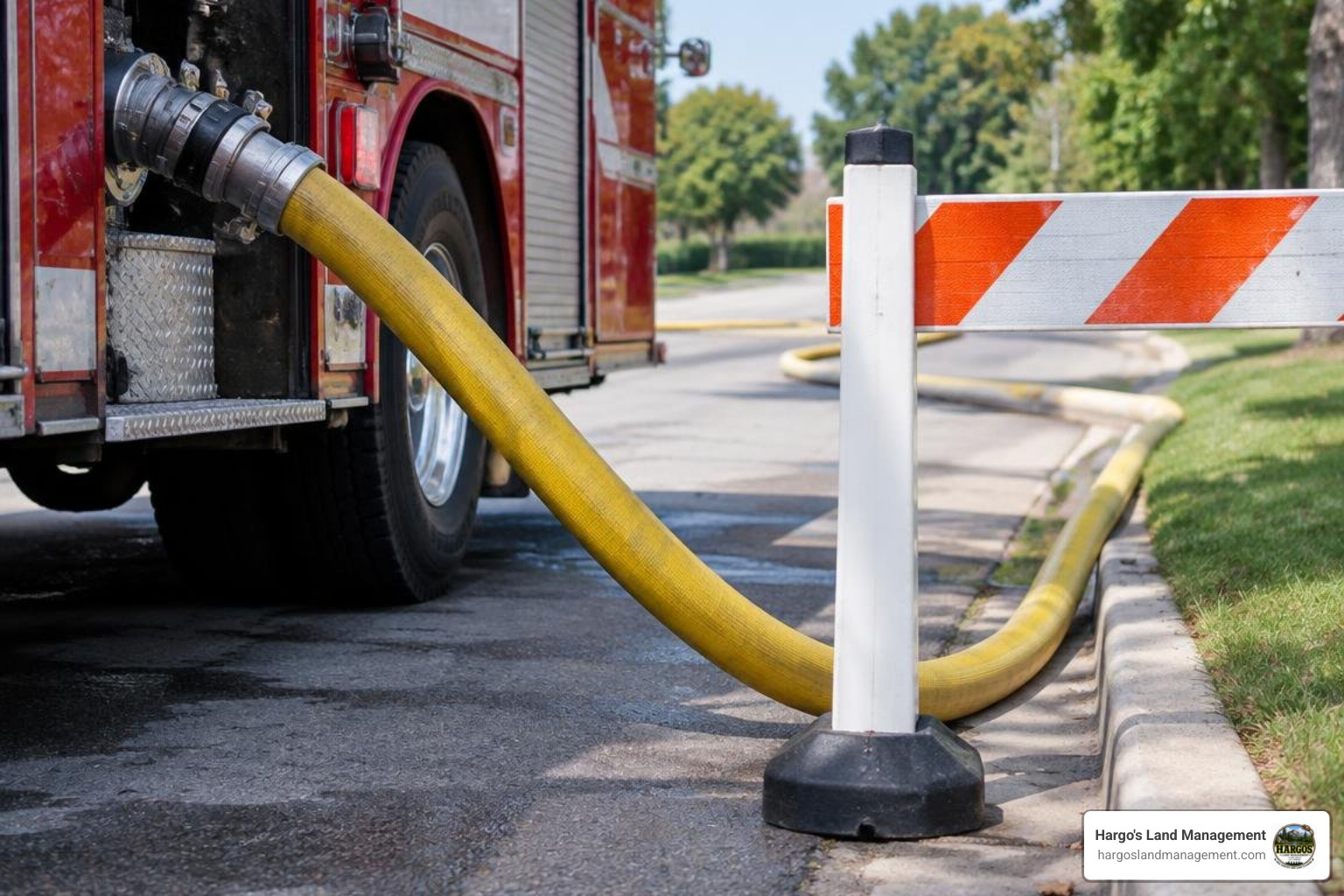
During an active fire, emergency crews will not waste time looking for vehicle owners or delicately pruning ornamental shrubs. If a car blocks access, firefighters may smash the vehicle’s windows to route high-pressure supply hoses directly through the passenger cabin.
Vehicle owners have virtually no legal recourse for damage caused under emergency conditions. Furthermore, if delayed hydrant access leads to greater structural losses or injury on adjacent properties, the person who created or maintained the obstruction may face substantial civil negligence claims and higher insurance premiums.
4. How Overgrown Vegetation Threatens Connected Fire Protection Systems
Fire hydrants work as part of a larger network of dedicated suppression equipment. When dense brush and overgrown hedges spread across property lines, they hide other critical fire protection assets along with the hydrant barrel.
Implementing routine vegetation management keeps all life-safety infrastructure accessible. As outlined in the municipal hydrant clearance guide, all suppression systems must maintain clear sightlines from approaching apparatus access roads.
Post Indicator Valves and Fire Department Connections
Commercial buildings and multi-family complexes rely on dedicated auxiliary hardware to control and boost interior fire sprinklers and standpipes:
- Post Indicator Valves (PIVs): These manual shut-off valves show whether the underground water supply to a building’s sprinkler system is open or closed. They require the same 3-foot working radius as a hydrant.
- Fire Department Connections (FDCs): External inlet couplings allow fire engines to pump extra water directly into a building’s sprinkler or standpipe system. FDCs must remain visible, sit within 50 feet of a fire apparatus access road, and fall within a 150-foot hose lay of the nearest working hydrant.
Impact Protection, Concrete Bollards, and Line-of-Sight Visibility
Where fire hydrants or standpipe risers sit near parking lots, driveways, or loading docks, they face regular risks from vehicle impact. Fire codes require the installation of physical impact barriers, typically consisting of 4-inch concrete-filled steel pipe bollards set into reinforced concrete footings.
These protective bollards must shield the equipment without blocking access ports or interfering with hose connections. In addition, hydrants must remain clearly visible from both directions of travel along the roadway, giving engine crews an unobstructed visual path as they approach the scene.
5. Proactive Ways to Maintain Clear Space Around Fire Appliances

Keeping fire hydrants accessible requires regular landscape maintenance throughout the year. Routine weed abatement keeps fast-growing annual grasses from overtaking utility easements during peak wildfire season. You can see how thorough clearing transforms a landscape in this video defensible space before after overview.
Landscape Trimming, Shrub Pruning, and Fuel Reduction
To keep your utility frontage safe, clean, and fully compliant:
- Clear a 3-Foot Non-Combustible Ring: Remove dry organic matter, wood chips, and thick plantings within 3 feet of the hydrant base, replacing them with decomposed granite or clean pea gravel.
- Prune Nearby Hedges and Shrubs: Cut back surrounding ornamental plantings so their mature spread stays well outside the 36-inch radius and their height remains below 12 inches.
- Eliminate Steep Slope Hazards: Grade steep soil banks around the hydrant pad to give firefighters level, stable footing when operating heavy equipment.
Snow Removal and Winter Fire Hydrant Clearance Protocols
In high-elevation foothill and mountain areas like South Lake Tahoe, heavy winter snowstorms can bury fire hydrants beneath deep drifts and plow berms. Property owners and commercial managers must clear a 3-foot perimeter around hydrants after every major snowfall, creating a wide shoveled path directly to the cleared roadway.
Installing tall, reflective spring-steel snow marker flags on the hydrant body helps municipal plow drivers avoid striking the casting while allowing emergency crews to locate buried hydrants quickly in whiteout conditions.
Frequently Asked Questions About Fire Hydrant Regulations
What is the minimum clear space required around a fire hydrant?
National fire codes like NFPA 1 require a minimum clear space of 36 inches (3 feet) around the entire circumference of the hydrant. In addition, a 60-inch (5-foot) clear path must extend from the large front pumper connection directly to the roadway.
How close can a vehicle legally park to a fire hydrant?
The standard no-parking distance across most jurisdictions is 15 feet from the hydrant in either direction. Some local municipalities enforce ranges between 10 and 20 feet, often marked with red-painted curbs or posted no-parking signs.
Are private property owners responsible for clearing vegetation around hydrants?
Yes. While the water utility typically maintains the internal mechanical parts and valves, property owners are responsible for maintaining ground clearances and pruning vegetation on their frontage or dedicated utility easements.
Conclusion
Fire hydrants play a vital role in neighborhood fire protection, but they only work if first responders can find and access them quickly. Keeping a 3-foot radial clear zone, trimming dense shrubs, and removing seasonal obstructions helps protect your home and the wider community.
At Hargo’s Land Management, we help property owners across Placerville, South Lake Tahoe, and El Dorado County create safe, compliant landscapes. As a locally owned, licensed, bonded, and insured team, we provide professional tree services, fuel reduction, and defensible space clearing to protect your property ahead of fire season. Contact us today for a free on-site estimate.
CUSTOMER REVIEWS & TESTIMONIALS
We strive to exceed your expectations. See what our customers have to say.















CONTACT US TODAY
Serving El Dorado and Surrounding Counties
Locally owned and operated since 2013. Use our live chat support to get in touch about your land management needs today.
Request a free evaluation and estimate by completing our online form or book an on-site appointment.
El Dorado County: El Dorado Hills, Cameron Park, Shingle Springs, Coloma, Placerville, Camino, Pollock Pines, South Lake Tahoe and more...
Amador County: Jackson, Ione, and Surrounding Towns
Sacramento County: Sacramento and Surrounding Cities
Placer County: Roseville, Rocklin, Auburn, and Everything In Between
Nevada County: Penn Valley, Nevada City, Grass Valley