
What Fire Defensible Space Clearance Really Requires Under Local Regulations
Fire Defensible Space Clearance Creates a Safer Wildfire Buffer
Fire defensible space clearance means managing vegetation and other fuels around your home so embers and flames have fewer ways to reach it. Start closest to the structure: remove dry leaves, needles, dead plants, wood mulch, and stored combustibles within the first 5 feet. Then prune, mow, and space the remaining vegetation out to 100 feet, or to your property line where it is closer.
For El Dorado County homeowners, this is more than a landscaping task. California Public Resources Code 4291 generally requires 100 feet of defensible space around structures in designated fire-hazard areas. The goal is fuel reduction, not stripping the property to bare dirt. Healthy, properly spaced trees and maintained plants can often stay.
A quick way to plan the work:
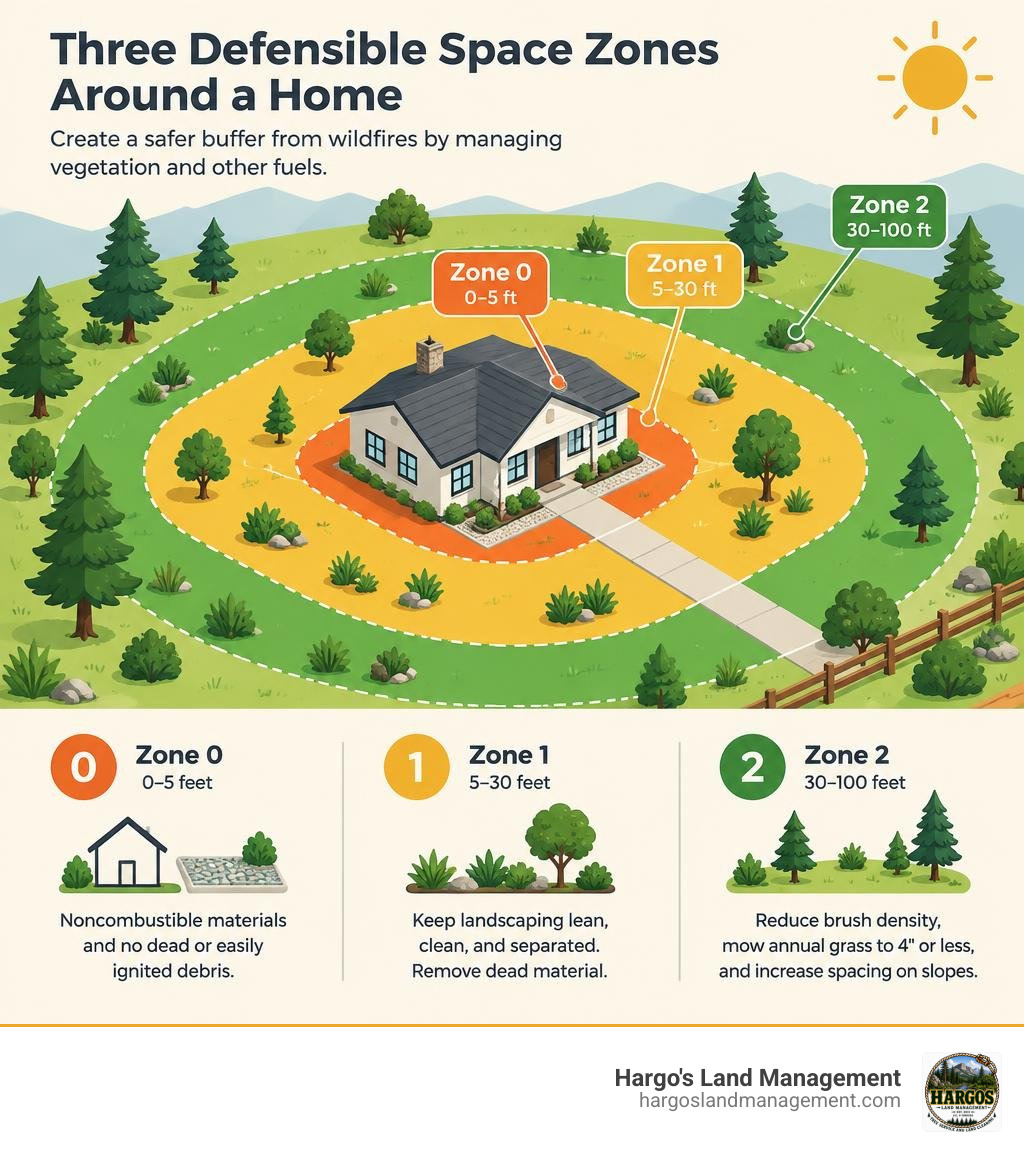
- Zone 0: 0-5 feet – Create an ember-resistant perimeter with noncombustible materials and no dead or easily ignited debris.
- Zone 1: 5-30 feet – Keep landscaping lean, clean, and separated. Remove dead material and break up ladder fuels.
- Zone 2: 30-100 feet – Reduce brush density, mow annual grass to 4 inches or less, and increase spacing on slopes.
Understanding Legal Mandates and California Defensible Space Regulations
Wildfires do not simply roll across a landscape like a uniform wall of flame; they cast millions of wind-driven embers hundreds of yards ahead of the main fire front. When these burning embers land on dry pine needles in a rain gutter, ignite bark mulch against a foundation, or catch in thick ladder fuels beneath tall trees, homes ignite from the outside in.
To protect communities and give emergency personnel a safe perimeter to defend structures, state law mandates clear vegetation management standards. Under California Public Resources Code 4291 (PRC 4291), property owners in State Responsibility Areas and designated high-fire-hazard zones must maintain 100 feet of defensible space around every occupied building, structure, or manufactured home (or up to the property line, whichever is closer).
Statewide enforcement and guidance are established through the official CAL FIRE Defensible Space guidelines. These fuel treatment standards are designed to interrupt the continuous path of fuel that leads directly to your roofline. While the state baseline requires a 30-foot lean zone and a 70-foot reduced-fuel zone, local jurisdictions frequently adapt these rules to account for microclimates, fuel loads, and terrain. For instance, Ventura County mandates 50 feet of clearance for Zone 1, demonstrating how regional fire codes can be even stricter than state minimums.
A common misunderstanding among property owners is that meeting these codes requires bulldozing everything down to bare mineral soil. In reality, bare dirt on steep hillsides creates severe erosion hazards, slope instability, and runoff issues during winter storms. Modern fire safety standards prioritize fuel reduction and separation. By adopting sensible, proactive steps to reduce wildfire dangers, you keep living trees healthy, preserve erosion-controlling root structures, and eliminate the dead debris and ladder fuels that feed catastrophic fires.
Step-by-Step Guide to Fire Defensible Space Clearance by Zone
Creating a functional buffer requires dividing your parcel into three distinct rings centered on your home. Each zone addresses a specific fire behavior mechanism, moving from immediate ember ignition near the siding to radiant heat reduction and flame deflection further down the slope.
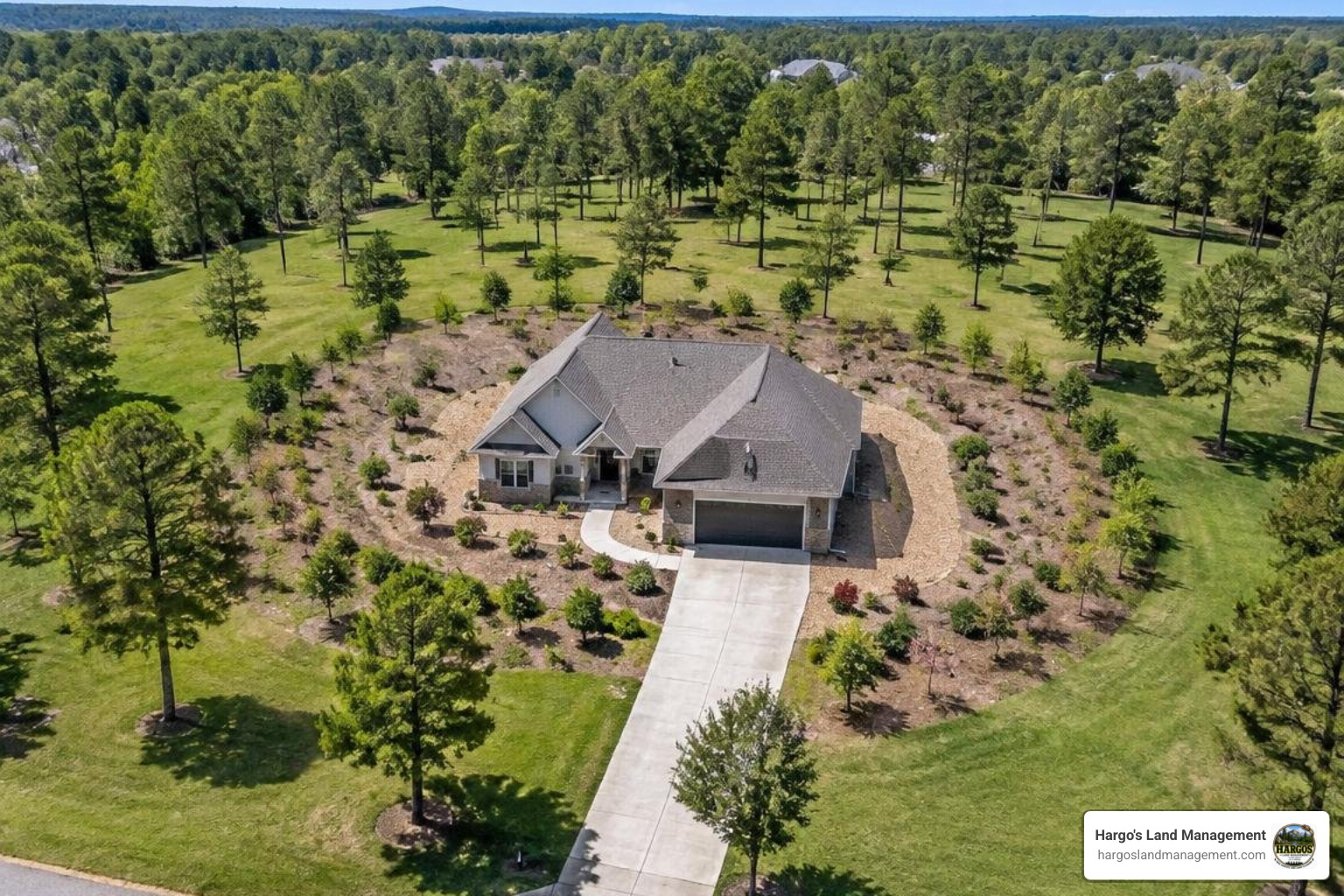
Carrying out comprehensive defensible space clearing across these concentric rings gives your home the highest probability of surviving an ember storm without active firefighter intervention.
Zone 0: The Immediate Ember-Resistant Buffer (0 to 5 Feet)
Zone 0 encompasses the area directly adjacent to your exterior walls, decks, stairs, and under roof eaves. Because airborne embers are responsible for over 80% of structure ignitions during major wildland events, this zone is the single most critical line of defense.
To secure Zone 0:
- Eliminate Combustible Ground Cover: Strip away all bark mulch, wood chips, pine needles, and rubber mulch within 5 feet of exterior siding. Replace these flammable beds with decomposed granite, pea gravel, river rock, pavers, or bare concrete.
- Clear Roofs and Rain Gutters: Remove all dry leaves, pine needles, and moss from roof valleys and gutters. Embers that land in debris-filled metal or vinyl gutters ignite the dry organic matter directly under the fascia boards.
- Maintain Clear Perimeter Siding: Prune back any ornamental bushes, climbing vines, and ground covers touching your walls. Even well-watered bushes act as kindling when subjected to high heat.
- Upgrade Boundary Attachments: Combustible wood fences can act like fuses leading flames right into the side of a house. Replace the final 5-foot section of wood fencing connecting to your home with a non-combustible metal panel or gate, as outlined in the Cal OES Zone Guidelines.
- Relocate Outdoor Flammables: Never store firewood, patio furniture cushions, brooms, lumber, or trash bins against exterior walls or under low decks during high fire season.
Zone 1: Lean, Clean, and Green Landscaping (5 to 30 Feet)
Zone 1 functions as your primary flame-break zone. The objective here is to keep vegetation sparse, manicured, and green so that radiant heat from approaching flames drops significantly before it can break window glass or ignite eaves.
Key actions for Zone 1 include:
- Prune Dead and Dying Wood: Cut away dead limbs, broken branches, and dried foliage from all remaining trees, shrubs, and ornamental garden beds.
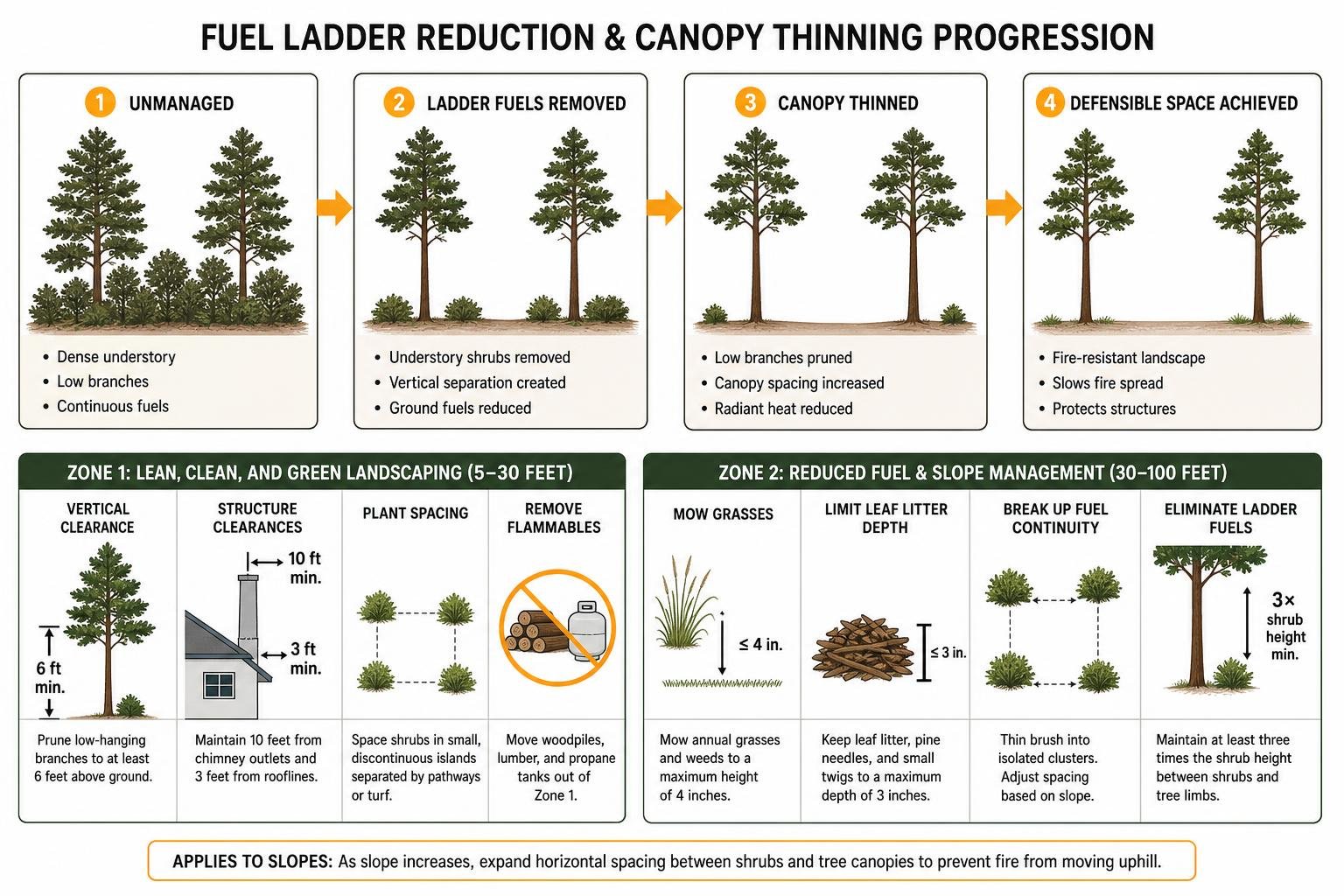
- Maintain Vertical Canopy Clearance: Prune low-hanging tree branches upward to at least 6 feet above the ground (or up to one-third of the total tree height for smaller trees) to prevent ground fires from climbing into the crowns.
- Enforce Structure Clearances: Ensure all mature tree canopies are trimmed back so that branches remain at least 10 feet away from chimney stovepipe outlets and at least 3 feet clear of rooflines.
- Space Plant Groupings: Arrange shrubs in small, discontinuous islands separated by non-combustible pathways or manicured turf. For detailed layout spacing rules, review our guide on tree spacing rules and zone requirements.
- Relocate Woodpiles: Move all seasoned firewood, lumber scraps, and portable propane tanks out of Zone 1 and into Zone 2.
Zone 2: Reduced Fuel and Slope Management (30 to 100 Feet)
Zone 2 is the extended fuel-reduction ring. In this zone, the goal is to slow a wildfire’s forward rate of spread and force dangerous crown fires back down to low-intensity ground fires.
To manage Zone 2 effectively:
- Mow Annual Grasses: Cut all wild annual grasses and weeds down to a maximum height of 4 inches. (That some local jurisdictions, including Ventura County, specify a 3-inch limit, so check local mandates.)
- Limit Surface Leaf Litter: While maintaining some surface mulch is beneficial for stabilizing hillside soil, loose pine needles, fallen leaves, and small twigs must not exceed a maximum depth of 3 inches across the fuel bed.
- Break Up Fuel Continuity: Thin dense brush stands (such as manzanita, buckbrush, and chamise) into isolated clusters. The space between clusters must be adjusted based on slope steepness to prevent flames from leaping from clump to clump.
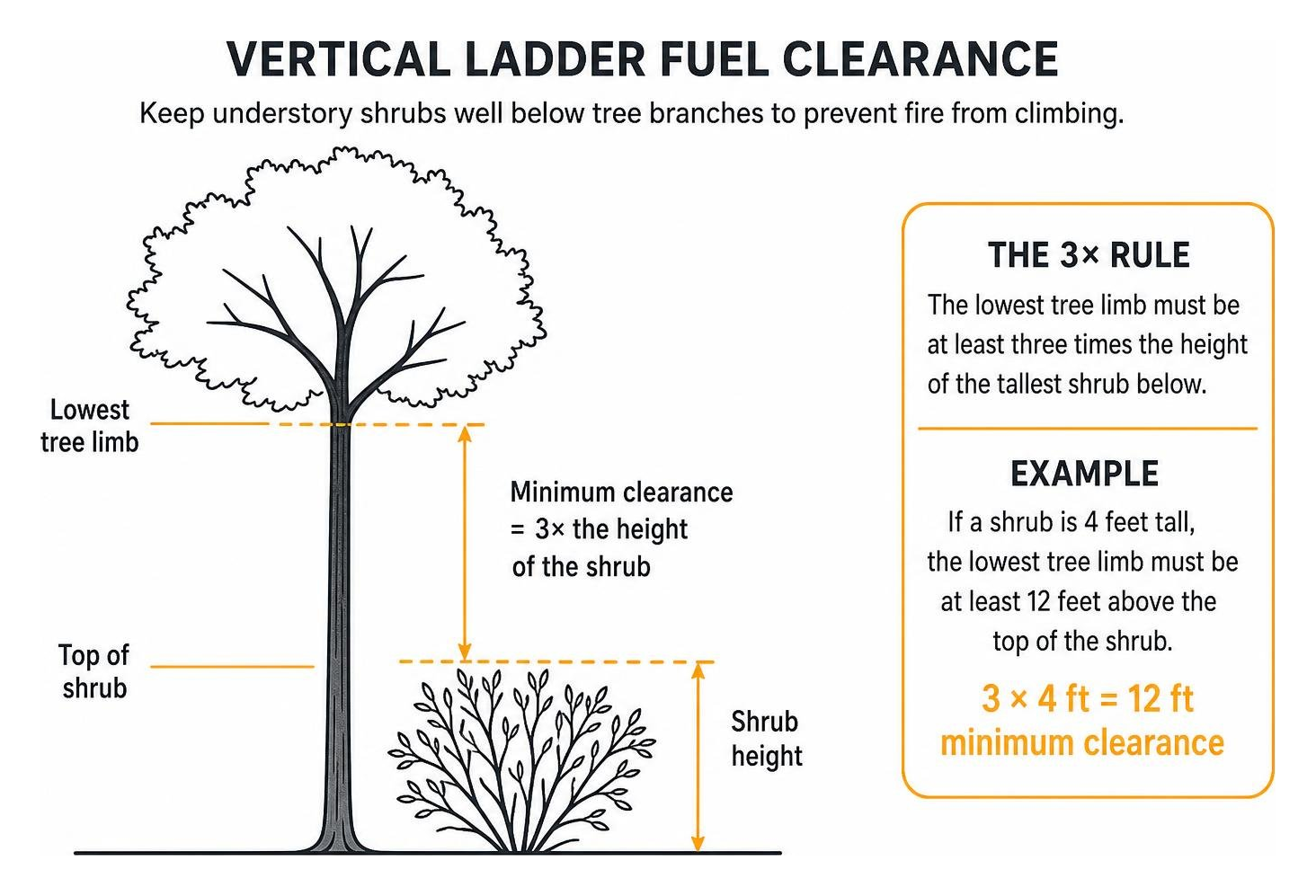
- Eliminate Ladder Fuels: Remove intermediate shrubs growing beneath the driplines of mature trees. Following the state’s General Guidelines for Creating Defensible Space, vertical clearance between the top of any understory shrub and the lowest tree limb should measure at least three times the height of the shrub.
- Execute Routine Thinning: Apply systematic vegetation management to thin overgrown timber stands, clear out deadfall, and haul away downed logs that measure less than 6 inches in diameter.
Tree and Slope Clearance Rules to Prevent Wildfire Spread
Topography heavily influences wildfire behavior. Because heat rises, flames preheat the uphill vegetation, allowing fires to travel uphill up to three times faster than on flat terrain. Consequently, the clearance distances required between tree crowns and individual shrubs expand significantly as the slope percentage increases.
The diagram below outlines the standard progression of fuel reduction from the ground up:
When assessing your acreage, measure the slope of the land and apply the mandatory horizontal and vertical separation metrics:
| Slope Percentage | Terrain Classification | Horizontal Shrub Spacing | Horizontal Tree Canopy Spacing |
|---|---|---|---|
| 0% to 20% | Mild / Flat | 2× the height of the shrub | Minimum 10 feet between canopies |
| 20% to 40% | Moderate | 4× the height of the shrub | Minimum 20 feet between canopies |
| Greater than 40% | Steep | 6× the height of the shrub | Minimum 30 feet between canopies |
Beyond horizontal distances, vertical fuel ladders represent the biggest threat to residential timber stands. If a 4-foot-tall ceanothus bush sits beneath an oak tree, the lowest tree branch must be pruned to at least 12 feet above the top of that bush (3 × 4 ft = 12 ft of clearance).
When large, dying pines or structurally compromised oaks sit inside these clearance zones, basic pruning is no longer enough. Unstable trees become immense fuel sources during a fire and can fall across driveways, trapping residents and blocking access for fire engines. In these situations, scheduling hazardous tree removal or securing a certified arborist tree risk assessment ensures that high-risk canopy fuels are removed safely without destabilizing the surrounding hillside.
DIY vs. Professional Land Clearing: Safety, Equipment, and Cost
Homeowners can often handle routine defensible space maintenance themselves, but it is important to know where DIY safety ends and professional equipment becomes necessary.
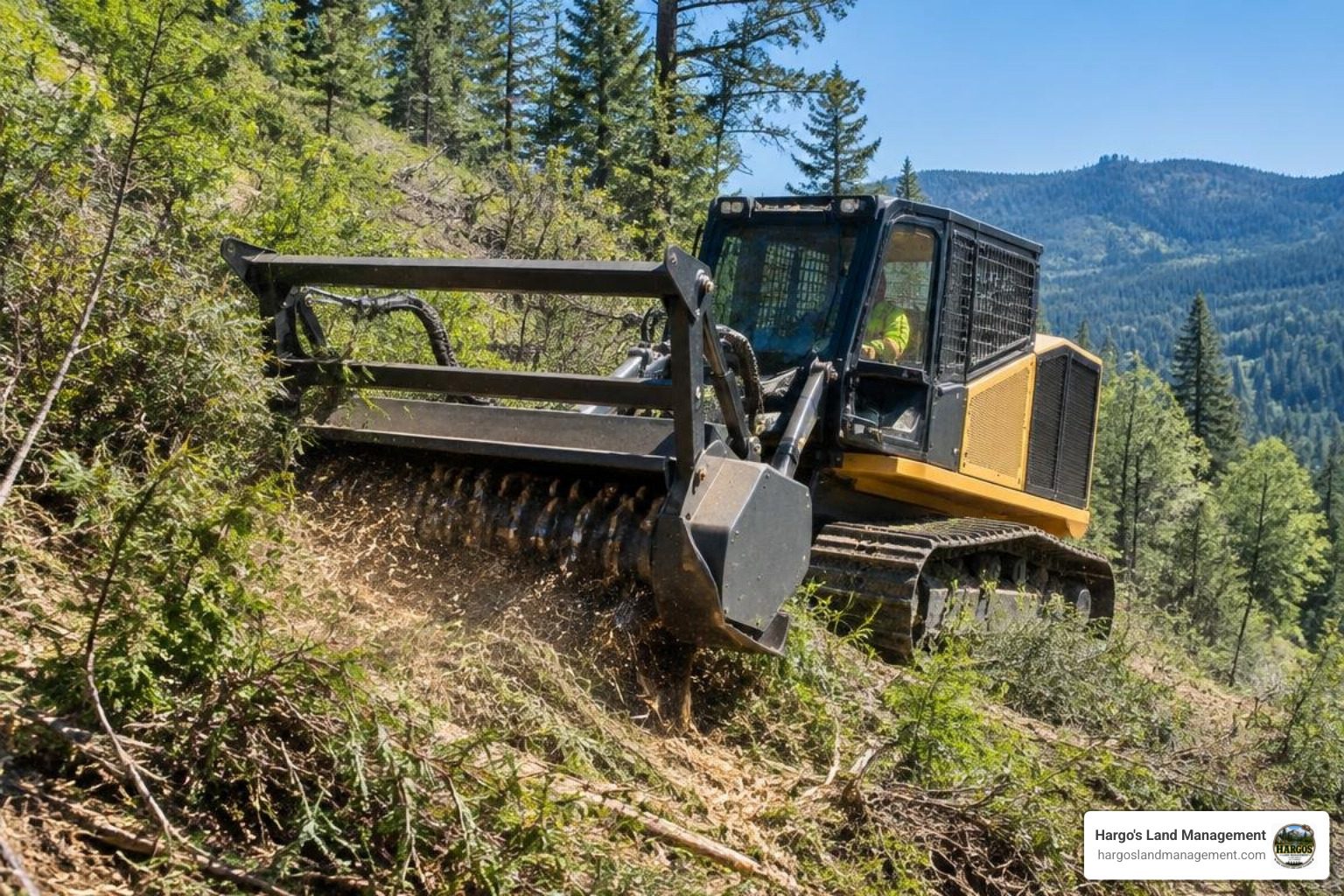
Light manual tasks—such as clearing roof gutters, raking needles in Zone 0, pruning small garden shrubs, and string-trimming grass on flat surfaces—are straightforward weekend DIY projects. However, tackling dense brush on steep Sierra foothill slopes, felling large dead timber, or operating heavy power tools in tinder-dry conditions carries major risks.
Power equipment with metal blades striking granite rocks can create sparks that ignite fast-moving brush fires. State law requires that all internal combustion engines operated near wildland brush have approved, operational spark arrestors. When the terrain is too steep, the brush fields too thick, or the tree work requires climbing, utilizing professional brush and land clearing solutions equipped with heavy-duty forestry mulchers, commercial chippers, and trained rigging crews is the safest, most efficient route.
Planning Your Fire Defensible Space Clearance Schedule
Timing your property clearance around seasonal growth cycles saves substantial labor. Raking pine needles during a red-flag summer windstorm is both stressful and dangerous; clearing should follow an organized annual calendar:
- Late Winter to Early Spring (January – March): Perform major tree pruning, hazardous timber felling, and heavy brush mastication while trees are dormant, the soil is firm, and wildfire danger is minimal.
- Late Spring (April – June): As annual grasses cure from green to gold, mow and string-trim everything down to 4 inches before 10:00 AM while morning relative humidity is high. CAL FIRE defensible space inspections typically begin in April and run through September.
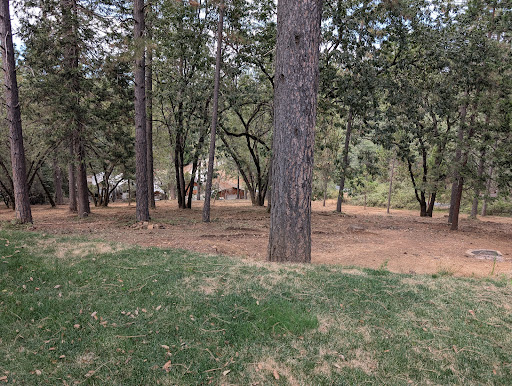
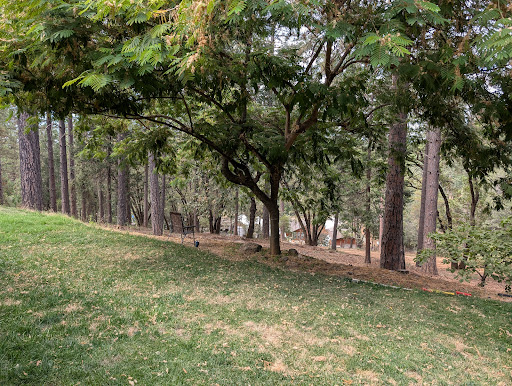
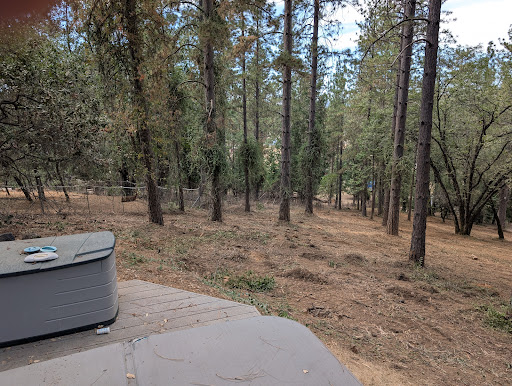
- Summer to Early Autumn (July – October): Conduct light upkeep. Clear newly dropped needles from gutters and Zone 0, remove dead stems from irrigated landscaping, and ensure clear driveway clearance for emergency vehicle access. You can see how this multi-stage work transforms overgrown acreage by reviewing visual defensible space before and after results.
- Late Autumn (November – December): Take advantage of post-rain burn windows or municipal green-waste chipper programs to dispose of accumulated organic debris.
How Much Does Fire Defensible Space Clearance Cost in California?
The cost of clearing defensible space varies across California based on parcel size, terrain slope, brush density, and disposal requirements:
- DIY Expenses: A homeowner with standard tools generally spends $100 to $400 annually on string-trimmer line, fuel, personal protective equipment, and green-waste drop-off fees at local transfer stations.
- Small, Flat Residential Lots (Under 0.5 Acre): Hiring a professional crew for basic canopy trimming, shrub pruning, and brush hauling typically ranges from $500 to $1,800.
- Medium Parcels (1 to 3 Acres, Moderate Slope): Standard fuel reduction involving ladder fuel pruning, mastication, and heavy brush clearing generally costs between $2,000 and $5,500.
- Large Parcels or Steep Hillside Acreage (3+ Acres): Severely overgrown parcels with heavy manzanita, dense conifer thickets, and steep ravines require specialized forestry equipment and skilled crews, with comprehensive projects ranging from $5,000 to $15,000+.
How to Pass a CAL FIRE Defensible Space Inspection
During fire season, CAL FIRE and local fire protection district inspectors walk rural and wildland-urban interface properties to verify compliance with PRC 4291. Inspectors utilize a standardized evaluation sheet, looking for specific hazard indicators.
To ensure your property passes without citations, walk your perimeter using the official UCANR Defensible Space Checklist and verify these common failure points:
- [ ] Zone 0 Cleanliness: Is the first 5 feet around all structures 100% free of dead vegetation, combustible mulch, and leaf litter?
- [ ] Roof & Gutter Clearance: Are roof valleys, gutters, and downspout entries completely clear of needles and leaves?
- [ ] Chimney Clearance: Is there a minimum 10-foot radial clearance between mature tree branches and your chimney or stovepipe outlet?
- [ ] Grass Height: Has all annual grass within 100 feet been mowed to 4 inches or less?
- [ ] Ladder Fuels: Have lower tree limbs been pruned up 6 feet from the ground or 3× the height of understory shrubs?
- [ ] Woodpile Location: Are all stacked firewood piles and combustible materials positioned at least 30 feet away from the home with 10 feet of cleared bare ground surrounding them?
- [ ] Street Visibility: Are your house numbers clearly posted with minimum 4-inch, reflective, high-contrast numbers visible from the street?
If an inspector finds violations, they will issue a Notice to Comply, giving you a set window (typically 14 to 30 days) to correct the hazards before a re-inspection. Failing a second inspection can lead to administrative fines or forced abatement, where the local district hires a contractor to clear the land at the property owner’s expense. Always take dated photographs of your completed clearing and retain receipts from tree services or green-waste facilities for your records, especially if you need documentation for California real estate disclosure compliance (Civil Code 1102.19).
Frequently Asked Questions About Wildfire Clearance
Do I have to clear my property down to bare dirt to pass inspection?
No. Fire inspectors do not want bare mineral dirt across your parcel. Stripping the land entirely creates severe soil erosion, dust hazards, and promotes fast-growing, highly flammable invasive weeds like star thistle and cheatgrass. The law requires fuel reduction, deadwood removal, and vertical/horizontal spacing among healthy, green plants.
What is the deadline for completing annual defensible space clearing?
Clearing should be completed each spring before annual grasses dry out and fire season begins. In Northern California and the Sierra Foothills, CAL FIRE inspections run actively from April through September. Heavy clearing should wrap up by late May before rising temperatures create spark hazards during equipment operation.
How far must tree branches be kept from chimneys and rooflines?
State fire code mandates that all tree canopies be pruned so that no branches hang within 10 feet of any chimney or stovepipe opening. Additionally, overhanging branches should be trimmed back to maintain at least 3 to 5 feet of vertical clearance above roofs and eaves to prevent dry leaf accumulation and direct flame transfer.
Conclusion
Creating and maintaining compliant defensible space is the single most effective action you can take to protect your home, your family, and your community from wildfire. By approaching your land in systematic rings—starting with an ember-resistant Zone 0, establishing a lean and green Zone 1, and reducing continuous fuel ladders across Zone 2—you break the chain of ignition and give emergency crews a fighting chance to defend your property.
Navigating steep terrain, heavy Sierra brush, and strict local fire ordinances can be challenging, but you do not have to tackle it alone. At Hargo’s Land Management, we are locally owned, licensed, bonded, and insured, delivering rapid, fire-safety-focused solutions across El Dorado County, including Placerville and South Lake Tahoe. Whether you need selective brush mastication, canopy fuel thinning, or expert tree service and land clearance, our team provides free on-site estimates to ensure your property meets every local regulation and stands resilient this fire season.
CUSTOMER REVIEWS & TESTIMONIALS
We strive to exceed your expectations. See what our customers have to say.













CONTACT US TODAY
Serving El Dorado and Surrounding Counties
Locally owned and operated since 2013. Use our live chat support to get in touch about your land management needs today.
Request a free evaluation and estimate by completing our online form or book an on-site appointment.
El Dorado County: El Dorado Hills, Cameron Park, Shingle Springs, Coloma, Placerville, Camino, Pollock Pines, South Lake Tahoe and more...
Amador County: Jackson, Ione, and Surrounding Towns
Sacramento County: Sacramento and Surrounding Cities
Placer County: Roseville, Rocklin, Auburn, and Everything In Between
Nevada County: Penn Valley, Nevada City, Grass Valley