
Unlock Classic Smokehouse Flavor with Hickory Wood for Grilling
What Is Hickory Wood and Why Is It the Gold Standard for Barbecue?
Hickory belongs to the deciduous hardwood family and has long been celebrated as the backbone of traditional American barbecue. Its popularity comes down to basic botanical physics: density and thermal energy. Dense hardwoods contain tight cellular structures that yield exceptional thermal efficiency, allowing the wood to burn at stable, high temperatures while releasing complex aromatic compounds.
When harvested and processed specifically for cooking, top-tier wood is kiln-dried to eliminate excess sap and moisture. This controlled drying cycle prevents the acrid, thick gray soot caused by green timber, creating natural kiln-dried wood chips that ignite predictably and burn cleanly over extended cooking sessions.
Botanical Origins and Flavor Profile
Hickory trees belong to the genus Carya, a group within the walnut family native primarily to Eastern North America. The wood combines remarkable shock resistance and hardness with a distinct chemical composition rich in organic compounds that break down into savory smoke aromatics.
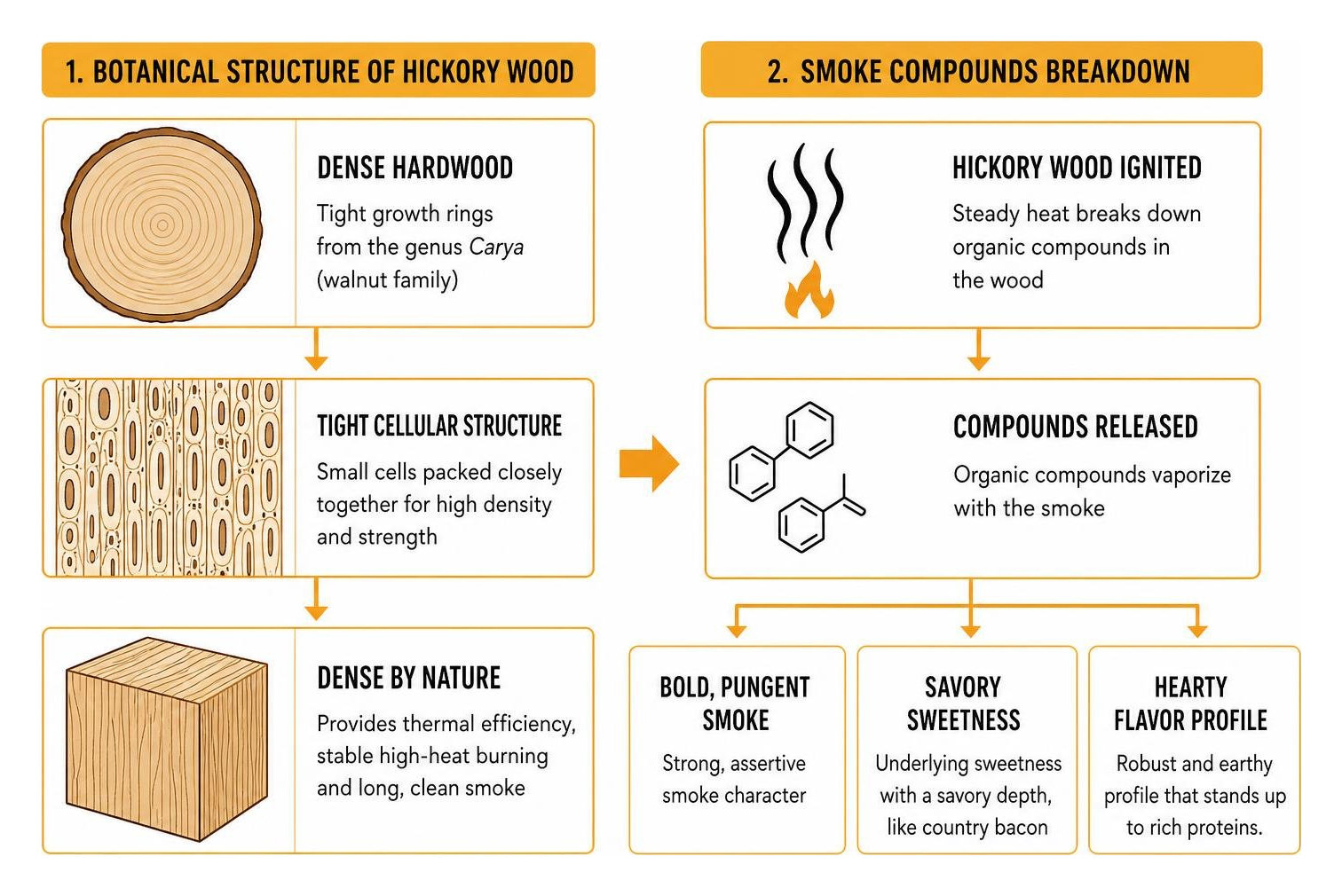
When ignited over steady heat, hickory releases a bold, pungent smoke underscored by a savory sweetness often compared to country bacon. Because its flavor profile is naturally hearty, it complements rich proteins that can stand up to heavy wood smoke:
- Pork Ribs and Pork Shoulder: Hickory smoke cuts through the intramuscular fat of pork, creating a mahogany-colored crust (the “bark”) and infusing deep, savory notes.
- Beef Brisket and Beef Ribs: The intense beefy profile of brisket harmonizes with the bold, earthy undertones of hickory without disappearing behind the meat’s natural richness.
- Whole Poultry and Turkey: When applied in measured amounts, hickory gives poultry skin a golden color and a rustic, campfire aroma.
- Wild Game: Dense, lean meats like venison and wild boar benefit from the robust aroma of hickory, which rounds out natural gaminess.
Hickory Wood Chips vs. Wood Chunks: Choosing the Right Cut
Choosing between wood chips and larger wood chunks comes down to cook time and your fuel source. Wood chips measure roughly 1 to 3 inches in length and are thinly shaved or cut. They ignite rapidly and produce an immediate burst of aromatic smoke, making them ideal for quick-grilling sessions under an hour or for use in compact electric trays and gas smoker boxes.
Wood chunks, by contrast, are cut into roughly 3-inch blocks. Their greater mass allows them to smolder slowly over hours without burning away completely, making them better suited for overnight smoking.
| Feature | Hickory Wood Chips | Hickory Wood Chunks |
|---|---|---|
| Average Piece Size | 1 to 3 inches (shaved/chipped) | 3″ × 3″ × 3″ solid blocks |
| Typical Burn Time | 30 to 45 minutes per batch | 2 to 4+ hours per piece |
| Ignition Speed | Rapid (under 5 minutes) | Gradual (10 to 15 minutes) |
| Best Cooking Equipment | Gas grills, electric smokers, stovetop smokers | Offset smokers, large charcoal kettles, drum smokers |
| Ideal Meat Cuts | Steaks, pork chops, chicken pieces, fish, burgers | Whole brisket, pork butt, whole turkeys, beef ribs |
| Bulk Box Weight | ~28 lb per 1.5 cu. ft. case | ~40 lb per 1.5 cu. ft. case |
How Hickory Compares to Apple, Mesquite, and Cherry
Every hardwood species brings a distinct balance of smoke intensity, aroma, and color to the grill grates. Understanding where hickory sits on the flavor spectrum helps you build custom smoke profiles by mixing wood varieties:
- Mesquite: Sits above hickory in sheer intensity. Mesquite burns hot and fast, producing an earthy, bold smoke that can turn bitter if used on long cooks. It is best reserved for quick-seared flank steaks and fajita meat.
- Hickory: Sits in the medium-to-strong category. It delivers classic Southern barbecue flavor with a recognizable bacon-like aroma and subtle sweetness, remaining versatile across almost all red meats and pork.
- Apple: A mild fruitwood that imparts a subtle, fruity sweetness. It takes longer to penetrate dense meats and is prized for delicate cuts like chicken breasts, pork tenderloin, and fish.
- Cherry: Known for its mild, sweet aroma and the rich, dark mahogany-red hue it imparts to meat surfaces. Pitmasters frequently blend 60% hickory with 40% cherry to combine hickory’s deep flavor with cherry’s visual appeal.
How to Smoke with Hickory Wood Chips on Gas, Charcoal, and Electric Grills
Mastering wood smoke requires managing temperature and airflow. Your goal is to produce “thin blue smoke”—a faint, translucent haze of clean vapor—rather than billowing white clouds of smoldering soot.
Step-by-Step Setup for Gas and Electric Smokers
Gas burners and electric heating elements provide clean heat, but they do not naturally create wood smoke. To add genuine smokehouse character, you need a dedicated container for your chips:
- Equip a Smoker Box: Place your dry chips into a heavy-gauge stainless steel smoker box. If you do not have a dedicated box, wrap a handful of chips in heavy-duty aluminum foil and poke several small holes in the top with a fork to let smoke escape.
- Position Over the Heat Source: On a gas grill, place the smoker box directly above the primary lit burner beneath the cooking grate. On an electric smoker, load your wood into the designated internal chip chute or tray adjacent to the heating element.
- Preheat and Wait for Smoke: Turn the primary burner to medium-high until the chips begin to smolder. Once a steady stream of thin smoke emerges, turn your grill down to your target cooking temperature (typically 225°F to 250°F).
- Choose Clean-Burning Wood: Using all-natural clean-burning chips with the outer bark removed ensures minimal ash buildup and keeps your grill’s burner tubes clean throughout the cook.
Managing Charcoal Fires and Smoker Boxes
Charcoal setups offer the most straightforward way to run wood chips because the hot coals provide direct ignition:
- The Direct Ember Method: Scatter a dry handful of chips directly over glowing briquettes or lump charcoal right before placing your meat on the grate. This creates immediate smoke that infuses the meat during the critical early stages of cooking.
- The Smoker Pouch on Coals: To extend chip life on charcoal, place chips inside a perforated foil packet and set that packet on the edge of the coal bed. The foil limits oxygen, allowing the wood to smolder gently rather than catching fire.
- Airflow Management: Adjust your grill’s bottom intake dampers to control fire temperature and top exhaust dampers to draw smoke cleanly across the meat. Never close the top exhaust vent entirely, as trapped smoke turns stale and imparts an acrid, bitter flavor.
Soaking Hickory Wood Chips: Flavor Myths and Best Practices
A common debate in the barbecue community is whether to soak wood chips in water for 30 minutes before smoking. While soaking was long thought to extend burn time, thermodynamic testing reveals that water-soaked wood cannot produce flavorful smoke until all absorbed moisture evaporates at 212°F.
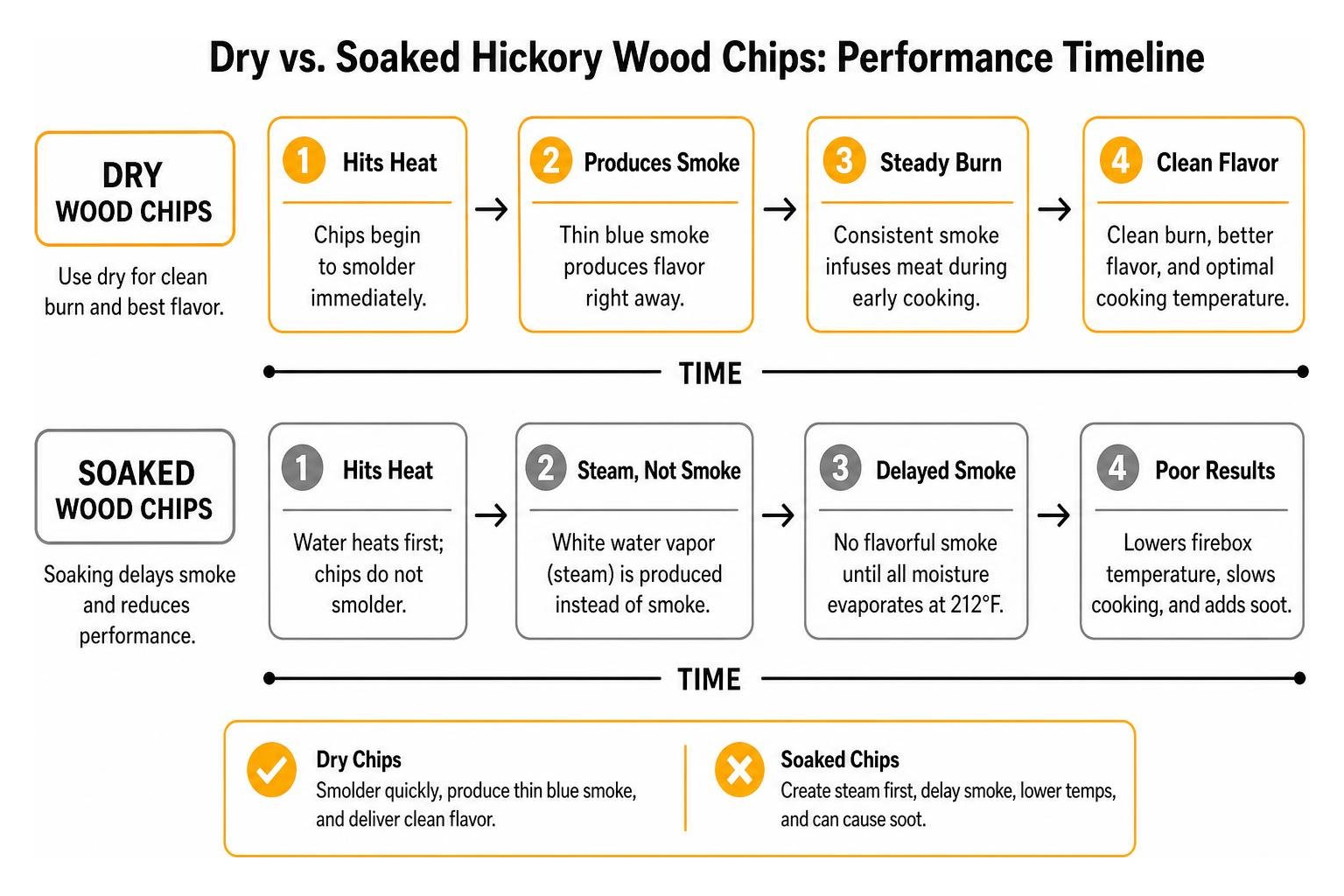
When wet wood hits hot coals, it produces white water vapor (steam) rather than smoke. This steam lowers firebox temperatures, slows cooking, and can deposit soot on your food.
For the cleanest burn and best flavor, use kiln-dried wood chips dry. If your setup runs hot and chips burn too quickly, restrict oxygen using a dedicated smoker box rather than adding water to the wood.
Health, Safety, and Proper Storage for Smoking Wood
Smoking with untreated hardwood is an excellent way to prepare healthy, flavorful meals. Cooking with aromatic wood smoke adds deep flavor without added calories, fat, or sodium, fitting easily into low-sodium and health-conscious lifestyles. Our team often discusses how clean, natural forestry products enhance everyday life in our collection of helpful outdoor cooking resources.
Clean Combustion and Health Considerations
To ensure safe cooking, always choose wood harvested, debarked, and kiln-dried specifically for food preparation. Tree bark collects dirt, lichens, and fungal spores that create bitter off-flavors and undesirable particulates when burned.
Food-grade hickory chips are kiln-dried without chemical binders, accelerants, or artificial fragrances. This controlled drying yields clean combustion, minimal ash, and a steady smolder that avoids the dense creosote build-up linked to poorly ventilated, smoldering green wood.
Storing Wood to Prevent Moisture and Contaminants
Hardwoods are naturally porous and absorb ambient humidity if left exposed to the elements. Proper storage keeps your wood dry and ready to use:
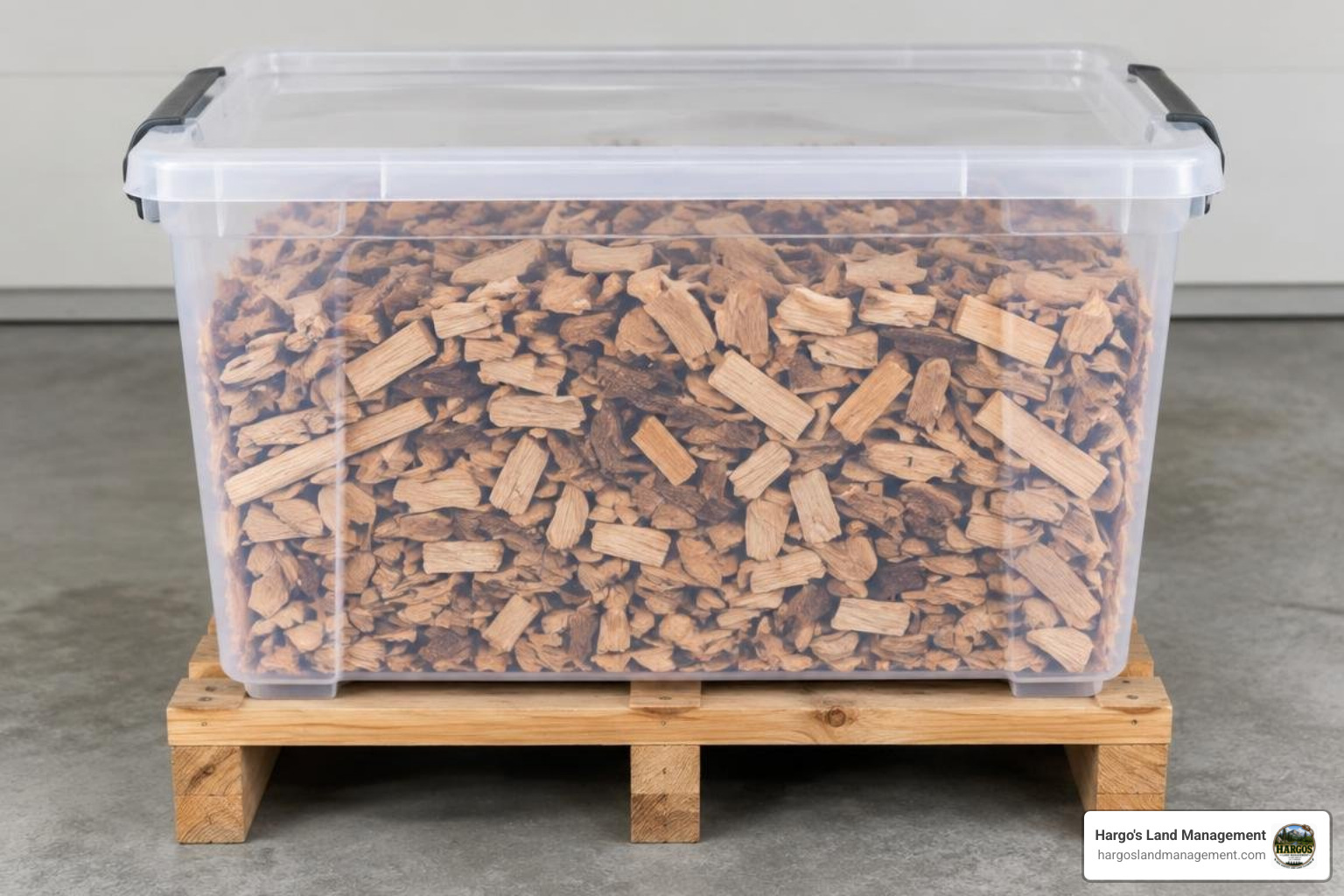
- Elevate Off Dirt and Soil: Never store boxes or bags of smoking wood directly on bare soil. Keep wood containers elevated on shelves or dry concrete surfaces to prevent ground moisture from seeping in.
- Use Sealed, Ventilated Storage: Keep opened bags in heavy-duty plastic storage bins with tight lids to deter rodents, spiders, and wood-boring insects.
- Keep Storage Areas Dry: Store your wood in a garage, shed, or covered patio away from roof run-off and morning dew. Excess moisture encourages mold growth, which ruins the wood’s natural aroma.
Beyond the Smoker: Landscaping and Mulch Repurposing
Property owners often ask whether yard wood chips can double as cooking fuel. In short: keep them separate. Untreated cooking chips belong in the smoker, while yard chips belong in the landscape.
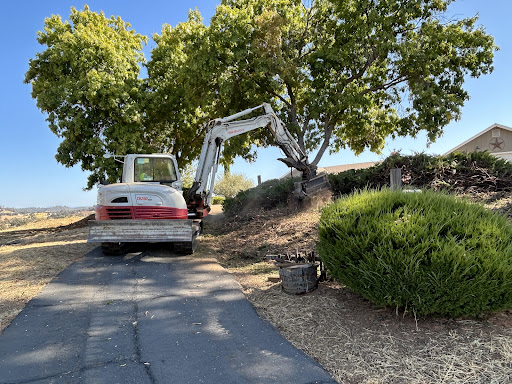
When managing trees or clearing brush on rural properties, routine residential wood chipping converts fallen branches and slash into useful ground mulch. This coarse wood mulch helps retain soil moisture, stabilizes root temperatures, and suppresses weeds around gardens and walking paths.
However, because yard mulch contains mixed species, raw bark, green sap, and soil debris, it should stay in the landscape rather than your smoker box.
Frequently Asked Questions About Smoking with Hickory
What meats pair best with hickory wood smoke?
Hickory pairs exceptionally well with fatty, robust proteins like pork shoulder (pulled pork), pork spare ribs, beef brisket, beef plate ribs, and whole chickens. Its rich profile also complements wild game meats like venison and duck. For lighter proteins like delicate white fish or chicken breast, use hickory sparingly or blend it with milder fruitwoods like apple or peach.
How long do hickory chips produce smoke during a cook?
A standard handful of dry hickory wood chips placed in a smoker box or over hot coals burns for roughly 30 to 45 minutes. For cooking sessions lasting several hours, add a fresh handful of dry chips every 45 to 60 minutes during the first two to three hours of cooking, which is when meat absorbs smoke most readily.
Can dry wood chips cause dangerous flare-ups?
Dry wood chips can catch fire if exposed to open flames and excessive oxygen. To prevent flare-ups, avoid dropping loose chips onto roaring, open flames. Instead, tuck them inside an enclosed metal smoker box, wrap them in a perforated aluminum foil pouch, or place them directly onto glowing, ash-covered charcoal coals while keeping the grill lid closed to regulate airflow.
Conclusion
Hickory wood remains an American barbecue classic for good reason. Its steady heat output, balanced bacon-like aroma, and versatility across red meat and poultry make it an essential tool for any outdoor cook. By selecting clean, kiln-dried chips, managing your grill’s airflow, and using dry wood over indirect heat, you can reliably create tender, flavorful smokehouse meals in your own backyard.
At Hargo’s Land Management, we care deeply about wood health, defensible space, and sustainable forest management across our local Northern California communities. Whether you are dialing in your weekend barbecue setup or looking for clean ground cover to protect your soil, explore our options for sourcing free wood chips for property projects to keep your land healthy, safe, and beautiful all year long.
CUSTOMER REVIEWS & TESTIMONIALS
We strive to exceed your expectations. See what our customers have to say.




















CONTACT US TODAY
Serving El Dorado and Surrounding Counties
Locally owned and operated since 2013. Use our live chat support to get in touch about your land management needs today.
Request a free evaluation and estimate by completing our online form or book an on-site appointment.
El Dorado County: El Dorado Hills, Cameron Park, Shingle Springs, Coloma, Placerville, Camino, Pollock Pines, South Lake Tahoe and more...
Amador County: Jackson, Ione, and Surrounding Towns
Sacramento County: Sacramento and Surrounding Cities
Placer County: Roseville, Rocklin, Auburn, and Everything In Between
Nevada County: Penn Valley, Nevada City, Grass Valley