
Transform Overgrown Acreage into Usable Ground Fast
Turn Overgrown Acreage into Usable, Safer Ground
Skid steer land clearing is a fast way to cut brush, mulch small trees, remove stumps, and prepare a property for defensible space, trails, fencing, or construction. Start by walking and marking the site for utilities, rocks, drainage areas, property lines, and trees you want to keep. Then match the attachment to the vegetation: use a brush cutter for lighter growth, a forestry mulcher for dense brush and small trees, and a grapple or stump tool for cleanup.
For many residential properties, a skid steer can clear targeted areas in less than a day while working around mature trees, structures, and tight access points. A forestry mulcher can typically process moderate brush at roughly 1/4 to 1/2 acre per hour, turning vegetation into a mulch layer instead of leaving burn piles behind.
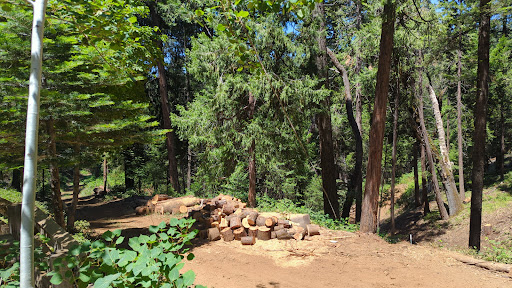
For El Dorado County landowners, the goal is not simply to make land look cleaner. It is to reduce ladder fuels, create better access, and build more usable, wildfire-conscious space without disturbing more ground than necessary.
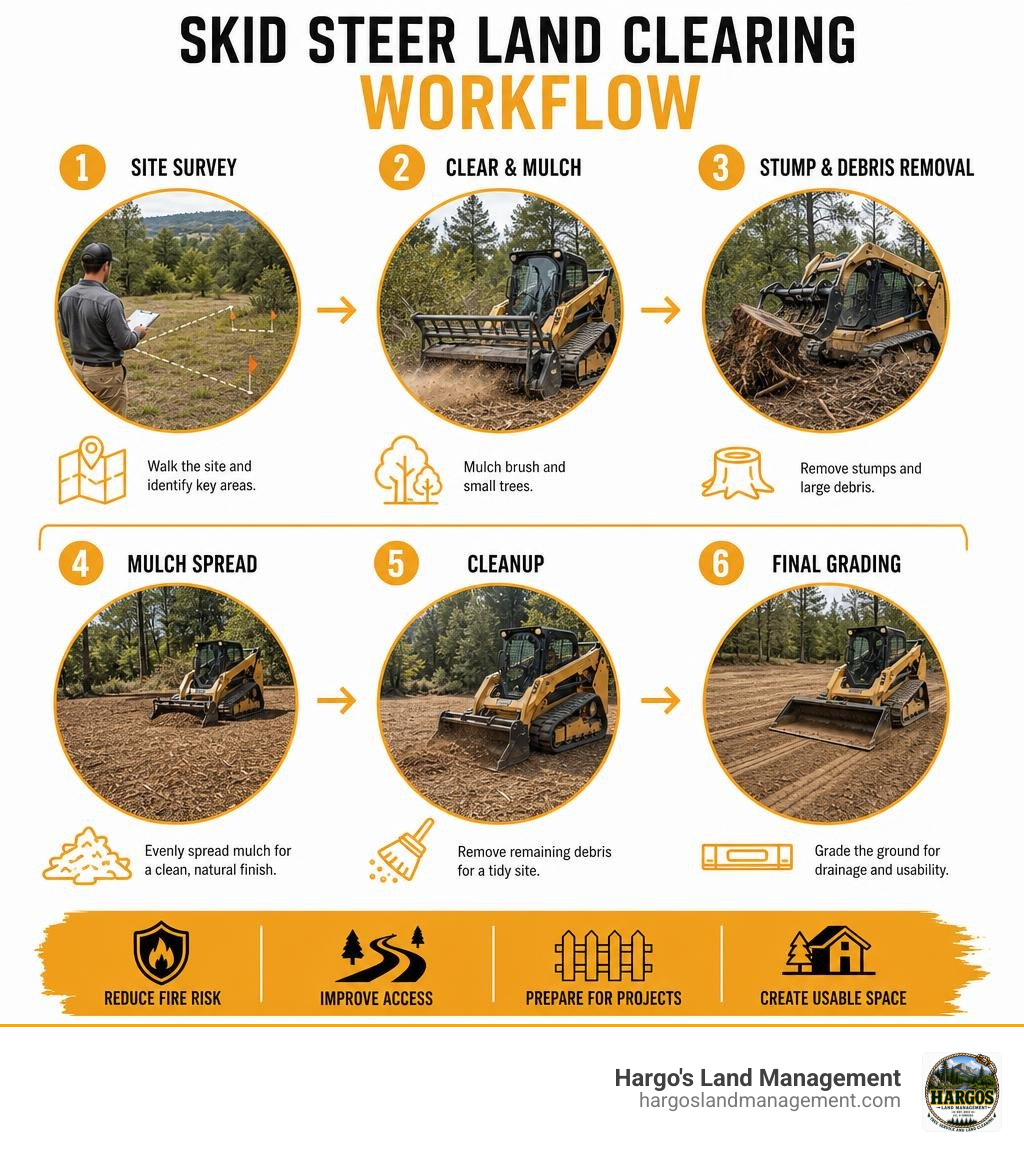
Skid steer land clearing vocab to learn:
Essential Attachments for Skid Steer Land Clearing
A skid steer is only as capable as the implement attached to its front arms. The universal quick-attach system found on modern loaders allows operators to swap heavy-duty work tools in minutes, turning a single power unit into an all-in-one land reclamation system. Choosing the right tool comes down to matching your machine’s hydraulic capacity with the thickness and density of the vegetation on-site.
For heavy clearing projects involving mixed brush and standing timber, heavy-duty attachments like the Heavy-Duty 72-Inch Hydraulic Forestry Mulcher deliver the high-torque performance needed to shred mature woody growth directly into ground cover in a single continuous pass.
Forestry Mulchers and Brush Cutters for Dense Growth
When thick manzanita, buckbrush, berry vines, and small softwood stands take over acreage, cutting tools do the heavy lifting:
- Rotary Brush Cutters: Built for mowing tall grass, thick weeds, and saplings up to 4 inches in diameter. Open-front deck designs allow the spinning blades to contact standing brush before the frame pushes it over, preventing bog-down and speeding up processing times.
- Disc Mulchers: Utilizing a heavy flywheel with perimeter teeth, disc mulchers store kinetic energy to fell trees up to 14 inches thick quickly. They excel at rapid, aggressive clearing across open fields.
- Drum Mulchers: Engineered with a horizontal spinning rotor, drum mulchers grind standing trees up to 8 to 12 inches in diameter down to fine, uniform mulch. They give operators precise control when working close to the ground or around structures, making them central to professional mastication services.
Grapples, Stump Grinders, and Grubbing Tools
Clearing timber often leaves behind large logs, root balls, and below-ground obstacles that standard cutters cannot process:
- Root Grapples: Featuring bottom tines that slide beneath the dirt without scooping up excessive topsoil, hydraulic grapples clamp down on fallen logs, large root clusters, and boulders. They make log skidding and pile consolidation fast and clean.
- Stump Grinders: Hydraulic wheel grinders chew through root systems 10 inches or more below grade, eliminating trip hazards and clearing the sub-surface profile for grading or replanting.
- Grubbing Attachments: Purpose-built V-shaped blades wedge under deep root collars. By levering the loader arms, operators can pop entire root balls directly out of the ground to prevent aggressive resprouting, complementing dedicated tree service work on complex lots.
Land Planers and Root Rakes for Final Grading
Once trees and brush are cleared, the soil surface must be reshaped and finished. A 72-inch skid steer land plane provides the grading muscle needed to scarify hard-packed ground, break up root mats, and sift out loose debris. Equipped with adjustable ripper teeth and sifting screens, these attachments smooth uneven skid paths, repair washouts, and leave a stable, flat seedbed ready for construction or erosion-control plantings.
Matching Machine Specs to Land Clearing Attachments
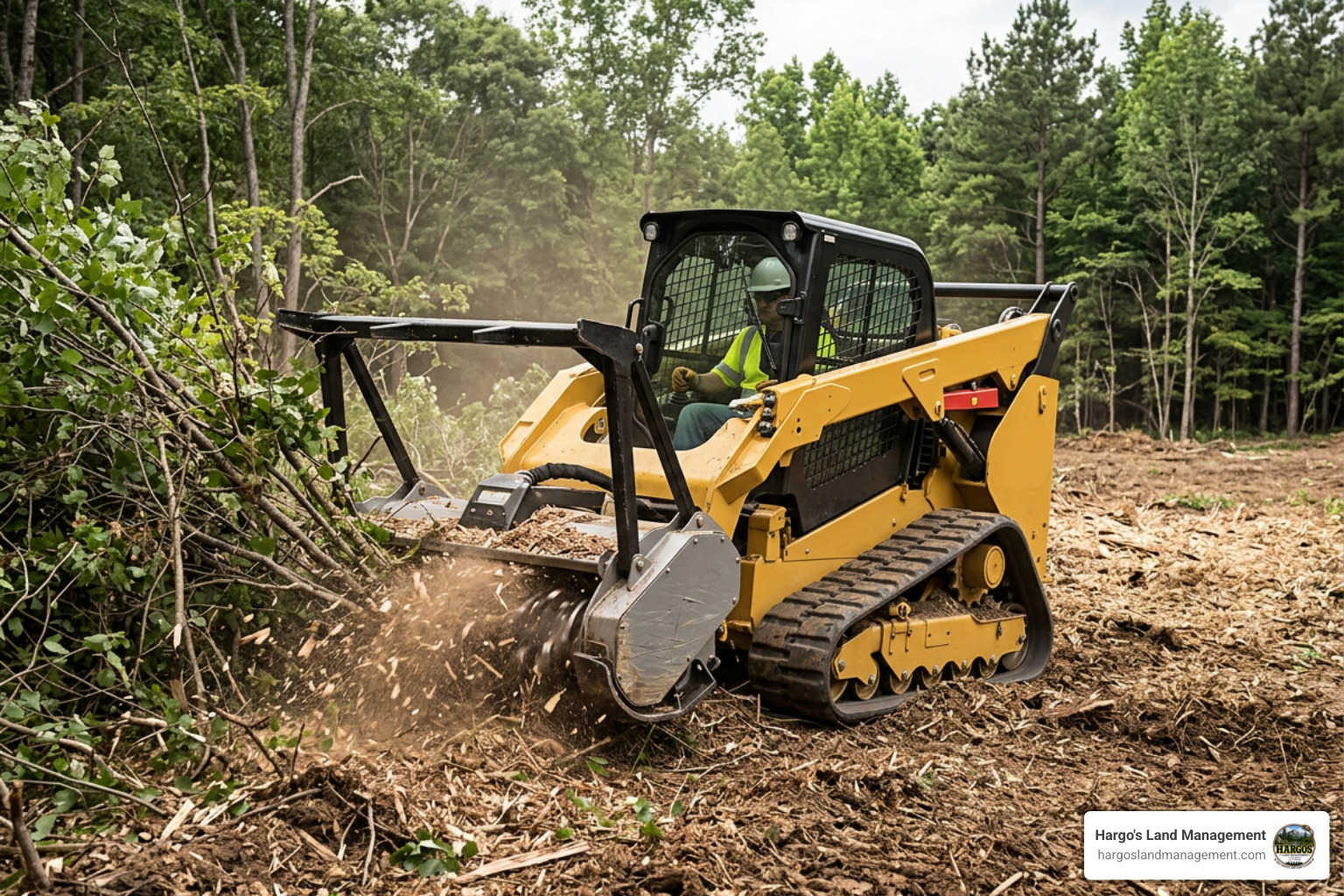
Operating a heavy land-clearing attachment on an undersized or underpowered machine leads to constant hydraulic stalling, extreme engine wear, and disappointing production rates. Matching your skid steer or compact track loader (CTL) to the implement ensures optimal cutting torque and keeps cooling systems operating safely under continuous load.
Hydraulic Flow and Operating Capacity Requirements
Skid steer hydraulic systems come in two primary configurations: standard-flow and high-flow. Understanding the demands of your implement prevents premature component failure:
- Standard-Flow Hydraulics (15 to 25 GPM): Standard-flow systems operate around 3,000 PSI and are suited for lighter implements, including rotary brush mowers (up to 4-inch cutting capacity), light grapples, and soil levelers.
- High-Flow Hydraulics (26 to 45+ GPM): High-flow systems boost hydraulic output and pressure (often up to 3,500–4,000 PSI). High-flow capacity is essential for drum forestry mulchers, high-torque disc cutters, and heavy stump grinders that must process 8- to 12-inch trees without losing drum RPM.
- Rated Operating Capacity (ROC): Heavy forestry heads can weigh between 1,500 and 3,000 pounds. Ensure your loader has a rated operating capacity high enough to carry the attachment safely at full lift height on uneven slopes without tipping.
Key Attachment Features: Teeth, Materials, and Mounting
When selecting heavy-duty clearing attachments, evaluate their construction details:
- Tooth Selection: Carbide teeth provide exceptional durability in rocky, abrasive soils where ground contact is unavoidable. Planer or knife-style steel teeth cut faster and yield finer mulch in clean wood, but dull quickly if they strike granite or shale.
- Bite-Limiting Rotors: Modern drum mulchers often incorporate bite-limiting rings or ribs along the rotor. These limit how deep the teeth can bite into a log per revolution, preventing engine bogging, maintaining steady drum RPM, and smoothing out hydraulic spikes.
- High-Strength Steel Construction: Frames and wear liners built with AR400 or Hardox steel resist abrasive wear, thrown rocks, and structural deformation when pushing over standing timber.
- Universal Mounting: Standardized quick-tach plates ensure seamless compatibility across all major equipment brands, allowing swift swaps between mulching heads, grapples, and grading attachments.
Step-by-Step Property Reclamation Workflow
Systematic land clearing protects existing property features, eliminates safety hazards, and maximizes hourly production. Our team at Hargo’s Land Management uses a structured multi-phase workflow to execute fast, clean, and safe residential brush and land clearing across the Sierra Foothills.
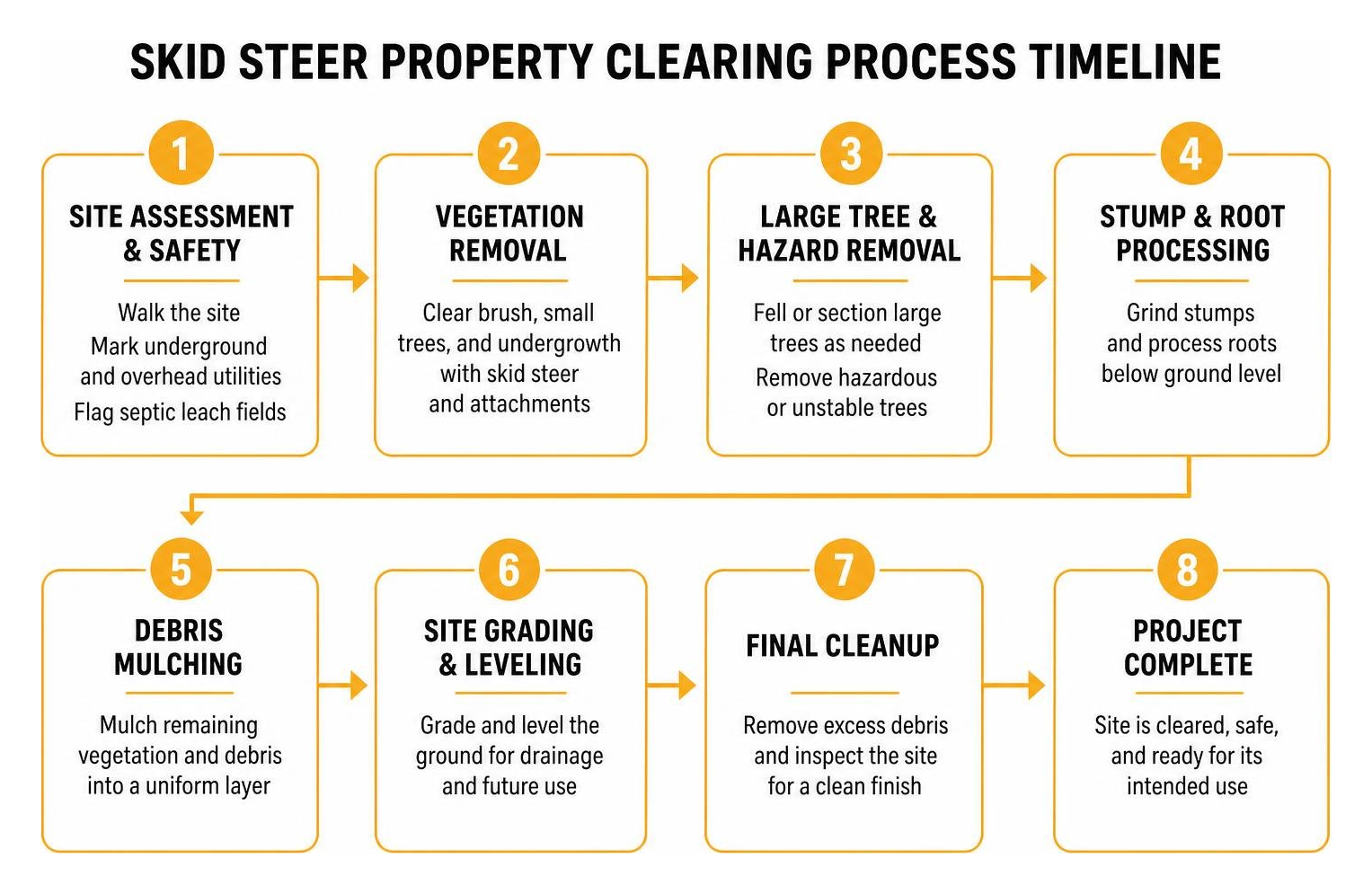
1. Site Assessment and Pre-Operation Safety Protocol
Every clearing project begins on foot before the machine leaves the trailer:
- Mark Underground and Overhead Utilities: Locate water lines, electrical conduits, septic tanks, and low-hanging service lines. Flag septic leach fields so heavy equipment avoids compacting the soil above them.
- Flag Hazards and Keep Trees: Clearly mark boundary lines, hidden metal posts, boulders, irrigation valves, and high-value heritage trees (such as mature black oaks) that require preservation.
- Set Up Debris Zones: Establish an active perimeter of at least 200 to 300 feet around mulching equipment. High-speed cutter teeth can throw rocks and wood splinters at high velocity.
- Inspect Protective Armor: Ensure the skid steer cab is fitted with a shatterproof polycarbonate front door (such as 1/2-inch Lexan) and forestry guarding to protect the operator from flying debris.
2. Executing Safe and Efficient Skid Steer Land Clearing
With safety zones confirmed, clearing begins from the perimeter inward:
- Tackle Standing Trees from the Top Down: For tall brush and trees up to 10–12 inches, raise the mulching drum, tilt the head forward to take down the canopy, and then lower the spinning drum steadily through the trunk to the stump.
- Maintain Steady Ground Speed: Push the attachment into the brush at a consistent speed that allows the hydraulic pump to maintain operating RPM without bogging down the engine.
- Layer the Mulch: Distribute shredded wood chips across the ground in a loose, 2-to-3-inch layer. This locks down bare dirt, insulates native soil moisture, and suppresses weed regrowth as part of ongoing vegetation management.
3. Stump Extraction, Soil Smoothing, and Final Finish
After mulching or felling overgrowth, focus shifts to ground preparation:
- Grind or Extract Root Collars: Use a stump grinder to work stumps down 4 to 10 inches beneath the soil line, or deploy a grubbing tool to pop entire root systems out on species prone to vigorous suckering.
- Consolidate Non-Mulchable Slash: Use a root grapple to pick up oversized logs, rock outcroppings, or concrete fragments without collecting loose topsoil.
- Plane and Grade: Make finishing passes with a land plane or root rake to fill tire ruts, smooth washouts, sift out roots, and restore clean ground contours.
Comparing Equipment, Costs, and Core Applications
Selecting the right equipment platform depends directly on the scope of your project, soil sensitivity, tree sizes, and budget constraints.
Comparing Skid Steers, Dozers, and Excavators

While bulldozers and large excavators move immense volumes of earth and clear large timber, compact track loaders and skid steers offer clear advantages for selective clearing on parcels under 10 acres.
| Equipment Type | Best Project Scale | Tree Capacity | Soil Disturbance | Selective Clearing Ability | Typical Transport Requirement |
|---|---|---|---|---|---|
| Skid Steer / CTL | 0.25 to 10 Acres | Up to 8–12 in. | Very Low to Moderate | Exceptional (tight spaces) | Standard Equipment Trailer |
| Bulldozer | 10 to 50+ Acres | Unlimited (up to 30+ in.) | Very High (strips topsoil) | Poor (pushes everything) | Commercial Lowboy Transport |
| Excavator | Varied / Steep Banks | Unlimited (with shear/thumb) | Moderate to High | Good (reaches steep banks) | Heavy Semi-Transport |
When comparing machines, a compact track loader with wide rubber tracks distributes machine weight down to roughly 4 to 5 PSI of ground pressure—far less than the ground impact of a 40,000-lb bulldozer. For a deeper breakdown of machine capabilities, review our heavy brush removal equipment comparison for landowners.
Project Types and Average Skid Steer Land Clearing Costs
Skid steer land clearing typically costs $150 to $350 per hour or $1,500 to $3,500 per acre for moderate vegetation density. In comparison, bulldozer clearing often requires higher mobilization fees and requires additional expenses to haul away or burn left-behind brush piles.
Common applications where skid steers deliver the highest return on investment include:
- Wildfire Defensible Space: Thinning ladder fuels and invasive thickets within 100 feet of residential homes, barns, and access routes.
- Recreational Trails & Access Roads: Carving 6-to-12-foot access lanes through dense timber without damaging adjacent healthy root zones.
- Fence Line Preparation: Clearing tight 10-foot corridors along property boundaries so fencing crews can work unimpeded.
- Pasture Reclamation & Building Prep: Eradicating encroaching invasive brush to restore grazing pastures or level ground for sheds, outbuildings, and workshops across our range of services.
Frequently Asked Questions About Skid Steer Land Clearing
What size trees can a skid steer forestry mulcher handle?
A high-flow skid steer equipped with a modern drum mulcher can efficiently mulch trees up to 8 to 12 inches in diameter. Softer tree species (such as pine, cedar, and fir) process much faster and can be handled up to 12 inches, while dense hardwoods (like black oak or madrone) are best limited to 8 inches for efficient, continuous processing.
Can a skid steer permanently remove invasive brush like mesquite and cedar?
Yes, but success depends on using the proper attachment for the target species:
- Cedar and Non-Suckering Conifers: Mulching or cutting the tree flush with the ground permanently kills the plant, as cedars do not resprout from root crowns once the green canopy is removed.
- Mesquite, Willow, and Blackberries: These plants resprout aggressively from dormant buds located 12 to 18 inches underground. To eradicate them permanently, use a grubbing attachment to extract the subsurface root crown, or follow forestry mulching with an approved spot-treatment herbicide.
When should you choose a compact track loader over a wheeled skid steer?
A Compact Track Loader (CTL) is preferred over a wheeled skid steer whenever you are working on:
- Steep Slopes: Rubber tracks provide superior traction and stability on hillsides and uneven forest terrain.
- Soft, Wet, or Sandy Soils: Tracks distribute machine weight over a large footprint, preventing the loader from sinking into mud or compacting sensitive soils around septic fields and tree root zones.
- Finished Turf: Tracks reduce tire scuffing and soil gouging during tight zero-radius turns.
Reclaim Your Land with Professional Precision
Tackling dense brush and overgrown timber does not have to mean tearing up your property with massive earthmovers or spending months dragging slash piles by hand. With modern high-flow skid steer forestry attachments, dense brush and problem trees are transformed into clean, protective ground cover in a fraction of the time.
Locally owned, licensed, bonded, and insured, our experienced team at Hargo’s Land Management helps landowners throughout El Dorado County—including Placerville and South Lake Tahoe—clean up acreage quickly while prioritizing fire resilience.
Ready to clear your boundary lines, reclaim unusable acreage, or establish robust wildfire protection around your home? Contact us today to schedule your free on-site estimate for professional defensible space clearing.
CUSTOMER REVIEWS & TESTIMONIALS
We strive to exceed your expectations. See what our customers have to say.













CONTACT US TODAY
Serving El Dorado and Surrounding Counties
Locally owned and operated since 2013. Use our live chat support to get in touch about your land management needs today.
Request a free evaluation and estimate by completing our online form or book an on-site appointment.
El Dorado County: El Dorado Hills, Cameron Park, Shingle Springs, Coloma, Placerville, Camino, Pollock Pines, South Lake Tahoe and more...
Amador County: Jackson, Ione, and Surrounding Towns
Sacramento County: Sacramento and Surrounding Cities
Placer County: Roseville, Rocklin, Auburn, and Everything In Between
Nevada County: Penn Valley, Nevada City, Grass Valley