
Is Your Propane Tank Too Close to Overgrown Brush and Outbuildings?
Keep a Clear, Fire-Safe Zone Around Your Propane Tank
To maintain safe propane tank clearance, remove dry grass, weeds, brush, trash, and other combustible material for at least 10 feet around the tank. Keep sheds, decks, walls, windows, generators, HVAC equipment, and other ignition risks outside the code-required setback for your tank size. Do not use the tank area for storage.
For many residential above-ground tanks, the key starting points are:
- 10 feet from ignition sources such as generators, electrical equipment, or open flames
- 10 feet free of weeds, dry grass, brush, and combustible debris
- 10 feet from an important building or buildable property line for common 125- to 500-gallon tanks
- 25 feet from important buildings or buildable property lines for many 501- to 2,000-gallon tanks
A propane tank surrounded by overgrown brush is more than a wildfire concern. It can give flames a direct path to the tank, block safe service access, and create a code or insurance issue. In El Dorado County, where dry vegetation and ember exposure can be severe, clearing this space is a practical part of home hardening.
Clearance rules vary by tank capacity, whether it is above ground or buried, and local fire-code amendments. Measure from the tank and identify nearby openings, outbuildings, equipment, driveways, and vegetation before clearing or building nearby.
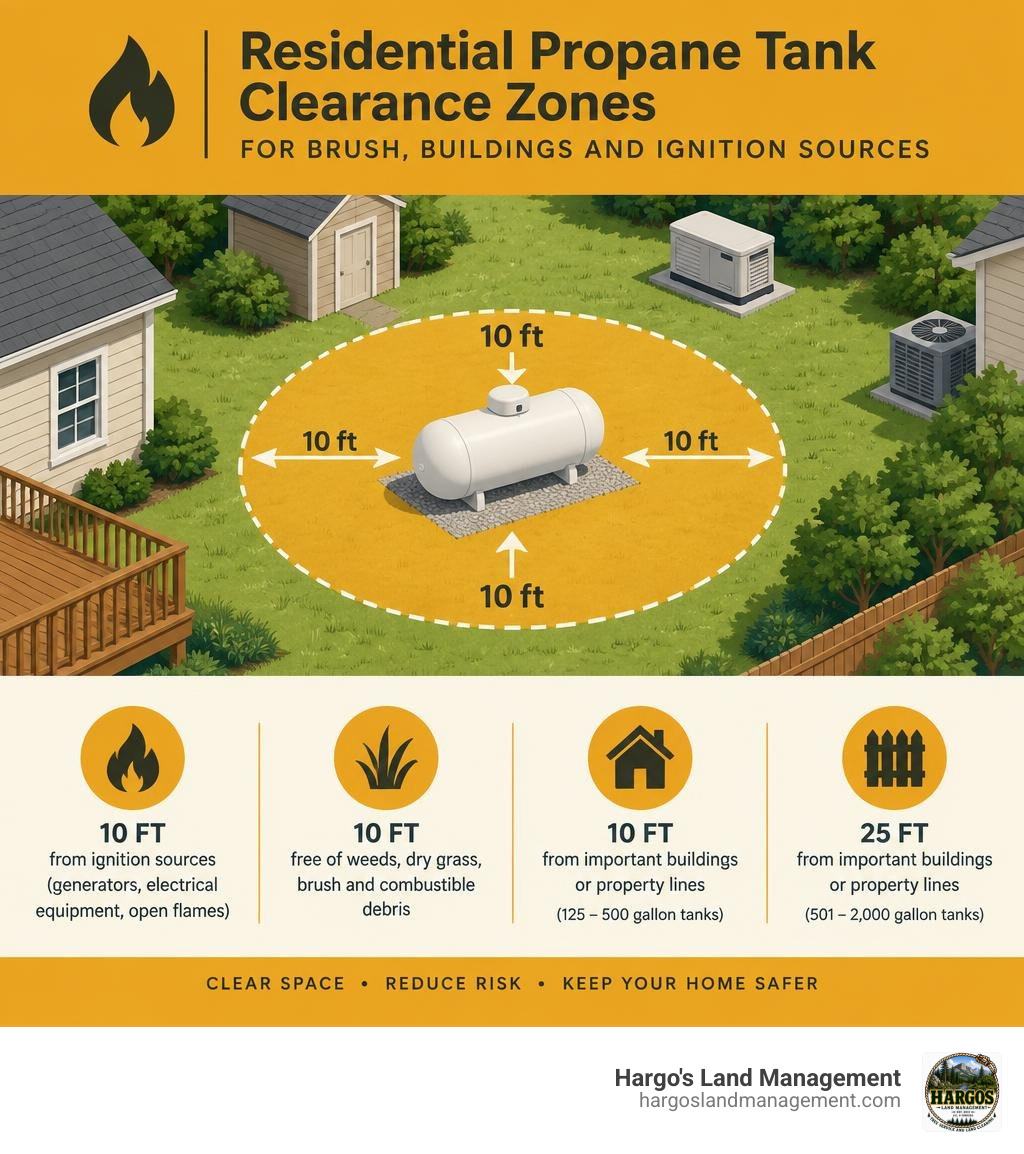
Propane tank clearance terms at a glance:
Understanding NFPA 58 and Propane Tank Clearance Standards
Liquefied petroleum gas (LP-gas) is stored under pressure as a liquid. When released, it expands to 270 times its liquid volume as a vapor. Because propane vapor is heavier than air, it pools in low spots, trenches, and foundation pockets rather than quickly dissipating into the sky. If an ignition source or open brush fire reaches that pooling gas, the consequences can be catastrophic.
To prevent fire accidents, the National Fire Protection Association establishes baseline guidelines through NFPA 58 (the Liquefied Petroleum Gas Code). States and municipal jurisdictions adopt and enforce these rules, often integrating them into local building codes and the International Fuel Gas Code. Reviewing NFPA 58 separation distance requirements shows that clearances are determined by container water capacity, whether the tank is installed above ground or buried, and the nature of nearby hazards.
Establishing these buffers goes hand-in-hand with understanding defensible space zones and tree spacing rules. In fire-prone regions, your propane tank must be treated as a critical utility asset that requires dedicated protection from wildland fuels.
| Tank Capacity (Water Gallons) | Installation Type | Min. Distance to Important Buildings / Property Lines | Min. Distance to Exterior Ignition Sources | Min. Distance to Building Openings |
|---|---|---|---|---|
| < 125 Gallons (e.g., DOT cylinders, 100-gal ASME) | Above Ground | 0 – 5 Feet (depending on wall construction) | 5 – 10 Feet | 3 Feet (horizontally from relief valve) |
| 125 to 500 Gallons | Above Ground | 10 Feet | 10 Feet | 10 Feet |
| 501 to 2,000 Gallons | Above Ground | 25 Feet (10 ft for single ≤1,200 gal tank isolated by 25 ft) | 10 Feet | 25 Feet |
| Up to 2,000 Gallons | Underground / Mounded | 10 Feet | 10 Feet | 10 Feet (from relief valve & fill connections) |
| 2,001 to 30,000 Gallons | Above Ground | 50 Feet | 10 Feet | 50 Feet |
Measuring Propane Tank Clearance for Above-Ground Containers
For above-ground tanks, separation distances are measured horizontally from the closest exterior point on the tank’s surface to the nearest structure, buildable property line, or hazard.
For smaller installations like a standard 100-gallon cylinder (often used for fireplaces, water heaters, or small ranges), the container itself may sit near an exterior masonry wall, but the pressure-relief valve discharge must remain at least 3 feet horizontally from any building opening located below the discharge point. In addition, ASME tanks filled on-site require a 10-foot buffer between their fill connection and any exterior ignition sources or mechanical air intakes.
When stepping up to a 500-gallon ASME tank—the workhorse of rural residential heating—the rules become absolute:
- Maintain at least 10 feet of clear horizontal distance to any important building (including houses, attached garages, and outbuildings).
- Maintain at least 10 feet to the nearest buildable property line.
- Keep a full 10-foot separation from exterior ignition sources, including heat pump disconnects, generators, and compressors.
For large residential and commercial containers holding between 501 and 2,000 gallons, the standard setback jumps to 25 feet from buildings and property lines. An exception allows a single container of 1,200 gallons or less to sit 10 feet from a structure, provided it maintains at least 25 feet of separation from any other LP-gas container. Furthermore, if a building features an overhang or eaves, the horizontal placement of above-ground tanks greater than 125 gallons must account for the overhead structure to prevent venting gas from collecting under soffits.
Underground and Mounded Tank Setbacks
Underground propane containers offer aesthetic advantages and natural protection against direct wildfire flame exposure. Soil acts as a thermal barrier, allowing buried tanks to have smaller exterior clearance requirements than their large above-ground counterparts.
Following IFGC LP-gas installation standards, underground and mounded LP-gas containers up to 2,000 gallons require a flat 10-foot setback from any building or buildable lot line. Unlike above-ground tanks, this distance is measured from the container’s pressure-relief valve, riser casing, and fill connections rather than the buried tank shell.
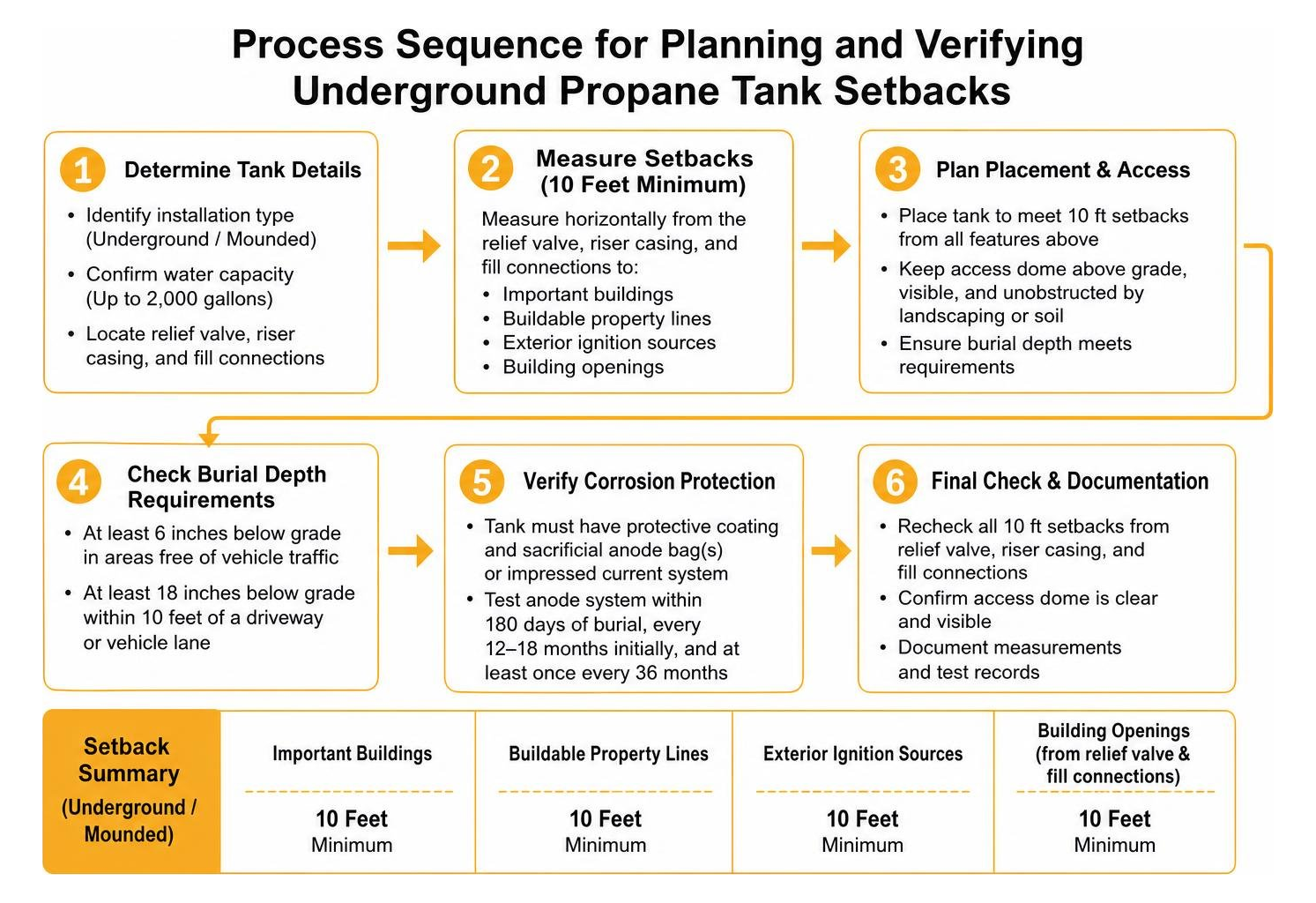
Key requirements for underground tanks include:
- Burial Depth: Containers must be buried at least 6 inches below grade in areas free of vehicle traffic, or at least 18 inches below grade if within 10 feet of a driveway or vehicle lane.
- Access Dome: The protective inspection shroud housing the relief valve, gauges, and service valves must remain above grade, clearly visible, and unobstructed by dense landscaping or soil backfill.
- Cathodic Protection: Underground tanks require a protective coating and sacrificial anode bags (or an impressed current system) to prevent structural corrosion. Anode systems should be tested within 180 days of burial, every 12 to 18 months initially, and at least once every 36 months thereafter.
How to Clear Combustible Vegetation and Brush Around Your Tank
A thick screen of manzanita, ceanothus, or tall grass might hide an industrial-looking tank from view, but in wildfire country, it turns a fuel storage container into a severe safety hazard. If radiant heat or ground flames reach an above-ground tank, the liquid propane inside boils rapidly, raising interior pressure until the relief valve opens. While the valve is designed to vent pressure safely, venting propane into active flames creates a massive torch jet.
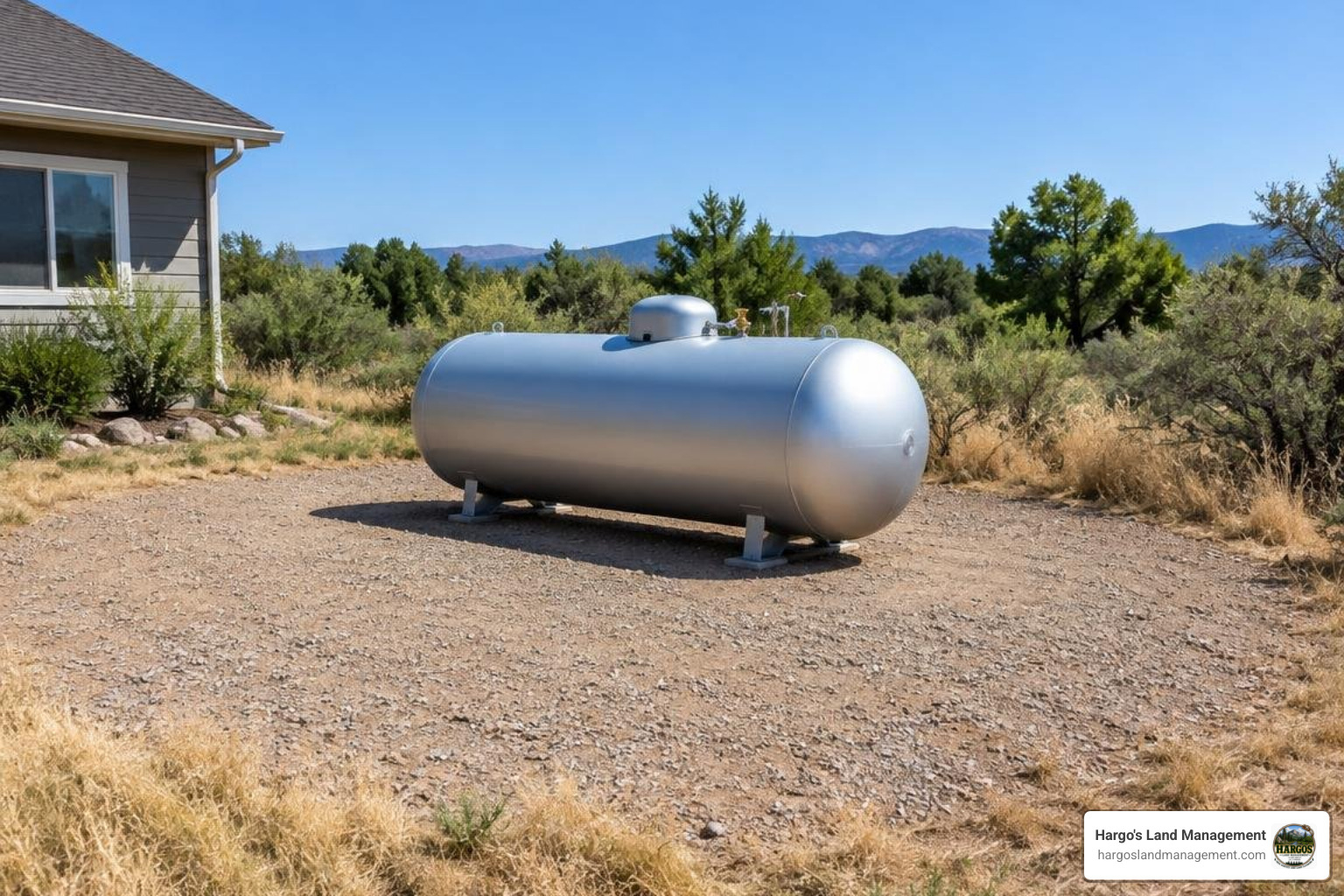
To prevent localized flame contact, NFPA 58 mandates that all weeds, dry grass, brush, fallen leaves, and combustible materials be kept at least 10 feet away from any LP-gas container. Routine weed abatement and brush management are simple ways to reduce wildfire dangers across your entire parcel.
Creating a 10-Foot Buffer: Vegetation and Propane Tank Clearance
The 10-foot perimeter around your propane tank is a zero-combustible zone. Within this 10-foot radius:
- Remove All Ground Fuels: Clear tall weeds, dead grass, pine needles, leaves, and organic mulch down to bare mineral soil.
- Install Non-Combustible Ground Covers: Replace flammable bark mulch or wood chips with crushed rock, washed pea gravel, or decomposed granite over a commercial weed barrier. This stops weeds from regrowing and prevents ember ignition.
- Eliminate Ladder Fuels: Cut back dense native shrubs, blackberry vines, and low-growing brush. If your parcel has accumulated heavy vegetation over several seasons, professional brush and land clearing can restore the required safety buffer.
Addressing Overhanging Tree Limbs and Canopy Hazards
Clearing the ground is only half the battle; overhead hazards pose a serious threat during high-wind events and canopy fires:
- Vertical Canopy Pruning: Prune all tree branches hanging directly above the tank to maintain at least 10 to 15 feet of vertical clearance above the tank fittings.
- Remove Dead and Dying Trees: Any diseased, dead, or structurally compromised trees that could fall on the tank, sever copper gas supply lines, or damage regulator valves must be addressed immediately with professional hazardous tree removal.
- Maintain Defensible Space Zones: Integrate your tank clearing into broader parcel-wide vegetation management. Keep surrounding tree crowns spaced apart to prevent canopy fire spread.
- Power Line Clearances: Ensure the tank sits at least 6 feet away from the vertical plane of overhead power lines carrying more than 600 volts, reducing the risk of fallen electrical lines contacting the steel container.
Outbuilding, Structure, and Mechanical Clearance Checklist
It is common for rural properties to accumulate outbuildings over time. However, building a wooden storage shed, installing a workshop, or extending a backyard deck too close to an existing tank introduces structural fire hazards that violate safety codes.
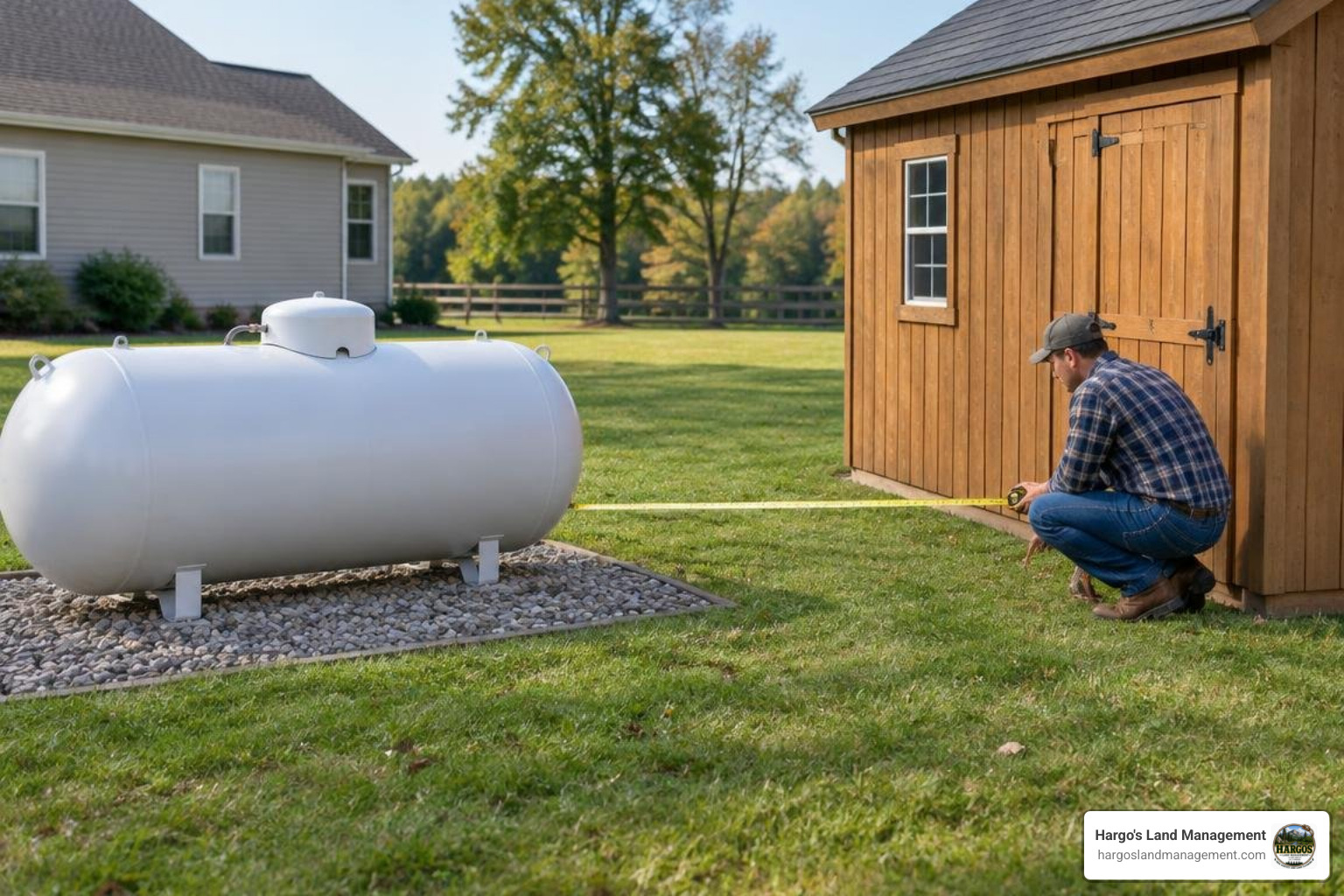
Wooden structures within the code-prohibited zone can ignite from embers and subject the propane tank to prolonged direct flame exposure. Keep these structural setbacks in mind:
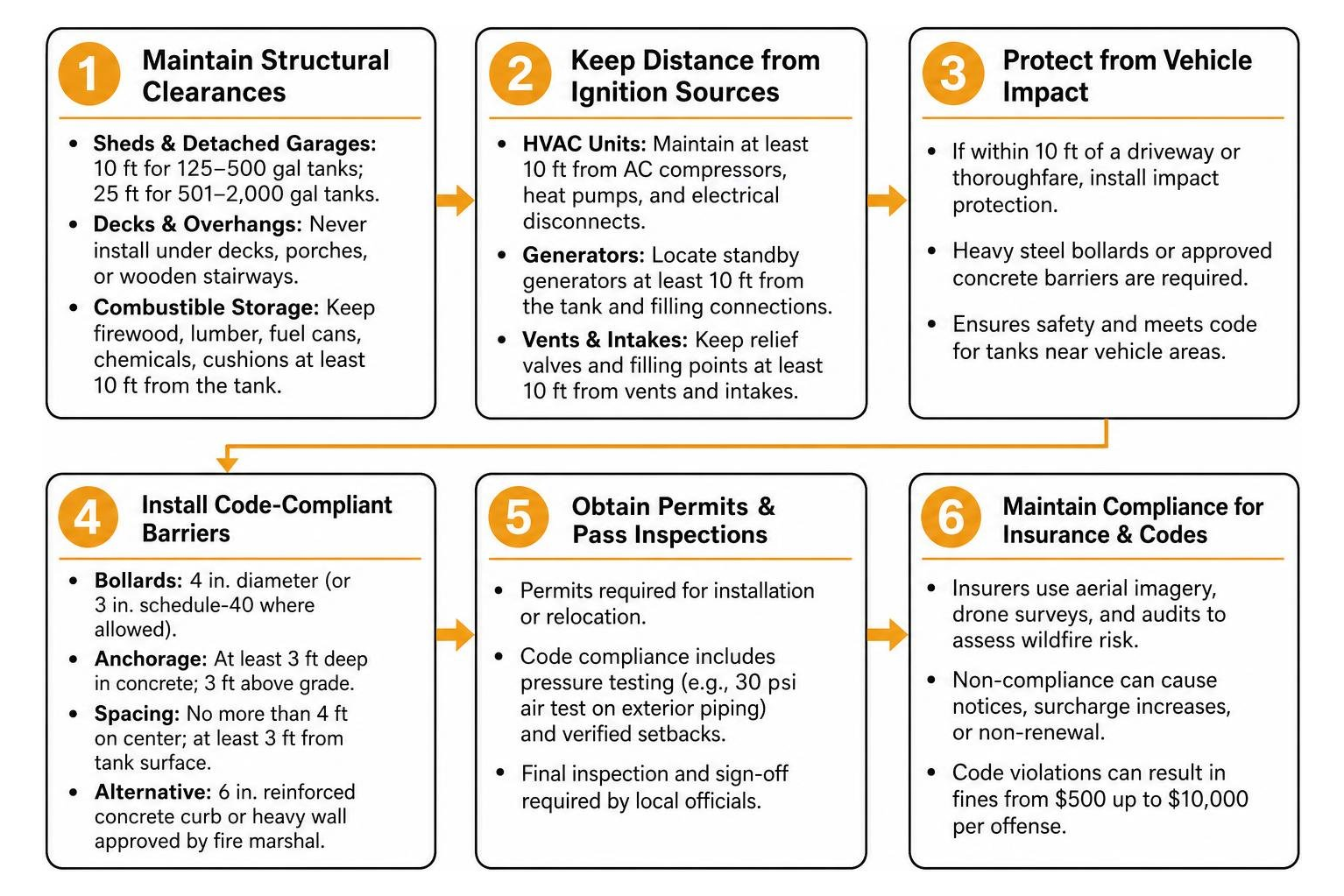
- Sheds and Detached Garages: Treat wooden workshops, tool sheds, and pump houses as important buildings. Maintain a minimum 10-foot setback for 125- to 500-gallon tanks, and 25 feet for 501- to 2,000-gallon tanks.
- Decks and Overhangs: Never install a propane tank underneath a cantilevered deck, porch, or wooden stairway. Venting gas can become trapped under the deck framing.
- Combustible Storage: Do not store firewood stacks, scrap lumber, gasoline cans, paint thinners, or patio cushions within 10 feet of the tank.
Maintaining Setbacks from Air Conditioners, Generators, and Ignition Sources
Propane appliances and systems are designed to operate safely, but exterior mechanical systems can generate electrical arcs, sparks, and extreme heat during normal operation.
Every propane tank installation requires dedicated clearance from all exterior ignition sources:
- Air Conditioning Compressors & Heat Pumps: Maintain at least 10 feet of clearance between the propane container (and its relief valve) and exterior HVAC condensing units, electrical disconnect boxes, and heat pumps.
- Standby Generators: Backup generators are essential during rural power outages, but they have hot exhaust systems and electrical switchgear. Always locate stationary generators at least 10 feet from the tank and filling connections.
- Direct-Vent Appliances & Intakes: Keep relief valves and filling points at least 10 feet away from mechanical ventilation intakes, crawl space vents, and openings into direct-vent heating equipment.
Physical Vehicle Impact Barriers and Driveway Protection
Tanks situated near driveways, parking pads, alleys, or equipment turnaround areas face the risk of vehicle impact. If an above-ground LP-gas container sits within 10 feet of a vehicular thoroughfare, NFPA codes and local fire ordinances mandate heavy-duty vehicle impact protection.
Standard vehicle barrier requirements include:
- Bollard Specifications: Heavy-gauge steel bollards (structural steel pipe) at least 4 inches in diameter (or 3-inch schedule-40 steel in certain state-specific codes).
- Concrete Anchoring: Bollards must be anchored at least 3 feet deep into concrete footings, extending at least 3 feet above finished grade.
- Spacing: Bollard posts must be spaced no more than 4 feet apart on center and positioned at least 3 feet away from the tank surface to allow adequate room for servicing and gauge inspection.
- Alternative Barriers: Continuous 6-inch reinforced concrete curbing or heavy perimeter retaining walls can be approved by the local fire marshal if they physically block vehicle access.
Ensuring Compliance for Insurance Policies and Local Fire Codes
Property owners across California and fire-prone western states face strict scrutiny from insurance providers. Underwriting teams routinely use high-resolution aerial imagery, drone surveys, and drive-by field audits to evaluate wildfire risks on residential properties.
A propane tank surrounded by unmanaged brush, touching a wooden fence, or sitting too close to a structure is one of the most common red flags flagged during underwriting reviews. Non-compliance often leads to immediate notices of required hazard correction, steep policy surcharge spikes, or outright policy non-renewal.
In addition to insurance risks, municipal fire marshals and building officials enforce strict LP-gas compliance:
- Permits and Inspections: Relocating or installing an LP-gas container requires permits, pressure tests (such as a 30 psi air-pressure test on exterior piping lines with joints), and signed off setbacks.
- Code Violation Penalties: In states like Texas, administrative fines for LP-gas code violations range from $500 up to $10,000 per offense, with criminal misdemeanor fines accumulating daily for deliberate violations.
- Service Refusals: Propane delivery drivers are legally required to refuse tank refills if they encounter an illegible manufacturer nameplate, excessive rust, buried relief valves, or overgrown brush that blocks safe access.
Completing comprehensive insurance clearing protects your property from wildfire hazards while helping you maintain clean inspection records for your insurance carrier.
Frequently Asked Questions About Propane Tank Setbacks
How close can a propane tank be to a window or building opening?
For standard above-ground residential tanks between 125 and 500 gallons, the tank and its pressure-relief valve must sit at least 10 feet away from any building opening, including operable windows, exterior doors, crawlspace vents, and basement access points. For small containers under 125 gallons, the relief valve discharge must remain at least 3 feet horizontally from any opening that sits below the level of the discharge, and at least 5 feet from mechanical air intakes.
Can dry brush or wooden structures be within 10 feet of a propane tank?
No. National safety codes (NFPA 58) and local fire ordinances mandate a minimum 10-foot cleared safety perimeter around all propane tanks. You must remove all weeds, dry grass, brush, tree branches, trash, and combustible storage. Wooden outbuildings such as sheds and gazebos must meet the structural building setback for your specific tank size (at least 10 feet for 125- to 500-gallon tanks, and 25 feet for 501- to 2,000-gallon tanks).
Do underground propane tanks need the same clearance as above-ground tanks?
Underground propane tanks have smaller property line and structural setbacks because surrounding soil provides thermal insulation. Underground tanks of up to 2,000 gallons require a flat 10-foot setback from buildings and buildable property lines, measured directly from the relief valve and riser casing. However, you must still maintain a 10-foot clearance from exterior ignition sources and keep the inspection dome clear of dense vegetation, dirt, and heavy storage.
Protect Your Property with Professional Defensible Space
Maintaining safe clearance around your propane tank is an essential part of preparing your property for wildfire season. Clear zones protect your fuel storage from wildfire exposure, prevent gas leaks near home ignition points, and keep your property compliant with municipal fire codes and insurance standards.
At Hargo’s Land Management, we help property owners throughout El Dorado County—including Placerville, South Lake Tahoe, and surrounding foothill communities—establish code-compliant safety perimeters. As a locally owned, licensed, bonded, and insured team, we provide rapid, high-quality land management services tailored to fire safety.
Whether you need heavy brush clearing, hazardous overhanging tree limb pruning, or parcel-wide fire-season preparation, we are here to help. Contact us today to schedule your free on-site estimate and secure your home with comprehensive defensible space clearing.
CUSTOMER REVIEWS & TESTIMONIALS
We strive to exceed your expectations. See what our customers have to say.














CONTACT US TODAY
Serving El Dorado and Surrounding Counties
Locally owned and operated since 2013. Use our live chat support to get in touch about your land management needs today.
Request a free evaluation and estimate by completing our online form or book an on-site appointment.
El Dorado County: El Dorado Hills, Cameron Park, Shingle Springs, Coloma, Placerville, Camino, Pollock Pines, South Lake Tahoe and more...
Amador County: Jackson, Ione, and Surrounding Towns
Sacramento County: Sacramento and Surrounding Cities
Placer County: Roseville, Rocklin, Auburn, and Everything In Between
Nevada County: Penn Valley, Nevada City, Grass Valley