
The Ultimate Guide to Tree Pruning Basics
Tree Pruning Basics: What to Cut and When
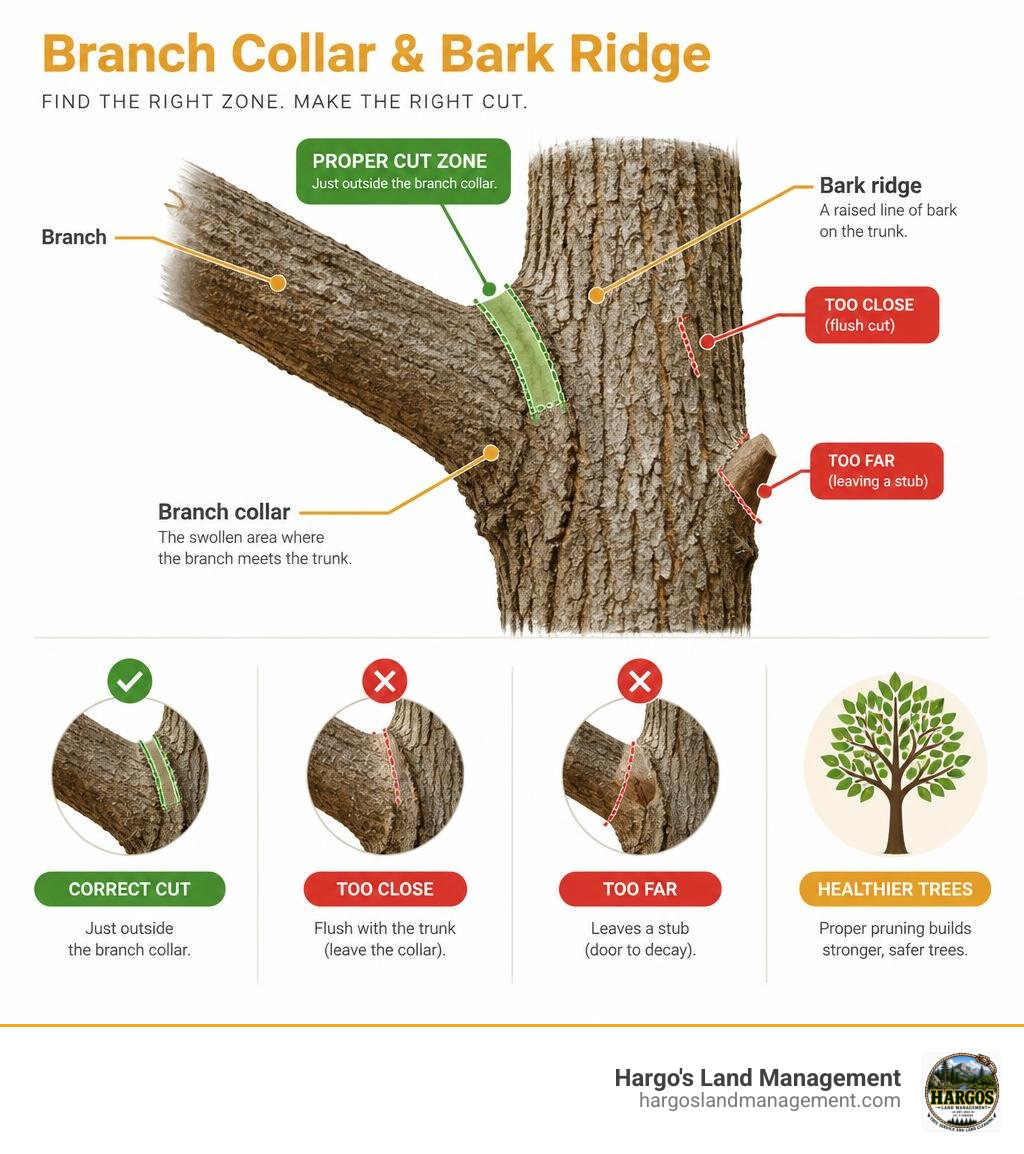
Tree pruning starts with a purpose: remove dead, broken, or rubbing branches, or correct a weak branch while it is still small. For most trees, plan routine pruning during the dormant season. Before each cut, find the branch collar at the base of the branch and cut just outside it. Never cut flush against the trunk or leave a long stub.
Good cuts can improve clearance and help a tree build a stronger shape. Bad cuts can leave lasting damage. On a large property in El Dorado County, start by checking for limbs over paths, driveways, and buildings. Leave heavy limbs and any tree near power lines to qualified professionals.
Why Property Owners Must Prune: Health, Hazard Reduction, and Ecology
Pruning is far more than a cosmetic touch-up. It is a vital maintenance practice that directly influences the structural integrity, safety, and lifespan of your landscape. In natural forest ecosystems, self-pruning occurs over decades as lower branches get shaded out and break away. In our residential landscapes, suburban developments, and commercial properties, unmanaged branches can quickly turn into major safety liabilities and entry points for decay.
When we prune thoughtfully, we accomplish three primary goals:
- Canopy Health and Disease Containment: Regularly inspecting the crown allows us to detect and eliminate the “Four D’s”—branches that are dead, diseased, damaged, or deranged (crossing and rubbing). Removing infected or fungal-ridden limbs stops pathogens from traveling inward toward the main trunk.
- Storm Resistance and Hazard Reduction: Removing deadwood and thinning overcrowded crowns reduces wind resistance (known as the “sail effect”). During severe winter storms or high-wind events, wind passes freely through a well-spaced canopy rather than catching dense foliage and tearing massive limbs from the tree.
- Sunlight Exposure and Airflow: Opening up the interior canopy allows sunlight and fresh air to reach inner leaves and understory vegetation. Increased air circulation dries morning dew and rainfall quickly, creating an inhospitable environment for fungal leaf spots and mildew.
Beyond immediate safety, healthy urban and rural canopies deliver staggering environmental dividends. In the Pacific Northwest, municipal studies demonstrate that healthy tree canopies provide immense ecosystem benefits. For example, according to the City of Bellevue Pruning Guidelines, Bellevue’s tree canopy provides 62 million cubic feet in stormwater detention services valued at $123 million, removes 687,000 pounds of air pollutants annually (valued at $1.55 million per year), and stores 332,000 tons of carbon in tree wood while sequestering an additional 2,582 tons each year.
To protect these ecological assets and keep structures safe from falling limbs or wildfire ignition, property owners must proactively maintain healthy trees.
The Biological Standards and Methods of Tree Pruning
To prune effectively, you must understand a fundamental rule of arboriculture: every pruning cut is a controlled wounding of the tree. Trees do not “heal” damaged tissue the way human skin regrows over a scratch. Instead, trees seal off injured wood through a biological defense process known as the Compartmentalization of Decay in Trees (CODIT).
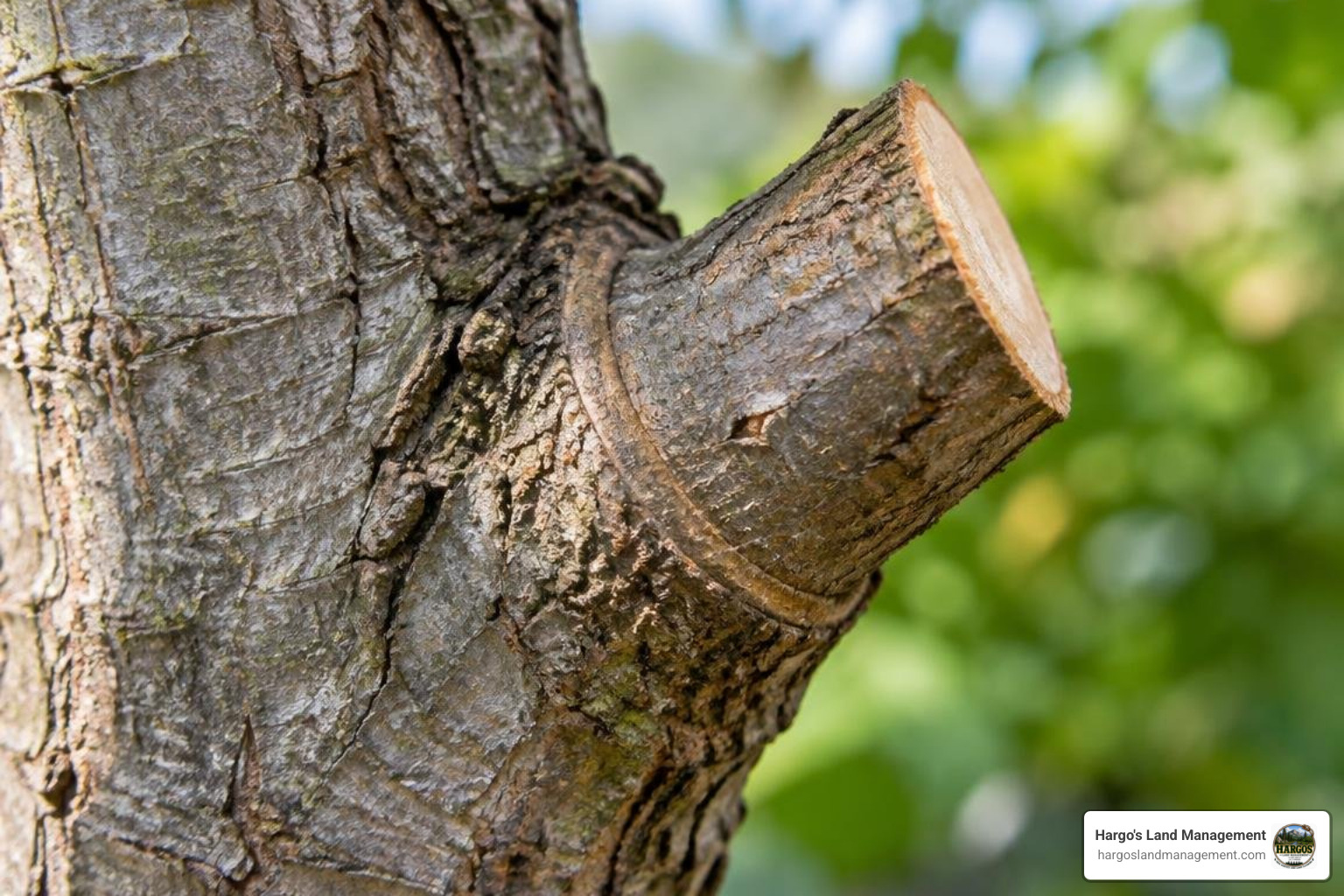
When you make a cut, the tree forms chemical boundaries around the wound to stop wood-decaying organisms from advancing into the trunk. The tree then produces specialized “woundwood” (callus tissue) from the outer margins of the cut, slowly rolling over the exposed surface until it is capped off.
To work in harmony with tree biology, every cut must respect two critical anatomical markers:
- The Branch Bark Ridge: A raised strip of rough bark running along the upper crotch where the branch meets the parent stem.
- The Branch Collar: The swollen shoulder at the base of the branch, formed by interlocking layers of trunk wood and branch wood—much like shuffling two halves of a deck of cards together.
Inside the branch collar sits the branch defense zone, a concentrated barrier of living cells that produce protective chemical compounds. If you cut into the branch collar (a flush cut), you destroy this protective barrier, opening a superhighway for decay fungi straight into the heart of the trunk. Conversely, leaving a protruding branch stub prevents woundwood from sealing the cut, creating dead wood that rot fungi feed on as they migrate into the tree.
According to research from Colorado State University Extension, living sapwood contains active cellular defenses against decay, whereas heartwood has no living defense mechanisms. Keeping pruning cuts under 2 inches in diameter minimizes heartwood exposure and ensures rapid closure. Cuts larger than 4 inches carry a significantly elevated risk of internal rot.
Primary Cut Types: Removal, Reduction, and Drop-Crotch Pruning
Professional arboriculture relies on distinct cut types to achieve specific structural goals:
- Removal Cuts (Thinning Cuts): A removal cut eliminates a side branch at its point of origin on the parent trunk or a larger scaffold limb. The cut is positioned just outside the branch bark ridge and collar. This technique reduces crown density, improves light penetration, and eliminates defective branches without destroying the tree’s natural architecture.
- Reduction Cuts (Drop-Crotch Cuts): A reduction cut shortens the length of a stem or limb by cutting it back to a lateral branch capable of assuming the terminal growth role. The USDA Forest Service publication HOW to Prune Trees specifies that the remaining lateral branch must be at least one-third the diameter of the stem being removed. If the lateral branch is too small, it cannot support the sap flow, causing the remaining stub to die back and decay.
- Heading Cuts: Heading cuts shear shoots or branches back to an arbitrary point between nodes or to an undersized lateral bud. Outside of formal hedge maintenance or specific fruit-tree training, heading cuts are unacceptable in landscape tree management because they release latent buds and stimulate dense, weakly attached sprout growth.
The Step-by-Step Three-Cut Method for Heavy Limbs
Attempting to cut through a large, heavy limb with a single downward saw stroke is a recipe for disaster. As the saw cuts past the midway point, gravity pulls the branch downward, tearing a long strip of bark and cambium down the trunk below the cut. This massive injury exposes heartwood and creates an unclosable wound.
Whenever you remove a branch larger than one inch in diameter, execute the three-cut method outlined in Ohio State University’s guide on Pruning and Care of Tree Wounds:
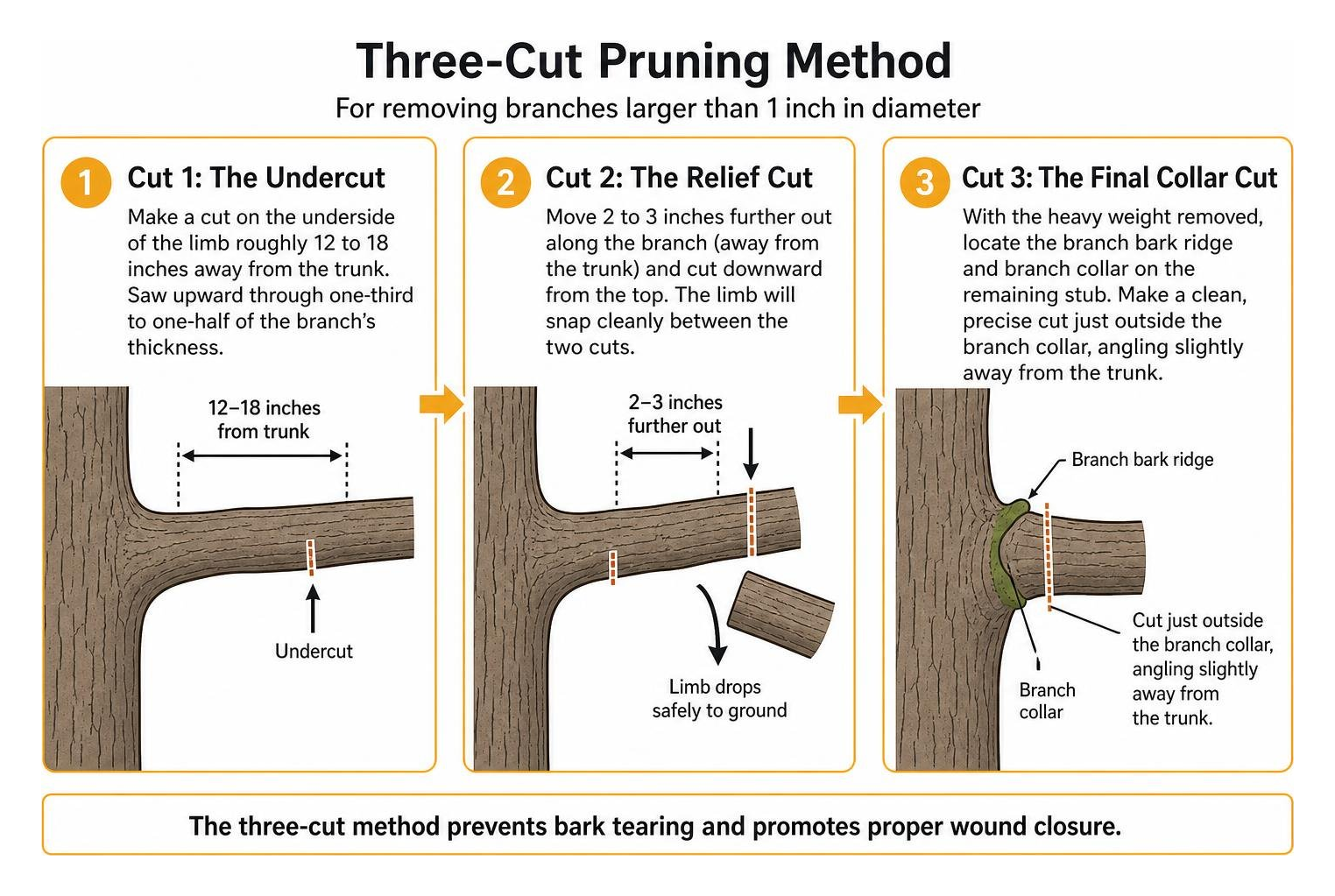
- Cut 1 (The Undercut): Make a cut on the underside of the limb roughly 12 to 18 inches away from the trunk. Saw upward through one-third to one-half of the branch’s thickness. This cut serves as an absolute barrier against bark tearing.
- Cut 2 (The Relief Cut): Move 2 to 3 inches further out along the branch (away from the trunk) and cut downward from the top. As the blade bites through, the weight of the limb will cause it to snap cleanly between the two cuts, dropping safely to the ground without ripping bark past the initial undercut.
- Cut 3 (The Final Collar Cut): With the heavy weight removed, locate the branch bark ridge and branch collar on the remaining stub. Make a clean, precise cut just outside the branch collar, angling slightly away from the trunk along the natural line of the collar.
Detrimental Practices: The Dangers of Tree Topping and Lions-Tailing
Few tree care mistakes cause more long-term damage than tree topping and lions-tailing.
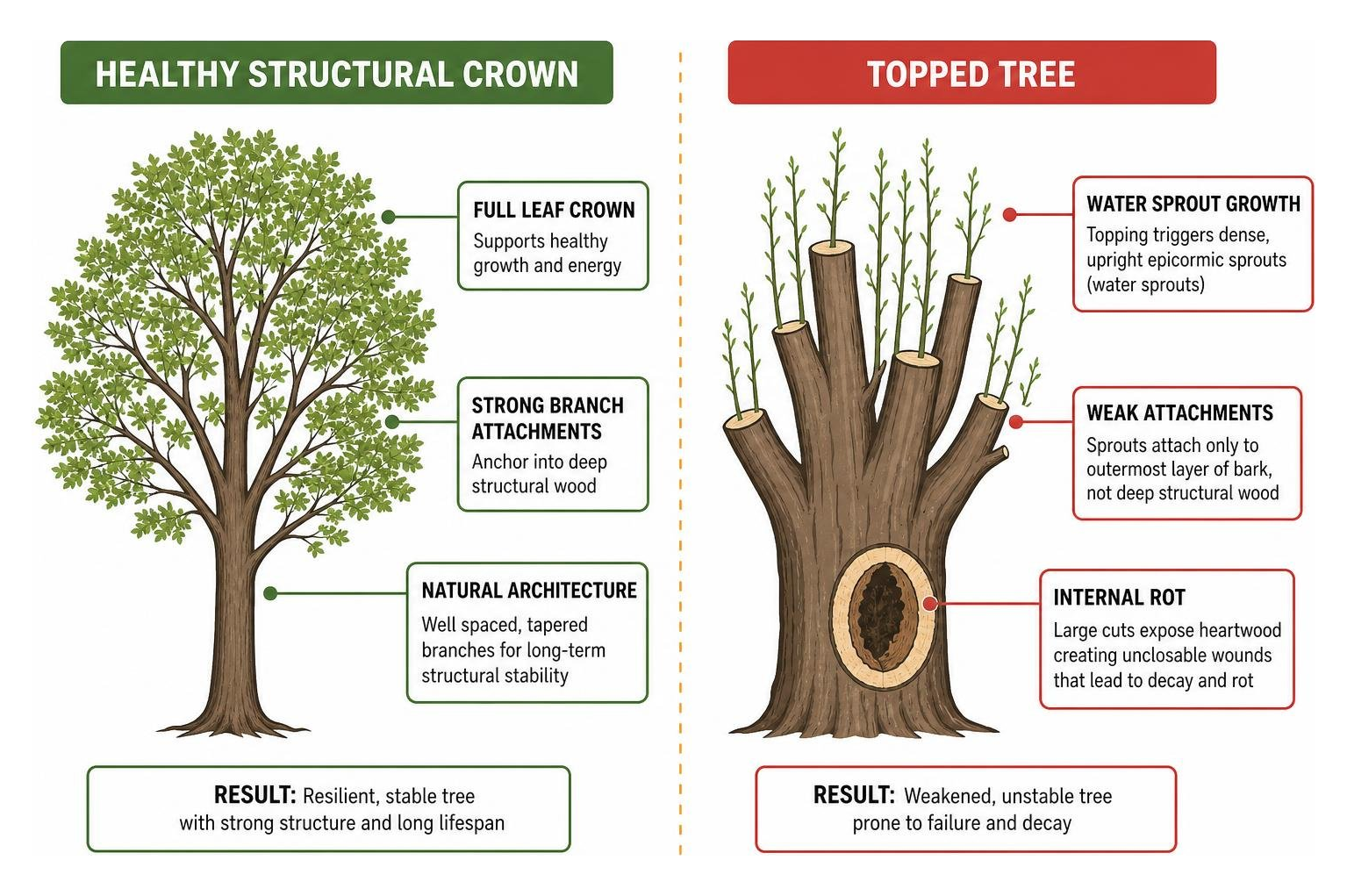
Tree topping—indiscriminately hacking off the upper canopy and central leader to arbitrary stubs—triggers severe structural and biological shock. Deprived of its photosynthetic leaf crown, the tree enters emergency survival mode, rapidly mobilizing its stored starches to produce clusters of upright “epicormic sprouts” (water sprouts).
These water sprouts grow aggressively to replace lost leaves, but they attach only to the outermost layer of bark rather than anchoring into deep structural wood. As they grow into heavy limbs, their weak attachments make them prone to failure during storms. Learn more about the severe dangers of tree topping and why reputable arborists avoid it.
Lions-tailing is another harmful practice that involves stripping out all interior foliage and lower lateral branches, leaving tufts of leaves only at the branch tips. This shifts the center of gravity to the very end of long, untapered limbs, increasing mechanical torque during windstorms and resulting in branch snapping.
Seasonal Timing and Strategic Scheduling for Tree Care
Timing your cuts correctly maximizes wound closure rates and shields your trees from seasonal insect infestations and fungal spores. Pruning at the wrong time can stress a tree, deplete its energy reserves, or invite lethal diseases.
According to Iowa State University Extension’s research on the Proper Time to Prune Trees and Shrubs, different tree varieties and conditions require tailored seasonal schedules:
- Late Dormant Season (Late Winter to Early Spring): This is the ideal window for most deciduous shade trees. With the canopy bare, branch architecture and structural defects are clearly visible. Because the tree is dormant, carbohydrate loss is minimized, and fresh cuts are exposed for only a brief period before spring cambial growth surges to produce protective woundwood.
- Active Growth Flush (Mid-to-Late Spring): Avoid heavy pruning while leaves are unfurling. Trees expend significant stored energy pushing out new foliage and tender stems; cutting into them during this metabolic transition causes unnecessary stress.
- The Fall Danger Zone: Pruning in autumn should be avoided. Wood-decaying fungi release prolific clouds of spores in cool, damp autumn air, while trees enter dormancy and lack the metabolic activity required to compartmentalize fresh wounds.
- Spring Sap Bleeders: Species such as birch, maple, walnut, elm, and willow bleed abundant sap if pruned in late winter or early spring. While this sap flow is rarely harmful to the tree, it can be messy and unsightly. Pruning these varieties in early summer after leaves have fully matured avoids heavy bleeding.
- Disease Vectors (Oak Wilt Prevention): In regions vulnerable to oak wilt—a devastating vascular fungal pathogen—oaks must never be pruned between March and October. Sap-feeding nitidulid beetles carry fungal spores directly to fresh pruning cuts. If emergency storm damage occurs during warm months, immediate application of water-based latex paint to the wound is essential to seal off scent cues from beetles.
Seasonal Tree Pruning Schedules by Species Type
| Tree Category | Optimal Pruning Window | Secondary Acceptable Window | Timing to Avoid | Primary Management Objectives |
|---|---|---|---|---|
| Deciduous Hardwoods (Oak, Maple, Ash) | Late Winter (Jan – Mar) | Early Summer (June – July) | Early Fall (Sept – Nov) & Spring Leaf-Out | Structural training, deadwood removal, clearance elevation. |
| Conifers & Pines (Pine, Fir, Cedar) | Late Winter / Early Spring | Mid-Summer | Late Fall | Removing lower dead branches, clearing ladder fuels for fire safety. |
| Spring-Flowering (Dogwood, Magnolia) | Immediately after blooming | Mid-Summer | Late Winter / Early Spring (removes flower buds) | Preserving seasonal flower display while shaping growth. |
| Summer-Flowering (Crape Myrtle) | Late Winter / Early Spring | Mid-Spring | Mid-to-Late Summer | Stimulating vigorous new spring growth that bears flowers. |
| Hazardous Deadwood | Any time of year | Any time of year | None (remove immediately) | Mitigating immediate property safety risks and target zones. |
Structural Tree Pruning for Young vs. Mature Canopies
The techniques you use must reflect the developmental age of the tree. Training a young tree prevents severe structural failures decades later, while mature trees require conservative, measured maintenance.
In landmark research by Edward F. Gilman, Brian Kempf, Nelda Matheny, and Jim Clark, structural pruning of young and medium-aged trees focuses on establishing a dominant central leader and managing branch aspect ratios.
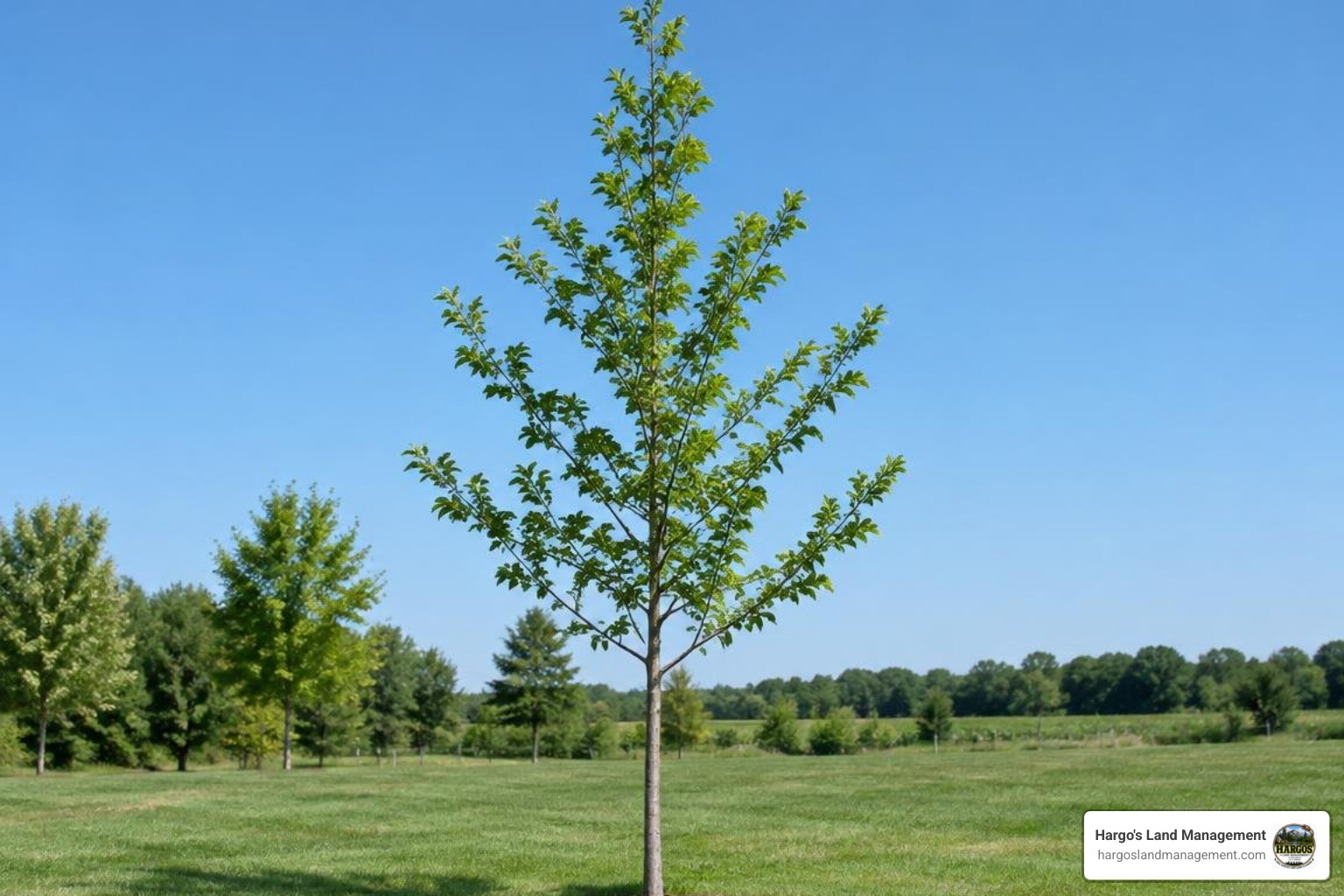
- Young Tree Architecture: Identify the strongest, most central vertical stem to serve as the dominant leader. Subordinate competing codominant stems (stems of equal diameter growing from the same union) by shortening them with reduction cuts. Maintain branch aspect ratios below 50%—meaning lateral branches should never exceed half the diameter of the parent trunk at the point of attachment. This prevents the formation of “included bark” (pinched bark within tight V-shaped crotches), which creates weak, failure-prone branch attachments.
- Mature Tree Canopy Care: Mature trees have established frameworks and lower metabolic reserves. Heavy pruning shocks mature specimens. Maintenance should be restricted to crown cleaning (removing dead, dying, and diseased wood), light thinning to improve airflow, and elevating lower limbs for pedestrian or vehicular clearance. Never remove more than 10% to 15% of a mature tree’s living foliage in a single season.
Essential Equipment, Maintenance, and Wound Management
Using the right tool for the diameter of the branch ensures clean, precise cuts that heal quickly without ragged bark tears or crushed cambium cells.
- Bypass Hand Pruners: Designed for twigs and small shoots up to 3/4 inch in diameter. Bypass pruners work like scissors, with a curved cutting blade sweeping past a hooked counter-blade. Avoid anvil pruners, which crush delicate vascular cambium tissue against a flat metal base.
- Bypass Loppers: Ideal for branches between 3/4 inch and 1.5 inches in diameter. The long handles provide mechanical leverage for clean cuts through woody stems.
- Arborist Handsaws: Featuring curved blades with razor-sharp, pull-stroke teeth, arborist handsaws easily slice through limbs between 1.5 and 4 inches in diameter without binding.
- Pole Saws & Pole Pruners: Telescoping fiberglass poles equipped with a pruning saw or rope-pulley bypass blade allow you to reach branches 10 to 15 feet overhead while keeping both feet on the ground.
- Tool Sanitization: Pruning tools can spread bacterial and fungal pathogens between trees. Disinfect saw blades and cutting edges between cuts or between trees using 70% isopropyl alcohol, a 10% bleach solution, or household disinfectant spray.
When working with larger limbs or powered equipment, safety gear is non-negotiable. Wear ANSI-rated safety glasses, a hard hat, leather work gloves, sturdy steel-toed boots, and chainsaw chaps.
According to data compiled by Colorado State University Extension, between 40,000 and 90,000 people suffer serious injuries and 40 to 60 are fatally injured in chainsaw accidents annually across the United States. If a job requires cutting from a ladder, working at height, or operating a chainsaw overhead, leave the task to experienced tree care professionals.
The Myth of Pruning Sealants
For decades, painting black asphalt tar or wound dressing over fresh cuts was standard practice. Modern arboricultural science has thoroughly debunked this approach.
Wound dressings trap moisture against exposed wood, creating a dark, humid environment that accelerates fungal decay. Furthermore, petroleum-based sealers can damage delicate cambial cells, slowing down the natural development of woundwood. Allow cuts to air-dry and compartmentalize naturally.
Electrical Hazards, Tree Risk Assessment, and When to Call an Arborist
While basic hand-pruning of low branches is a rewarding DIY task, complex canopy work carries serious risks. Working near high-voltage utility lines is especially hazardous and requires specialized training.
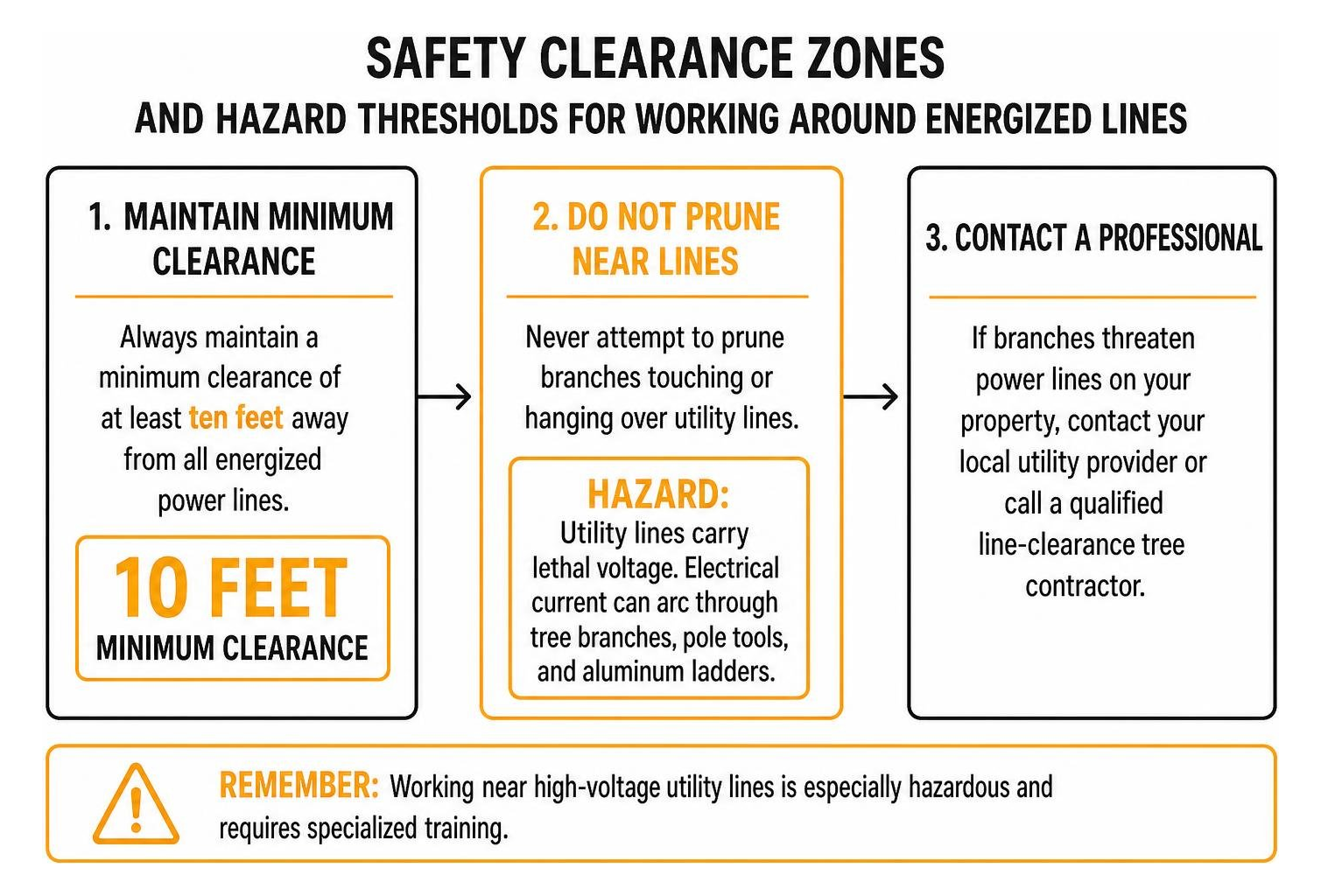
Always maintain a minimum clearance of at least ten feet away from all energized power lines. Never attempt to prune branches touching or hanging over utility lines. Utility lines carry lethal voltage, and electrical current can arc through tree branches, pole tools, and aluminum ladders. If branches threaten power lines on your property, contact your local utility provider or call a qualified line-clearance tree contractor.
Beyond electrical hazards, partner with an ISA Certified Arborist whenever you encounter:
- Large, heavy limbs overhanging roofs, driveways, or outbuildings.
- Trees showing signs of internal decay, including hollow trunks, fungal conks (bracket mushrooms), or carpenter ant activity.
- Storm-damaged trees with cracked, split, or hanging limbs under high mechanical tension.
- Co-dominant stems showing deep vertical cracks or seams of included bark.
A professional evaluation through a certified tree risk assessment helps identify hidden structural defects, fungal decay, and root-plate instability before catastrophic failures occur. When defects threaten people or property, our team delivers high-risk tree removal solutions to eliminate dangerous hazards safely.
Frequently Asked Questions About Tree Pruning
Should I put paint or sealant on pruning cuts?
No. Decades of research show that wound dressings and pruning paints do not prevent decay. Instead, they trap internal moisture, promote fungal colonization, and inhibit the tree’s natural compartmentalization process. The only exception is applying water-based latex paint to fresh wounds on oak trees during active oak wilt season (March to October) to deter sap-feeding beetles.
How much live canopy can I safely remove at one time?
Never remove more than 25% of a tree’s living canopy in a single year. For mature trees, limit removal to 10% to 15%. Over-pruning depletes the tree’s photosynthetic food-producing capacity, stresses root systems, and triggers a surge of weakly attached water sprouts.
How far away from power lines must I stay when trimming trees?
Always maintain a strict minimum clearance of 10 feet from all energized power lines. If any part of a tree or branch is within 10 feet of a line, do not attempt to trim it yourself. Contact your utility provider or a certified utility line-clearance arborist.
Conclusion
Tree pruning is an investment in the long-term safety, resilience, and beauty of your property. By respecting the natural branch collar, using the three-cut method on heavy limbs, avoiding harmful practices like topping, and timing your cuts to match species biology, you ensure your trees remain structurally sound and vibrant for generations.
Whether you need seasonal crown maintenance, hazard mitigation, or defensible space thinning to protect your home from wildfire risks, working with experienced professionals makes all the difference. For property owners across Placerville, South Lake Tahoe, and El Dorado County, Hargo’s Land Management provides licensed, bonded, and insured tree care and land clearing services.
Contact our team today to request a free on-site estimate for our professional tree service and let us help you protect your landscape.
CUSTOMER REVIEWS & TESTIMONIALS
We strive to exceed your expectations. See what our customers have to say.



















CONTACT US TODAY
Serving El Dorado and Surrounding Counties
Locally owned and operated since 2013. Use our live chat support to get in touch about your land management needs today.
Request a free evaluation and estimate by completing our online form or book an on-site appointment.
El Dorado County: El Dorado Hills, Cameron Park, Shingle Springs, Coloma, Placerville, Camino, Pollock Pines, South Lake Tahoe and more...
Amador County: Jackson, Ione, and Surrounding Towns
Sacramento County: Sacramento and Surrounding Cities
Placer County: Roseville, Rocklin, Auburn, and Everything In Between
Nevada County: Penn Valley, Nevada City, Grass Valley