
Wood Chips: Uses & Types Explained
Primary Types of Wood Chips and Their Production Methods
Wood chips come in various shapes, moisture levels, and fiber profiles. How chips are produced directly dictates their end-use. According to Wikipedia’s woodchips overview, these materials range from small industrial wood flakes to chunky, unrefined tree trimmings.
- Forest Chips: Harvested directly from logging residues, tree tops, thinnings, and whole trees. These chips contain a natural mix of heartwood, sapwood, bark, and pine needles.
- Sawmill Residues: Clean, uniform wood flakes produced from the debarked slabs, edging cutoffs, and trim ends generated during commercial lumber manufacturing.
- Ramial Chipped Wood (RCW): Chipped exclusively from small- to medium-diameter branches (under 3 inches thick). These twigs contain high concentrations of soluble nutrients, cambium, and young lignin, making them exceptional for fungal-dominated soil building.
- Recycled/Post-Consumer Wood: Sourced from unpainted construction cutoffs, clean shipping pallets, and crating materials. These tend to be dry and slow to break down.
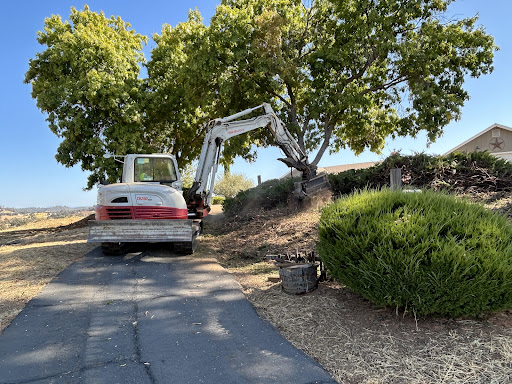
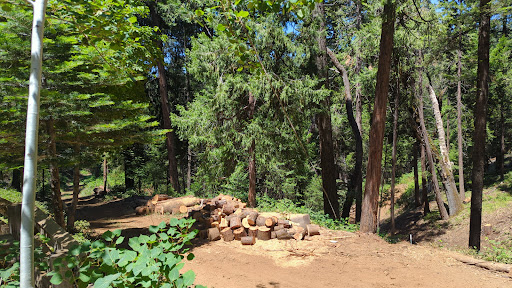
When executing residential and commercial brush and land clearing across Sierra foothills properties, we focus on transforming overgrown slash into functional, carbon-rich chips that protect soils against erosion and extreme heat.
Mechanical Chipping Equipment and Specifications
The mechanical action of the wood chipper determines particle size, fiber breakage, and uniformity:
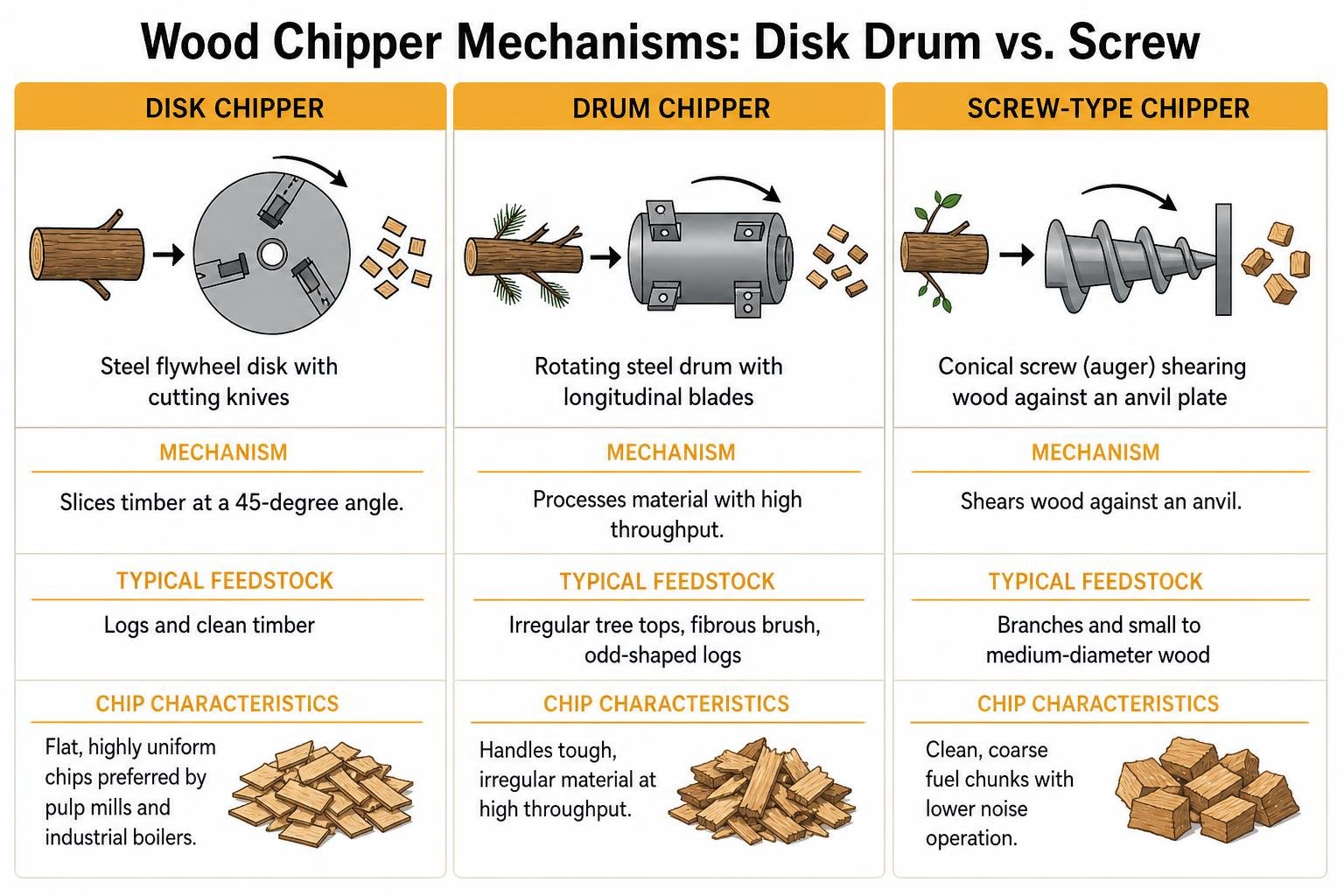
- Disk Chippers: Steel flywheel disks mounted with heavy cutting knives slice timber at a 45-degree angle. They yield flat, highly uniform chips preferred by pulp mills and automated industrial heating boilers.
- Drum Chippers: Heavy rotating steel cylinders equipped with longitudinal blades process irregular tree tops, fibrous brush, and odd-shaped logs at high throughput.
- Screw-Type Chippers: Conical, spiral-shaped augers shear wood against an anvil plate. They produce clean, coarse fuel chunks while operating at lower noise levels.
For clean automated energy systems, standardized grades like ANSI/ASABE AD17225-4 (GF60) demand dry, small chips with moisture levels between 10% and 30%. In contrast, our mobile wood chipping operations produce coarse, multi-sized arborist chips containing wood, bark, and leaves—an ideal mix for water retention and compaction resistance in garden beds.
Sourcing Feedstock from Forestry and Land Management
The raw material feed dictates final chip quality. Clean industrial forestry residues yield uniform wood fiber, while urban utility trimmings and professional tree service operations generate biologically diverse arborist chips.
Below-ground tree processing also contributes significant material. When completing stump grinding, the resulting mixture contains shredded wood fibers blended with native soil. While this makes it less suited for clean boiler combustion, it works well as a rustic groundcover for rough access roads and natural erosion berms.
Practical Applications Across Landscaping and Industry
Beyond standard mulching, wood chips serve a variety of specialized functions:
- Pulp and Paper Manufacturing: Clean, bark-free softwood and hardwood chips provide raw cellulose fiber for paper, cardboard, and packaging.
- Equestrian and Walking Trail Footing: Coarse wood chips create walkable, mud-free paths that allow rainwater infiltration while supporting foot and hoof traffic through wet winter months.
- Mushroom Cultivation: Hardwood chips provide an ideal fungal substrate for gourmet and medicinal varieties, such as King Stropharia (Stropharia rugosoannulata) and Oyster mushrooms (Pleurotus ostreatus).
- Culinary Barbecuing: Seasoned hardwood chips (such as hickory, applewood, mesquite, and pecan) impart distinct smoky flavor profiles during low-and-slow cooking.
Applying Arborist Wood Chips in Residential Landscapes
Arborist wood chips offer a diverse blend of wood fibers, bark chunks, and foliage. Unlike uniform, dyed bark nuggets that can mat down and block oxygen, arborist chips interlock loosely, allowing air and water to freely reach root systems.
Academic research on arborist wood chips as landscape mulch highlights their ability to insulate root zones and suppress weeds.
To calculate your landscape needs, note that covering 100 square feet at a 4-inch depth requires 35 cubic feet of material (or roughly 1.3 cubic yards). For newly planted trees, establish a mulch ring 3 to 6 feet in diameter, keeping the mulch pulled back 2 to 3 inches away from the tree’s root flare to prevent bark rot.
Agricultural and Environmental Biofiltration
Wood chips are also used in environmental remediation through denitrifying bioreactors. These subsurface trenches are filled with coarse wood chips to intercept agricultural drainage and livestock wastewater.
By providing an abundant carbon source, the wood chips feed naturally occurring anaerobic bacteria that convert dissolved nitrates into harmless nitrogen gas. Research shows these bioreactors can eliminate up to 90% of nitrate runoff from livestock operations, remaining active for up to 15 years before needing a fresh carbon recharge.
Horticultural Impact on Soil Chemistry and Plant Health
Because wood chips are rich in lignin, suberin, and tannins, they decompose slowly. As detailed in the Kansas State University wood chip mulch guide, this gradual breakdown releases small amounts of organic nutrients over multiple growing seasons without sudden nutrient spikes.
When managing properties in the Sierra Nevada, smart vegetation management combines fuel reduction with soil preservation. Chipping removed ladder fuels and spreading them over exposed hillside soil reduces surface erosion and keeps roots cool during hot, dry summer months.
Soil Nitrogen Dynamics and pH Levels
A common gardening myth is that woody mulches “steal” nitrogen from garden plants:
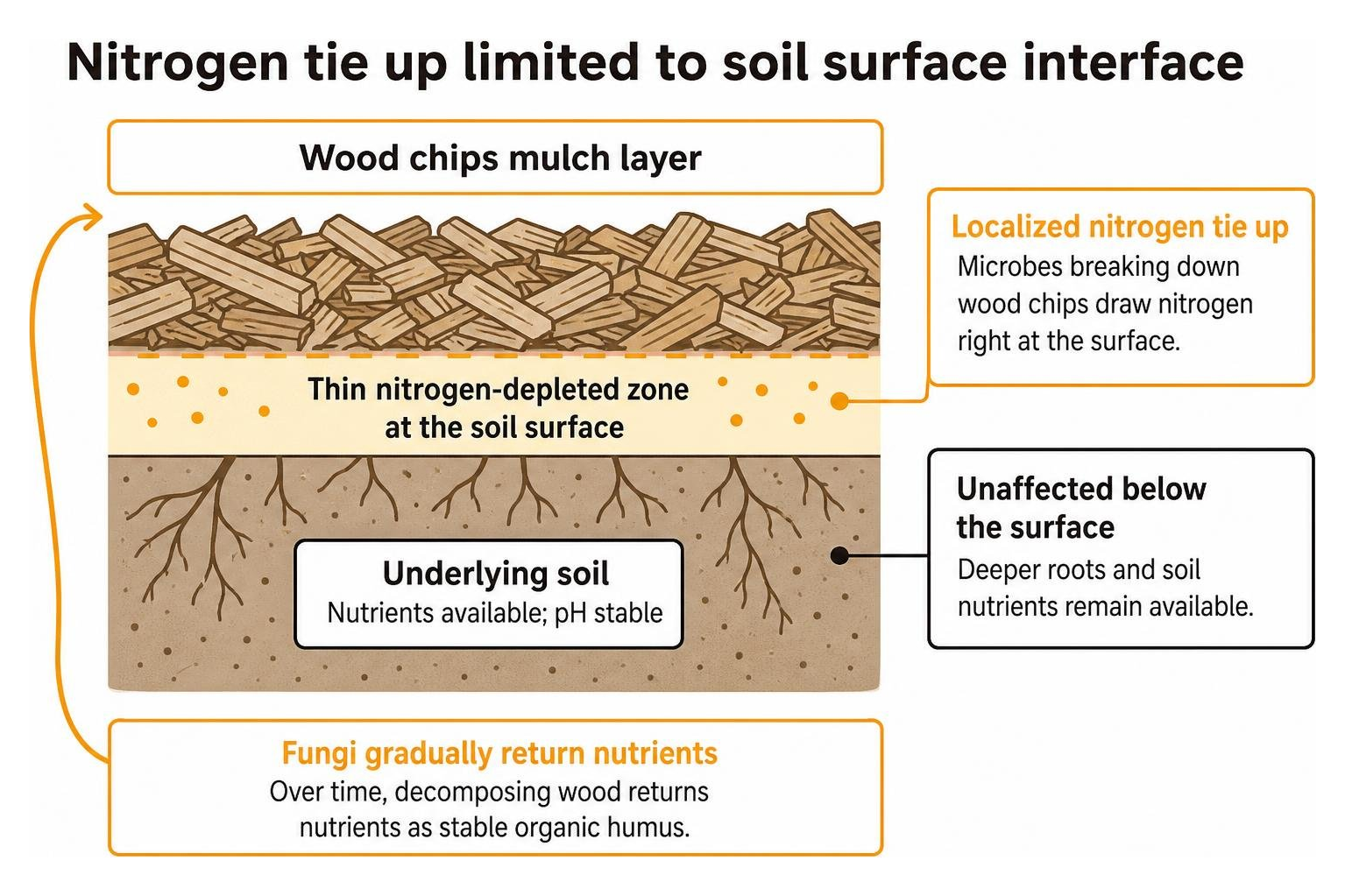
When soil microbes begin breaking down carbon-heavy wood chips, they draw on available nitrogen right at the point where the mulch meets the soil surface. This creates a thin, nitrogen-depleted zone at the top millimeter of soil.
This localized effect actually works to your advantage: it starves shallow-germinating annual weed seeds while leaving deeper perennial and tree root systems unaffected. Over time, as fungi break down the wood fibers, those locked-up nutrients are returned to the soil as stable organic humus.
Wood chips also do not acidify garden soils. While decomposing pine needles and wood chips can show slight acidity within the mulch layer itself, soil has strong natural buffering capacity that prevents any measurable drop in underlying soil pH.
Plant Pathogen Transmission and Pest Dynamics
Landscapers often worry about spreading diseases through chips made from sick trees. Field studies demonstrate that fungal pathogens causing branch or leaf blights rarely spread to healthy roots when chips are applied as a topdressing. Pathogens require living host tissue and struggle to survive once chipped and exposed to the sun.
However, avoid mixing uncomposted wood chips directly into planting holes as a soil amendment, as this can introduce dormant pathogens directly into the root zone.
Regarding pests, coarse arborist chips do not attract subterranean termites or carpenter ants to healthy landscapes. Termites prefer high-nutrient cellulose such as cardboard, paper, or damp, solid structural lumber over small, irregular wood fragments. Keeping a 6- to 12-inch bare soil buffer along home foundations prevents mulch from serving as a hidden bridge for crawling insects.
Comparing Common Organic and Synthetic Mulch Materials
| Mulch Type | Moisture Retention | Flammability Risk | Longevity | Relative Cost |
|---|---|---|---|---|
| Arborist Wood Chips | Exceptional | Low (when coarse/moist) | 2–4 Years | Low / Often Free |
| Bark Nuggets | Moderate | Moderate | 2–3 Years | Moderate to High |
| Fine Sawdust | Poor (crusts over) | High (fine flash fuel) | 1–2 Years | Low |
| Rubber Mulch | None (absorbs heat) | Very High (toxic fumes) | 5–10 Years | High |
According to the WSU Extension guide on arborist wood chips, coarse wood chips outperform fine mulches across nearly every biological metric.
Follow these best practices when applying wood chip mulch:
- Mow or hand-pull tall weeds before applying your mulch layer.
- Apply chips to a consistent depth of 2 to 4 inches (or up to 4 to 6 inches for heavy weed pressure).
- Avoid “mulch volcanoes” piled directly against tree trunks.
- Leave a clear inspection gap around building foundations and siding.
- Topdress with a light 1-inch layer every 1 to 2 years as the bottom layer breaks down into rich compost.
Flammability and Fire Safety Considerations
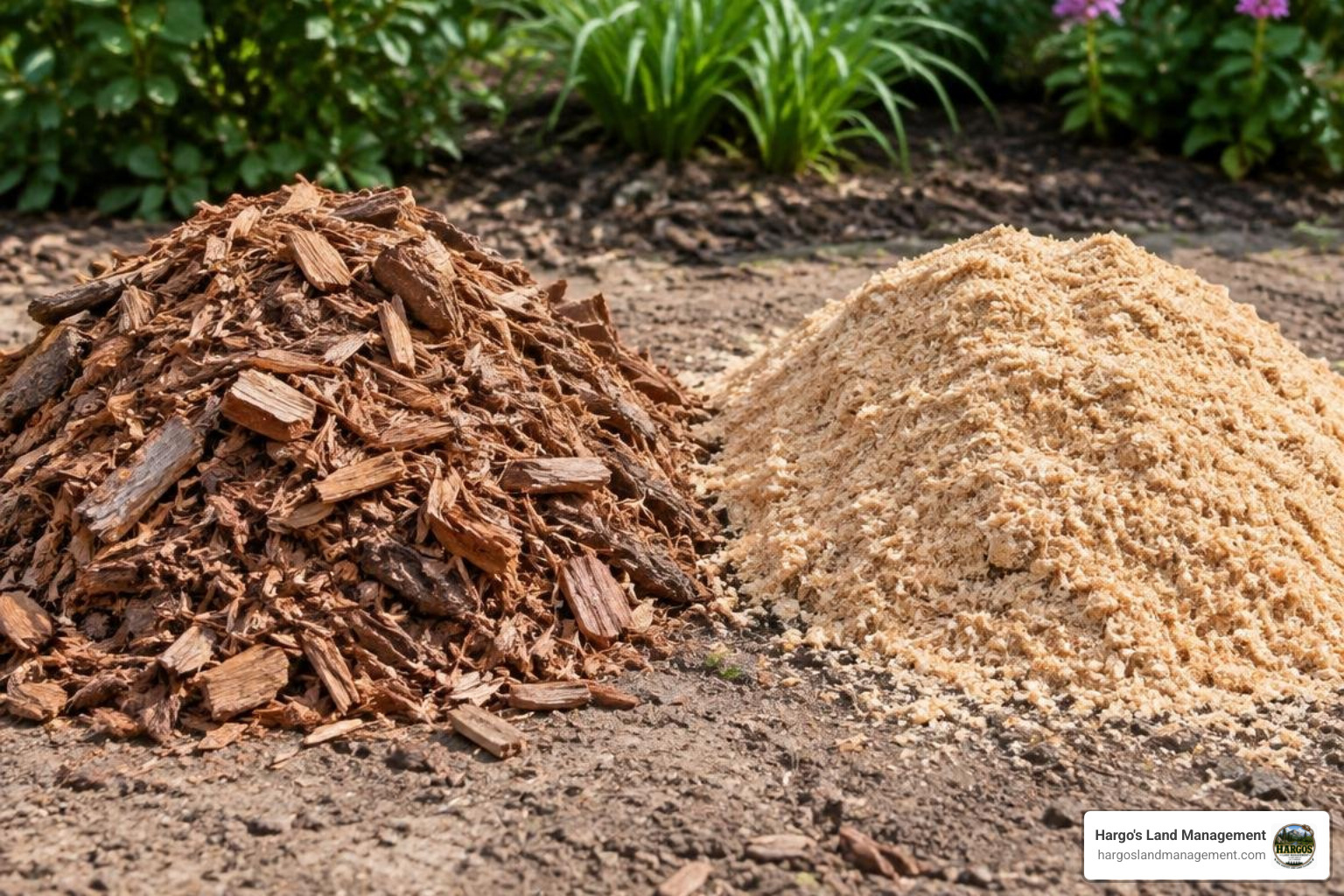
Fire behavior in landscape mulches depends heavily on particle size and moisture content. Fine, powdery mulches like sawdust and dry shredded pine straw ignite easily from stray sparks and burn quickly.
In contrast, coarse wood chips have less exposed surface area per unit of volume, making them much harder to ignite when damp. In wildfire-prone areas, keep all organic mulches at least 5 feet away from exterior walls and outbuildings to maintain effective defensible space.
Bioenergy Potential and Environmental Trade-offs
Solid biomass accounts for roughly 55% of global renewable energy and over 6% of total global energy production. Solid woody residues provide a dependable, base-load alternative to intermittent energy sources.
A comprehensive life cycle assessment of forest residue woodchips reveals that generating electricity from forest wood chips reduces climate impact by 34% compared to natural gas and 72% compared to fuel oil.
Forest Wood Chips in Renewable Power Generation
Using chipped forest slash in modern Combined Heat and Power (CHP) plants yields a climate change impact of just 0.0294 kg CO2-equivalent per kilowatt-hour.
When modern wood chip plants utilize Organic Rankine Cycle (ORC) turbines, they achieve electrical conversion efficiencies between 22.6% and 27.8%. Reusing wood waste keeps carbon moving through a short natural cycle while displacing fossil fuels.
Transportation Logistics and Emissions Analysis
The overall carbon balance of wood chip bioenergy depends heavily on transportation distance. Transporting chips over a short domestic radius (around 40 to 50 miles / 70 km) keeps transport emissions minimal.
Hauling chips across long distances or importing biomass internationally quickly degrades those carbon savings due to diesel emissions. Processing and using chips locally is the best way to maximize environmental and economic benefits.
Frequently Asked Questions
Will woody mulch rob garden plants of necessary nitrogen?
No. Nitrogen tie-up only happens along the very thin boundary where the mulch touches the soil surface. Plant roots sit well below this zone and draw their nutrients normally, while the localized surface deficiency helps stop weed seeds from taking hold.
Can mulch derived from diseased trees infect healthy landscape plants?
It is very unlikely when applied as a surface topdressing. Wood-decay fungi and leaf pathogens need living host tissues to survive and cannot compete with the beneficial soil microbes breaking down the mulch. Just remember not to till raw wood chips directly into your planting soil.
Do coarse wood mulches increase property fire risk or attract termites?
Coarse wood chips are the least flammable of organic mulches because their chunky texture resists ignition better than dry pine straw or fine sawdust. They also do not draw subterranean termites, which prefer solid damp structural lumber and paper products.
Conclusion
Wood chips are a versatile natural resource that connects responsible forest management with healthy garden care. Whether you are improving agricultural soil, generating low-carbon energy, or protecting your property, locally sourced chips offer an affordable, sustainable solution.
If you are working on your landscape or creating defensible space around your home, you can request free wood chips from our local operations to start building healthier, more drought-resistant soil today.
CUSTOMER REVIEWS & TESTIMONIALS
We strive to exceed your expectations. See what our customers have to say.



















CONTACT US TODAY
Serving El Dorado and Surrounding Counties
Locally owned and operated since 2013. Use our live chat support to get in touch about your land management needs today.
Request a free evaluation and estimate by completing our online form or book an on-site appointment.
El Dorado County: El Dorado Hills, Cameron Park, Shingle Springs, Coloma, Placerville, Camino, Pollock Pines, South Lake Tahoe and more...
Amador County: Jackson, Ione, and Surrounding Towns
Sacramento County: Sacramento and Surrounding Cities
Placer County: Roseville, Rocklin, Auburn, and Everything In Between
Nevada County: Penn Valley, Nevada City, Grass Valley